
Highlights
- Yale researchers used commercial satellite imagery to document major expansion at three Chinese-controlled DRC mines: Sicomines, Tenke Fungurume, and Kisanfu.
- Evidence shows China is building an integrated upstream ecosystem combining extraction, processing, logistics, and transportation—not merely increasing raw output.
- Cobalt is critical for aerospace, defense, and advanced batteries, making China's tightening grip a serious strategic concern for Western nations.
- Satellite analysis cannot directly measure production volumes, and the study is limited to three operations, leaving broader industry trends unexamined.
- Western supply-chain resilience will require competitive financing, allied refining capacity, and long-term partnerships—not just new mines.
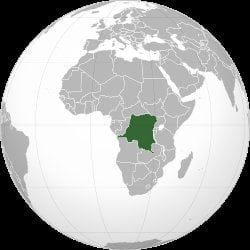
A new analysis (opens in a new tab) by Prince Osaji of Yale University, together with Luca Girodon, Keith Pemberton, Mateo Bodon, and Ty Kushi, uses commercial satellite imagery and open-source intelligence to document a steady expansion of three major Chinese-controlled copper-cobalt operations in the Democratic Republic of Congo (DRC): Sicomines, Tenke Fungurume, and Kisanfu. Rather than simply increasing mine output, the researchers argue the evidence points to growing investment across the entire mining complex—including ore processing, logistics, waste management, transportation, and site infrastructure. Because the DRC produces more than 70% of the world's cobalt and Chinese firms control most of its largest operations, these developments reinforce China's already dominant position in one of the world's most strategically important critical mineral supply chains.
How the Researchers Conducted the Study
The Yale team combined Google Earth and Maxar satellite imagery with publicly available production data, ownership information, and policy research. Rather than relying solely on company announcements, they tracked physical indicators of industrial expansion—including new processing equipment, haul roads, logistics facilities, leaching infrastructure, tailings storage, waste rock dumps, water-management systems, and land clearing—to evaluate whether mining activity is accelerating.
What the Satellites Show
Across all three operations, the imagery reveals substantial investment in production capacity. At Sicomines, researchers identified new processing infrastructure, expanded transport areas, additional equipment, and what appears to be a new leaching facility, all consistent with higher throughput. At Tenke Fungurume, expanded maintenance facilities, greater equipment density, and evolving tailings operations suggest continued scaling of one of the world's largest copper-cobalt mines. Meanwhile, Kisanfu appears to be undergoing perhaps the most dramatic expansion, with new thickeners, conveyor infrastructure, additional tailings capacity, expanding waste-rock facilities, and other signs of increasing processing capability.
Why It Matters
The findings extend well beyond central Africa. Cobalt remains essential for aerospace alloys, defense applications, and many advanced battery chemistries, while copper demand is accelerating because of electrification, artificial intelligence infrastructure, data centers, and grid modernization. As China expands not only mining capacity but also integrated processing and logistics inside the DRC, it further strengthens control over upstream supply at a time when Western governments are attempting to diversify critical mineral supply chains.
Important Limitations
The study appropriately acknowledges that satellite imagery cannot directly measure production volumes or confirm the precise function of every newly constructed facility. Many interpretations—such as identifying leaching plants or processing systems—are based on visual characteristics and engineering judgment rather than direct operational access. The analysis also focuses exclusively on three Chinese-controlled operations and therefore cannot determine whether similar expansion is occurring across the broader Congolese mining industry. Finally, while the paper highlights documented concerns involving labor practices, environmental stewardship, and infrastructure commitments associated with some Chinese mining investments, it does not independently investigate or verify those issues.
The REEx Perspective
Rare Earth Exchanges® believes the most important takeaway is not simply that Chinese companies continue expanding mines in the DRC. Rather, the satellite evidence illustrates how China is steadily reinforcing an integrated upstream industrial ecosystem—combining extraction, processing, logistics, and transportation into a coordinated critical minerals platform. And this fits into the emerging Great Powers Era 2.0 thesis.
For the United States and its allies, this underscores a larger strategic reality. Building new mines alone will not close the gap. Supply-chain resilience will require competitive financing, long-term partnerships with resource-rich nations, expanded domestic and allied refining capacity, and industrial policies capable of competing with China's decades-long, vertically integrated critical minerals strategy.
Citation: Osaji, P., Girodon, L., Pemberton, K., Bodon, M., & Kushi, T. Democratic Republic of Congo: Expansion of Chinese-Owned Cobalt and Copper Mines in the Lualaba Province. Yale University, December 5, 2025.


0 Comments
No replies yet
Loading new replies...
Moderator
Join the full discussion at the Rare Earth Exchanges Forum →