
Highlights
- Kazakhstan's rare earth potential is real, but geological resources alone do not equal commercial supply-chain capability or readiness to rival China.
- China's dominance stems from decades of building an integrated industrial ecosystem spanning cracking, separation, refining, and magnet manufacturing—not just mineral wealth.
- Kazakhstan's strategic location along the Middle Corridor positions it as a future critical minerals hub connecting Central Asia to European and global markets.
- Investors must distinguish between upstream resource promise and the industrial architecture required to deliver qualified rare earth products at commercial scale.
- In the Great Powers Era 2.0, competitive advantage will belong to nations that control integrated rare earth ecosystems, not simply those with the largest deposits.
Kazakhstan possesses world-class mineral potential and is attracting growing Western, Gulf, and Asian investment, making The National's reporting (opens in a new tab) directionally accurate. But investors should resist a familiar trap: confusing geological resources with commercial supply-chain capability. Rare Earth Exchanges® analysis finds that Kazakhstan's challenge is not discovering rare earths—it is building the industrial ecosystem required to crack, separate, refine, manufacture, and deliver qualified products to global markets. Until those midstream and downstream capabilities exist at commercial scale, Kazakhstan represents an important future upstream supplier, not a near-term alternative to China's integrated rare earth ecosystem. That distinction—not the size of the resource—is the investment story. As we enter the Great Powers Era 2.0, this distinction matters.
A Billion-Dollar Dream Meets Industrial Physics
Every few months another nation is presented as the next challenger to China's rare earth dominance.
This time it is Kazakhstan. The National accurately reports growing international interest in Kazakhstan's mineral wealth, supported by U.S., Gulf, and private-sector capital, including financing initiatives for tungsten and broader critical mineral development. The article also correctly identifies the country's significant constraints: aging Soviet-era infrastructure, limited rare earth processing capacity, dependence on long transport corridors, and the enormous capital required to build modern mining operations. Where the story becomes more complicated is what happens after the ore leaves the ground.
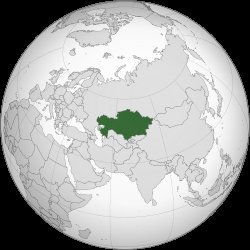
Rare Earth Exchanges® views Kazakhstan as one of the West's strategically promising long-term critical minerals partners—not because it is an immediate alternative to China, but because it possesses many of the ingredients needed to become one. Geographically, Kazakhstan occupies a pivotal position at the crossroads of Europe and Asia, north of the Middle East and along the rapidly developing Middle Corridor, giving it the potential to serve as a strategic logistics hub connecting resource-rich Central Asia with European and global markets. The country has substantial reserves of uranium, copper, tungsten, rare earths, and other critical minerals, a history of large-scale mining, and an increasingly pragmatic approach to attracting foreign investment. If Kazakhstan continues modernizing its regulatory framework, expands energy and transport infrastructure, develops domestic separation and downstream processing, and deepens partnerships with the United States, Europe, Japan, South Korea, and Gulf nations, it could evolve from a supplier of raw materials into a cornerstone of an allied critical minerals ecosystem. Success will ultimately depend not on the size of its mineral endowment, but on its ability to build the industrial capabilities that transform geological wealth into strategic economic power.
The Missing Middle
Rare Earth Exchanges believes the recent article understates the industry's most important bottleneck. Mining is only the beginning. Commercial value is created through cracking and leaching, solvent extraction, oxide separation, metals, alloys, magnets, qualification, and customer integration. China dominates not simply because it possesses large mineral resources, but because it spent decades building an integrated industrial ecosystem linking every stage of that chain. Kazakhstan today possesses geology, but also potential. China possesses geology and the industrial architecture. Those are fundamentally different competitive positions.
Separating Promise from Production
The Abu Dhabi-based media appropriately quotes experts cautioning that Kazakhstan is unlikely to replace China in the foreseeable future. That assessment aligns with current industrial realities. Where investors should exercise additional caution is around resource announcements. Large deposits—even discoveries measured in tens of millions of tonnes—do not automatically translate into commercial production. Financing, permitting, processing technology, logistics, energy infrastructure, customer qualification, and downstream manufacturing ultimately determine whether resources become profitable businesses. The mining industry has repeatedly demonstrated that geology alone rarely guarantees commercial success.
The REEx Bottom Line
Kazakhstan deserves serious attention. It could become a strategically important upstream supplier within an emerging allied critical minerals network. But investors should avoid mistaking geological potential for industrial readiness.
The lesson extends well beyond Kazakhstan. In Great Powers Era 2.0, nations or groups of nations forming critical mineral and rare earth production networks will not compete primarily on who owns the largest deposits. They will compete on who controls the industrial ecosystems that transform rock into qualified products. For rare earth investors, that remains the distinction that matters most.


0 Comments
No replies yet
Loading new replies...
Moderator
Join the full discussion at the Rare Earth Exchanges Forum →