
Highlights
- The U.S. State Department's U.S.-Africa Strategic Investment Program offers $5M–$50M grants to de-risk critical mineral projects in sub-Saharan Africa.
- Critics argue the program treats critical minerals as an investment problem rather than a systemic industrial challenge, unlike China's integrated mine-to-manufacturing approach.
- Infrastructure construction is ineligible for funding, a significant gap given that roads, rail, and energy are identified as major barriers to mineral development.
- Winning applicants must show how federal dollars catalyze larger private investment, with leverage and partnerships accounting for 20% of the scoring criteria.
- The program's success hinges on linking geological data, refining, offtake agreements, and Western manufacturing into a coherent supply-chain strategy.
The U.S. Department of State's new U.S.-Africa Strategic Investment Program (opens in a new tab) represents an important shift in American economic statecraft. The program makes up to $500 million available for projects intended to unlock private investment in sub-Saharan Africa, with critical minerals as one of two strategic focus areas. Awards are expected to range from $5 million to $50 million, generally over 12–36 months.
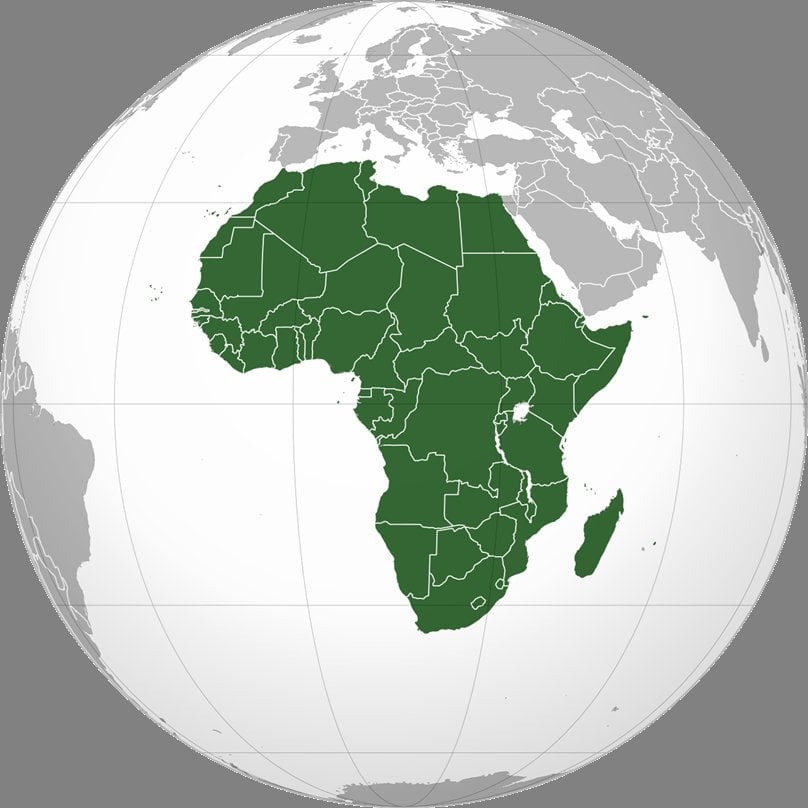
The program correctly identifies many barriers holding back African mineral development: poor geological data, regulatory uncertainty, inadequate infrastructure, limited technical capacity, insufficient processing and refining, and difficulty bringing transactions to financial close. But its greatest weakness may be conceptual. America is still largely treating critical minerals as an investment-enabling problem when the emerging Great Powers Era 2.0 increasingly makes them an industrial-system problem. The bureaucracy in Washington, D.C. does not get it yet.
China did not become dominant merely by making mines investable. It assembled interconnected mining, processing, refining, metallurgical, manufacturing, infrastructure, financing, and customer ecosystems. America now needs to think at comparable scale.
What Washington Is Actually Funding
The State Department is explicitly looking for market-based solutions that both create economic benefits for African countries and de-risk opportunities for U.S. and U.S.-aligned companies. Applicants can include U.S. and U.S.-aligned companies, nonprofits, and public international organizations. Cost sharing is not mandatory, although leverage and outside resources matter competitively.
Critical-mineral proposals can address four broad areas:
- Governance: licensing, procurement, regulatory capacity, and transparent investment frameworks.
- Data and skills: geological mapping, geodata accessibility, technical training, and government capabilities.
- Supply chains: alternative processing and refining, local value addition, and diversification away from single-buyer markets.
- Transactions: feasibility studies, technical assistance, and transaction advisory work capable of moving commercially viable projects toward investment.
That is considerably broader than a conventional foreign-aid program. There is also a notable contradiction, however. The program identifies infrastructure, transportation, and energy as major investment constraints, but construction activities themselves are ineligible for funding—something the Chinese have always been ready to finance. In other words, Washington can help diagnose an inadequate road, rail connection, or power system—but this particular program generally cannot build it.
How to Win: Follow the Capital, Not the Grant
Applicants first submit a concise two-page Statement of Interest, rather than a full application. Selected concepts can enter State Department co-design or advance directly to a full proposal.
The scoring system reveals what Washington really wants:
Quality and feasibility — 40% Organizational capacity and experience — 25% Leverage, burden sharing, and partnerships — 20% Ability to achieve objectives — 15%.
That 20% leverage score is especially important. Although formal cost sharing is not required, applicants are rewarded for mobilizing outside capital, technology, expertise, and partnerships. The APS explicitly says projects should ensure that taxpayer dollars "catalyze substantial commercial returns."
The strongest proposal therefore probably is not "give us $25 million to study African minerals."
It is closer to: This $25 million removes specific geological, metallurgical, regulatory, or feasibility risks standing between a defined African resource and several hundred million dollars of private investment, processing capacity, and contracted Western demand.
The Great Powers Era 2.0 Problem
The document itself recognizes the geopolitical contest. It seeks to reduce vulnerabilities from concentrated supply chains, create alternative processing and refining capabilities, reduce dependence on single-buyer markets, and address disadvantages U.S. companies face against state-backed competitors. That is Great Powers Era 2.0 in bureaucratic language. Yet several critical questions remain underdeveloped.
- Where is the guaranteed buyer? A mine or refinery is much easier to finance when credible long-term offtake exists.
- Where is the price-risk architecture? Western projects can be technically sound yet uneconomic if dominant suppliers drive prices below sustainable Western production costs.
- Where is the integrated midstream strategy? The APS mentions processing and refining, importantly, but does not articulate an integrated mine-to-material-to-manufacturing architecture.
- Where is the infrastructure capital? Mining competitiveness ultimately depends on electricity, water, railways, roads, and ports—not simply feasibility studies.
- And perhaps most importantly: What does Africa receive beyond extraction?
The APS does recognize local value addition, government revenues, workforce development, and African economic growth. But African governments increasingly want more than mines feeding foreign factories. They want processing, industrialization, skills, infrastructure, and greater participation in the value chain. That bargaining power will grow as competition for strategic resources intensifies.
REEx Insight | America Needs Ecosystems, Not Just Projects
One KPI is particularly revealing: the volume of critical minerals moving through the Lobito Corridor. Other measures include investment and offtake agreements moving toward financial close, American corporate participation, and increased African government revenues.
These are sensible metrics. But tonnage transported is not the same as strategic supply-chain control.
The ultimate measure should be harder: How much non-Chinese, commercially sustainable industrial capacity did America and its partners actually create? That means linking geological intelligence → mine development → separation/refining → metals and materials → infrastructure → financing → offtake → Western manufacturing.
The $500 million program could be highly valuable if it becomes the risk-removal layer connecting those stages to DFC, EXIM, private capital, allied governments, and industrial buyers. Standing alone, however, it is unlikely to transform the competitive balance.
Great Powers Era 2.0 is not simply a contest over who owns Africa's rocks. It is a contest over who finances, processes, transports, prices, buys, and ultimately converts those rocks into strategic industrial power.
That is the larger system Washington still needs to build.
Immediate Application Takeaways
For prospective applicants, the opportunity is real. Up to two Statements of Interest (SOIs) may be submitted per organization in each deadline window, and unsuccessful concepts cannot simply be resubmitted unchanged in a later window. SAM/UEI registration is unnecessary for the initial SOI but becomes necessary for a full application; State warns registration can take 4–8 weeks.
For a commercially oriented applicant, the winning formula appears straightforward: identify a specific bottleneck, attach it to a credible African resource and host-country benefit, demonstrate U.S./allied commercial participation, bring outside capital or technology, and show precisely how federal dollars move a substantially larger transaction toward financial close.
References
- U.S. Department of State, Bureau of African Affairs. Annual Program Statement: U.S.-Africa Strategic Investment Program, Opportunity No. DFOP0019410, July 23, 2026.
- U.S. Department of State. U.S.-Africa Strategic Investment Program — Executive Summary and Strategic Focus Areas.
- U.S. Department of State. Critical Minerals Investment — Priority Challenges and Key Performance Indicators.
- U.S. Department of State. Eligibility, Cost Sharing and U.S. Supply Chain Requirements.
- U.S. Department of State. SOI Review Criteria and Selection Process.
- U.S. Department of State. Application and SAM.gov/UEI Requirements.
- U.S. Department of State. Funding Eligibility and Restrictions.
- U.S. Department of State. Critical Minerals Supply Chain Development and Transaction Support.


0 Comments
No replies yet
Loading new replies...
Moderator
Join the full discussion at the Rare Earth Exchanges Forum →