
Highlights
- GRINM held its sixth 'Composite Materials Youth Academy' session, training over 40 young engineers in raw-material selection, process design, production control, and performance testing.
- China's industrial strategy simultaneously develops plants, processes, and people—an advantage the West underestimates as billions are appropriated for mines and factories but not experienced workforces.
- R&D Director Nie Junhui urged engineers to identify research problems on factory floors, reinforcing the laboratory-to-production feedback loop that builds irreplaceable industrial know-how.
- A factory can be built in three years, but the workforce capable of operating it at specification, yield, and scale may take a generation to develop—a critical vulnerability for Western supply chains.
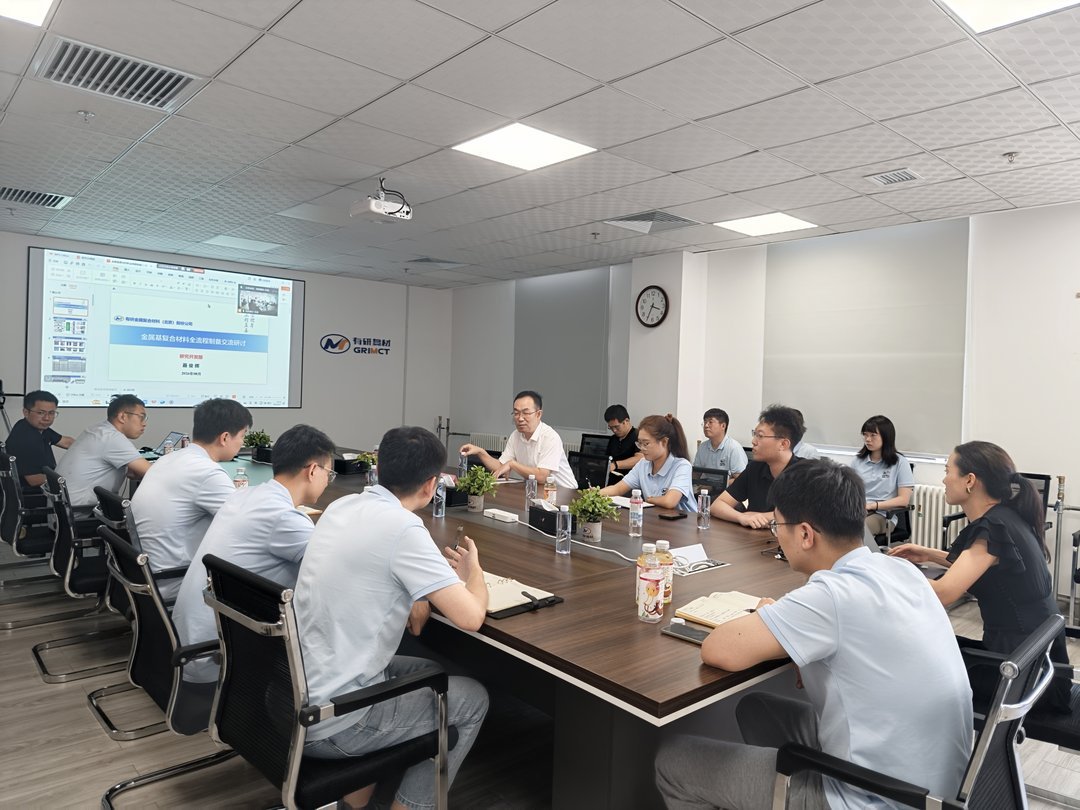
GRINM Advanced Materials held the sixth session of its "Composite Materials Youth Academy" on August 7 at its Yanjiao facility, bringing together more than 40 young technical employees to study the full manufacturing process for metal composite materials. Training covered raw-material selection, process design, production control and performance testing. There is no new product, capacity expansion, customer order or technical breakthrough disclosed here. The significance is structural: China's state-owned materials ecosystem continues systematically developing the engineers and technicians required to move technology from laboratory benches onto reliable industrial production lines.
REEx Insight | You Can Finance a Factory. You Cannot Finance 20 Years of Experience Overnight.
This seemingly routine training announcement points toward one of the West's least appreciated critical-minerals vulnerabilities: industrial capacity is ultimately constrained by people. R&D Director Nie Junhui, PhD, told younger engineers to find research problems on factory floors—turning actual production bottlenecks into R&D priorities. That laboratory-to-production feedback loop is precisely how industrial know-how accumulates.
Rare-earth separation, metallurgy, alloy production, magnets and advanced materials are not plug-and-play industries. Successful scale-up requires engineers and operators who understand how feedstock variability, chemistry, temperature, contamination, equipment and process controls interact—and how to diagnose problems when a commercial line does not behave like a pilot plant.
The United States and Europe can appropriate billions of dollars for mines, separators and magnet factories. Money can purchase equipment quickly; it cannot instantly create experienced metallurgists, process engineers, materials scientists and plant operators. To the credit of the Trump administration, just last Friday funding was announced to apply to mining-related educational programs.
China's advantage therefore extends beyond installed capacity. Decades of dominant production have created accumulated tacit knowledge—expertise learned by repeatedly operating, troubleshooting and improving real plants. Programs like GRINM's matter because they deliberately transfer that knowledge to another generation.
That is difficult to replicate and easy to underestimate.
From Raw Material to Finished Performance
Nie presented what GRINM describes as its "full-process technical system": raw-material selection → process design → process control → performance testing. The session examined technical bottlenecks and innovation priorities using company products as case studies. Chairman and Party Secretary Fan Jianzhong emphasized concentrating resources on core problems, learning from experienced colleagues, collaborating across teams and systematically reviewing project results.
These are organizational statements, not evidence of technological advancement. No quantitative performance data or new materials breakthrough was disclosed.
The Quiet Supply-Chain Advantage
The Youth Academy has now held six sessions, combining technical seminars, practical observation and cross-department knowledge sharing. For REEx, the larger lesson extends well beyond GRINM. China's industrial strategy is simultaneously developing plants, processes and people. Western policymakers increasingly understand the first two. The third may prove harder.
A factory can be built in three years. The workforce that knows how to make it perform at specification, yield and scale may take a generation.
GRINM Group — Chinese state-owned advanced-materials research and industrial group
Source disclaimer: This report originates from GRINM corporate media. GRINM Group is a Chinese central state-owned enterprise. The article primarily describes an internal workforce-development event; its claims should be independently verified before drawing commercial or investment conclusions.


0 Comments
No replies yet
Loading new replies...
Moderator
Join the full discussion at the Rare Earth Exchanges Forum →