
Highlights
- GRINM launched a formal training program emphasizing procurement compliance, anti-corruption safeguards, and end-to-end supply chain visibility across its purchasing operations.
- China's 'penetrating supervision' strategy aims to track materials, contracts, and decisions across multiple supplier layers, minimizing leakage of strategic materials and pricing intelligence.
- Senior disciplinary officials issued zero-tolerance warnings on corruption risks, reinforcing personal accountability for procurement staff in state-linked industrial systems.
- The initiative reflects a broader national shift treating procurement as a national security tool rather than a routine cost function in China's industrial dominance strategy.
A leading Chinese state research institute under the China General Research Institute for Nonferrous Metals (GRINM) has launched a formal training program to strengthen procurement compliance, supply chain risk control, and “penetrating supervision” across its purchasing operations.
The session brought together senior executives, procurement officers, and disciplinary officials, signaling a coordinated push to tighten internal controls over sourcing, bidding, and supplier management. Officials emphasized stricter enforcement of procurement rules, anti-corruption safeguards, and end-to-end visibility into purchasing activities.
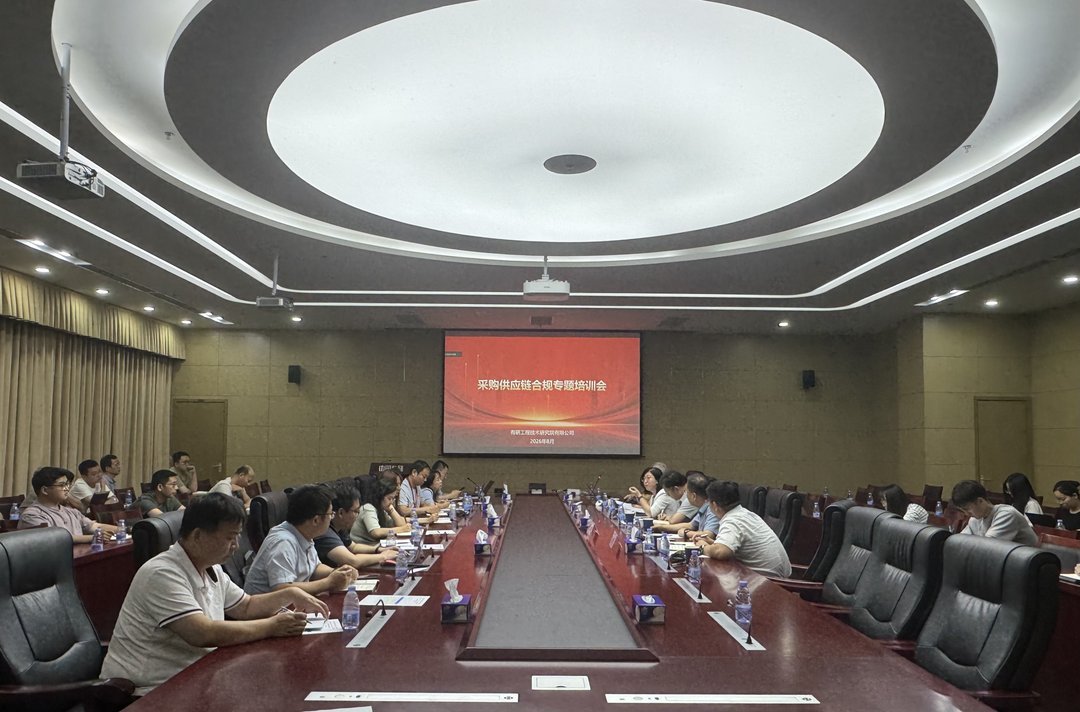
Source: GRINM
The move reflects a broader national trend in China: centralizing procurement governance, reducing leakage risks, and tightening control over strategic industrial supply chains—including rare earth-related materials and advanced manufacturing inputs.
REEx Insight: Procurement Control as Industrial Security
This is not routine administrative training. It is part of a deeper structural shift in China’s industrial system. In Great Powers Era 2.0™, procurement is no longer just a cost function—it is a national security and supply chain integrity tool. The emphasis on “penetrating supervision” signals an intent to track materials, contracts, and decision-making across multiple layers of suppliers and subcontractors.
For Western observers, the key implication is clear: China is building a system designed to minimize leakage of strategic materials, pricing intelligence, and technology flows while increasing state visibility over critical inputs—including rare earths and advanced materials.
While the West debates reshoring and diversification, China is refining the control architecture of its existing dominance.
Inside the Training: Compliance, Oversight, and Discipline
The training session featured multiple senior officials from GRINM’s operational and digitalization divisions. Key themes included:
- Interpretation of updated national procurement policies
- Review of current procurement management weaknesses
- Deployment of corrective and improvement measures
- Expansion of “penetrating supervision” across procurement cycles
Officials stressed that procurement must be managed across the entire lifecycle—from supplier selection to contract execution and delivery verification. A dedicated compliance module reinforced internal rules and clarified standardized workflows for procurement staff.
Anti-Corruption Pressure Intensifies
The institute’s disciplinary leadership issued a direct warning to procurement personnel, urging strict adherence to legal and ethical standards. Staff were instructed to:
- Maintain zero tolerance for corruption risks
- Follow procurement laws and internal regulations strictly
- Strengthen personal accountability in supplier interactions
This reflects China’s ongoing national campaign to reduce corruption risks in state-linked industrial procurement systems.
Strategic Message: Supply Chain as a Controlled System
The final message from senior management was unambiguous: procurement compliance is now central to operational stability, risk prevention, and high-quality development goals.
The institute emphasized that stronger enforcement and professionalization of procurement practices are essential to ensuring transparent, efficient, and tightly controlled supply chains.
REEx Connect: Key Organizations
- China General Research Institute for Nonferrous Metals (GRINM) – Parent organization overseeing procurement governance reforms
- GRINM Institute of Industrial Technology – Host of the compliance training session
- Wei Naiguang – Deputy General Manager, Operations & Digitalization Department, GRINM
- Hao Lei – Deputy General Manager, GRINM Institute of Industrial Technology
- Lin Zhongkun – Deputy Director, Marketing Department
- Yin Jiao – Deputy Party Secretary & Discipline Inspection Secretary
- Zhang Yong’an – General Manager & Deputy Party Secretary
Source Disclaimer: This news item originates from media affiliated with a Chinese state-owned enterprise system. The information, interpretations, and claims should be independently verified by external sources before use in commercial or policy decision-making.


0 Comments
No replies yet
Loading new replies...
Moderator
Join the full discussion at the Rare Earth Exchanges Forum →