
Highlights
- EO 122 creates a national framework to expand critical-mineral exploration and push nickel and copper toward domestic processing and higher-value manufacturing.
- Over 98% of Philippine nickel ore exports currently go to China, yet Manila is a U.S. treaty ally navigating competing industrial partnerships.
- A U.S.-Philippines MOU, Pax Silica, and the Luzon Economic Corridor signal Washington's effort to build alternative critical mineral supply networks.
- Philippine laterites may hold scandium alongside nickel and cobalt, raising the prospect of multi-product Ni-Co-Sc resource systems.
- EO 122 reflects a broader Great Powers Era 2.0 trend of resource-rich nations demanding larger shares of the industrial value chain.
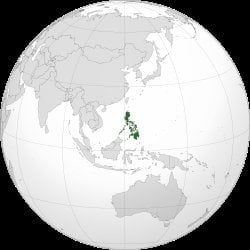
The Philippines wants to stop being merely the quarry and become part of the factory. President Ferdinand Marcos Jr. signed Executive Order No. 122 on August 18, creating a national framework to expand critical-mineral exploration, streamline permitting, and push nickel, copper and other resources toward domestic processing and higher-value manufacturing. EO 122 does not ban raw-ore exports. Instead, Manila is building the machinery to capture more value at home—a textbook development in what Rare Earth Exchanges® calls the Great Powers Era 2.0™.
REEx Insight: Great Powers Era 2.0 Comes to Manila
The old globalization bargain was straightforward: resource-rich countries exported commodities while established industrial powers captured much of the value through refining, technology and manufacturing.
Great Powers Era 2.0 is disrupting that bargain.
The Philippines joins Indonesia, Saudi Arabia, Malaysia, Argentina and other resource-rich states seeking to move up the value chain as critical minerals become instruments of industrial policy and geopolitical leverage per our thesis. Nations increasingly understand that possessing the ore is only the opening hand; processing, materials, intellectual property and manufacturing capture the larger economic prize.
The Philippines is particularly consequential. Industry figures put 2025 nickel production at 37.81 million dry metric tonnes, while Philippine investment officials say more than 98% of nickel ore and concentrate exports go to China. Yet Manila is a U.S. treaty ally. Washington is now building competing industrial architecture: a February U.S.-Philippines MOU covering critical minerals and rare-earth supply chains, Philippine participation in Pax Silica, the Luzon Economic Corridor and a proposed 4,000-acre New Clark City industrial hub spanning minerals, semiconductors, advanced manufacturing and AI.
This is Great Powers Era 2.0 in miniature: China possesses today's commercial gravity; America is attempting to shape tomorrow's network; Manila wants leverage over both.
Nine Million Hectares—and a Bigger Prize
Approximately 9 million hectares may hold mineral potential, but prospective ground is not reserves. Permitting, grades, metallurgy, infrastructure, Indigenous FPIC and capital remain hurdles. The sleeper opportunity is scandium. Philippine government researchers have demonstrated laboratory-scale recovery of nickel, cobalt and scandium from laterites. It is not yet a commercial resource, but it raises the possibility that Philippine laterites eventually become Ni-Co-Sc multi-product systems.
REEx Bottom Line: EO 122 is bigger than mining policy. Resource states are demanding a larger share of the industrial value chain, fragmenting yesterday's globalization model and creating new competing supply networks. That is the Great Powers Era 2.0 unfolding in real time.


0 Comments
No replies yet
Loading new replies...
Moderator
Join the full discussion at the Rare Earth Exchanges Forum →