
Highlights
- USA Rare Earth targets 6,400 tonnes per year of sintered NdFeB magnets at its Blacksburg, SC facility, with commissioning planned for 2028.
- Combined with Stillwater, USAR aims for 10,000 tonnes annually of U.S. magnets and 10,000 tonnes of metal and alloy capacity.
- USAR's broader platform integrates Serra Verde, Round Top, Wheat Ridge, LCM, and a 13.6% stake in Carester—each link carrying distinct execution risk.
- Carester's Caremag facility is still under construction and has never operated at scale, meaning USAR's access should not be treated as captive capacity.
- Stillwater commissioned its first magnet line in March 2025, but USAR has no prior history of commercial magnet manufacturing.
USA Rare Earth (Nasdaq: USAR) plans a 6,400-tonne-per-year sintered NdFeB magnet factory in Blacksburg, South Carolina, alongside 5,000 tonnes of metal and alloy capacity. Combined with Stillwater, USAR targets 10,000 tonnes annually of U.S. magnets and 10,000 tonnes of metal/alloy, with Blacksburg commissioning targeted for 2028. Those figures are genuine company targets—but investors should not confuse planned capacity with qualified commercial production.
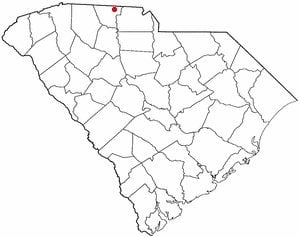
Blacksburg, SC
REEx Insight: USAR Is Building the Chain Before Proving Every Link
Blacksburg matters because metallization and alloy-making remain underappreciated Western bottlenecks between separated oxides and finished magnets. USAR's acquisition of Less Common Metals (LCM) gives it genuine commercial metal/alloy expertise.
The larger USAR proposition, however, has become extraordinarily ambitious: integrate Serra Verde in Brazil, develop Round Top, prove separation at Wheat Ridge, access Carester technology, expand LCM, and simultaneously scale U.S. magnet production. Trade press such as Creamer Media’s Mining Weekly promote the potential—which is important. And for investors, so are the risks.
Each link carries execution risk. USAR itself warns that the roughly $2.8 billion Serra Verde acquisition presents complex integration, financing, and operational risks. Round Top still lacks demonstrated commercial-scale mining and separation (and among old industry insiders, even more skepticism is expressed); Wheat Ridge is a demonstration facility, not proof of an operating industrial separation plant.
Carester could materially reduce that technical gap—but USAR is acquiring only 13.6%, not control. Carester's Caremag facility is itself under construction and has never operated at its planned 800-tpa NdPr, 500-tpa Dy, and 100-tpa Tb oxide scale. Its output will also serve a broader European ecosystem, meaning access should not be mistaken for captive USAR capacity.
Magnets Are the Final Exam
Stillwater commissioned its first line in March, but USAR acknowledges no history of commercial magnet manufacturing. Its disclosed process uses established sintered-NdFeB steps—hydrogen decrepitation, jet milling, pressing, sintering, grinding, and coating. Scaling that into competitive yields, customer-qualified parts, and reliable throughput is the test.
USAR is assembling perhaps America's broadest rare-earth industrial platform alongside MP Materials. Its opportunity is enormous precisely because the execution challenge is enormous.


0 Comments
No replies yet
Loading new replies...
Moderator
Join the full discussion at the Rare Earth Exchanges Forum →