
Highlights
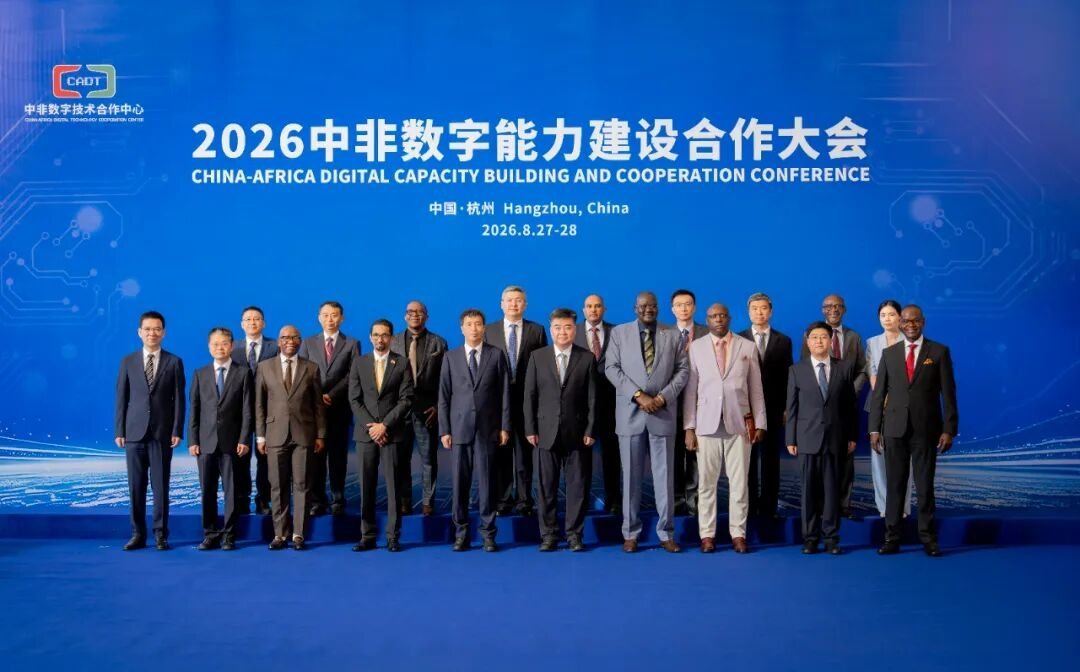
- China launched the China-Africa Digital Technology Cooperation Center at a Hangzhou conference attended by 300+ representatives from 18 African countries.
- Beijing extended zero-tariff treatment to all 53 diplomatically recognized African nations, with imports surging 23.5% year-over-year in May–June.
- China authorized Standard Bank and ICBC to operate an Africa-focused RMB clearing arrangement across 19 countries, easing trade settlement.
- The strategy integrates digital infrastructure, trade access, RMB finance, and industrial investment to build a commercial ecosystem around African critical minerals.
- The DRC illustrates the stakes: Chinese firms like CMOC, Zijin, and Huayou hold key mining positions as the West competes for influence.
China has added another piece to an increasingly integrated Africa strategy. At the August 27–28 China-Africa Digital Capacity Building Cooperation Conference in Hangzhou, Beijing formally launched the China-Africa Digital Technology Cooperation Center, convened the first China-Africa Digital Partnership Committee meeting, and brought together more than 300 government, corporate, and policy representatives from 18 African countries. The event matters beyond telecommunications: China is combining digital infrastructure, trade access, finance, and industrial investment across a continent containing some of the world's most important critical-mineral resources.
REEx Insight: Minerals Need Networks—and China Understands the Connection
The West often discusses African critical minerals as a mining problem. Beijing increasingly treats them as an ecosystem problem. A copper, cobalt, lithium, or rare-earth supply chain does not end at the mine gate. Modern mineral economies require electricity, telecommunications, cloud infrastructure, logistics, geological data, automated mines, processing plants, digital payments, and ultimately manufacturing. Helping build Africa's digital architecture therefore creates commercial relationships far beyond telecom.
Now layer trade policy on top.
Since May 1, China has extended zero-tariff treatment to imports from all 53 African countries with which it maintains diplomatic relations. Thirty-three least-developed African countries already had that treatment; the expansion brought another 20 countries into the regime, initially through a two-year preferential arrangement while broader economic-partnership agreements are negotiated. Chinese customs data subsequently showed imports from Africa reaching RMB193.8 billion during May and June, up 23.5% year over year.
Add another layer: China authorized Standard Bank and ICBC in June to operate an Africa-focused renminbi clearing arrangement spanning institutions across 19 countries, potentially making China-Africa trade and investment easier to settle directly in RMB.
Tariffs lower the border. Digital systems connect the economy. RMB infrastructure facilitates transactions. Chinese capital builds assets. African minerals feed industrial supply chains. That architecture should command Washington's and Brussels' attention. The Democratic Republic of Congo illustrates the stakes. China and the DRC recently deepened mining cooperation covering geological information, investment, and local processing, even as Washington pursues its own minerals partnership with Kinshasa. Chinese groups including CMOC, Zijin, and Huayou already occupy important positions there. The strategic contest is consequently migrating beyond who owns the mine. It is becoming a competition over who builds the commercial operating system around the mine.
Hangzhou Builds the Institutional Plumbing
The conference itself announced no major mineral transaction, mine acquisition, or rare-earth breakthrough. Its tangible developments were institutional: the new Digital Technology Cooperation Center, Digital Partnership Committee, training programs, and industry matchmaking. That distinction matters. This is capacity-building and relationship infrastructure, not evidence that China has suddenly secured new mineral resources. But supply chains are often won years before the first concentrate ships.


0 Comments
No replies yet
Loading new replies...
Moderator
Join the full discussion at the Rare Earth Exchanges Forum →