
Highlights
- Brazil's Congress approved R$7 billion in critical minerals policy, including a R$2 billion guarantee fund and R$5 billion in fiscal incentives for domestic processing.
- The legislation signals a shift from raw mineral exports toward building a full industrial ecosystem spanning separation, metals, alloys, and magnets.
- USA Rare Earth's merger with Serra Verde connects Brazil's ionic-clay deposits to a U.S.-aligned supply chain with a 15-year government-linked offtake agreement.
- An investment-screening council aims to attract foreign capital from the U.S., Europe, India, and China while retaining control over strategic assets.
- Analysts warn that announced capacity and reserve size are poor proxies for success—qualified downstream output is the true measure of Brazil's industrial ambition.
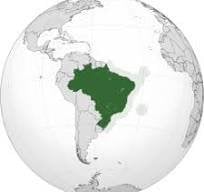
Brazil has plenty of rare earths. What it lacks is enough of the machinery between the mine and the magnet. Congress has approved a national critical-minerals policy offering R$7 billion (roughly US$1.4 billion) through a R$2 billion guarantee fund and R$5 billion in fiscal incentives aimed at domestic processing and transformation. The legislation awaits presidential action.
REEx Insight — Great Powers Era 2.0 Moves Downstream
The headline is not mining incentives. It is value retention—and strategic control.
This is precisely what REEx defines as Great Powers Era 2.0™: critical minerals are no longer simply commodities traded to the highest bidder. They are instruments of industrial power, defense security, and geopolitical leverage. The strategic contest increasingly occurs downstream, where ore becomes separated oxides, metals, alloys, and ultimately magnets.
Brazil therefore faces a choice. It can become one of the world's great mineral suppliers—or use its geology to build an industrial ecosystem.
The R$7 billion package pushes toward the latter, but money alone cannot manufacture capability. Solvent-extraction expertise, metallization, magnet production, qualified operators, and customers require years of commissioning and accumulated know-how. Investors should measure Brazil by qualified downstream output, not announced capacity or reserve size.
The proposed investment-screening council adds another Great Powers Era tension: Brazil wants American, European, Indian, and Chinese capital while retaining control over strategic assets. Poorly executed screening could deter investment; intelligently executed screening could prevent strategically important resources and technology from simply migrating into another country's value chain. The legislation explicitly establishes governance over strategic-mineral partnerships and transactions. (www12.senado.leg.br (opens in a new tab))
Serra Verde Makes the Contest Real
The timing is striking. USA Rare Earth (opens in a new tab) completed its combination with Serra Verde on September 3, connecting Brazil's producing ionic-clay resource to a planned U.S.-aligned chain spanning separation, metals, and magnets. SEC disclosures describe a 15-year U.S. government-linked offtake agreement and price floors covering NdPr, dysprosium, and terbium. (sec.gov (opens in a new tab))
Brazil is consequently becoming contested midstream territory in Great Powers Era 2.0.
The question is no longer who owns the ore. It is who separates it, who converts it to metal, who owns the processing technology—and where the magnet gets made.


0 Comments
No replies yet
Loading new replies...
Moderator
Join the full discussion at the Rare Earth Exchanges Forum →