
Highlights
- Europe's critical mineral targets face permitting delays, high energy costs, fragmented financing, and limited processing capacity.
- True supply-chain resilience requires separation, metallization, alloys, and magnet manufacturing—not just mining.
- China's advantage lies in a dense integrated industrial ecosystem, not merely reserves or refining share.
- The report's 'More with Less' strategy of substitution and recycling cannot replace building full industrial capacity.
- Western alternatives to Chinese rare earth processing remain thin, expensive, and insufficiently redundant.
Europe has targets. China has factories. A new report (opens in a new tab) by Dr. Alberto Claudio Tremolada, Vice President CT060 UNI Italian Standards Organization European Commission Workgroups and Expert Members, argues that permitting delays, high energy costs, fragmented financing, and limited processing capacity make European critical-mineral self-sufficiency unrealistic. The diagnosis is directionally strong; some of the numbers and language deserve sharper qualification.
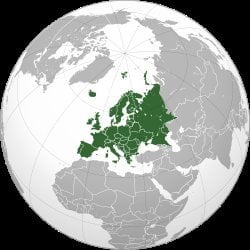
REEx Insight — Autonomy Is the Wrong Metric
The report's most important insight is buried beneath the mining discussion: Europe does not need geological independence; it needs functional supply-chain resilience. For rare earths, those are profoundly different things. A European mine does little for strategic autonomy if its concentrate still requires Chinese separation. Separation does little if Europe cannot produce metal and alloy. And magnet capacity means little without qualified Dy/Tb and other required inputs.
This is where REEx would push the analysis further. China's advantage is not simply reserves or refining share. It is the density of an integrated industrial ecosystem—separation, multiple purity specifications, metallization, alloys, magnet manufacturing, equipment, skills, and customers. That distinction matters enormously to investors. TREO is not supply security.
Where the Report Overreaches
Tremolada describes (opens in a new tab) China as having a “de facto monopoly” over rare-earth processing and assigns 100% control to heavy-rare-earth processing. That framing is becoming dated as ex-China Dy/Tb capacity emerges. The broader warning survives the correction: Western alternatives remain thin, expensive, and insufficiently redundant.
His proposed “More with Less” strategy—substitution, efficiency, recycling, and redesign—is sensible. But demand reduction cannot substitute for building industrial capacity.
Europe's problem is therefore harsher than insufficient mining. It needs molecules, metals, and magnets—not mining headlines.
Source: Tremolada, Critical Raw Materials: Integrated Market Analysis, Geopolitics, European Autonomy and Sustainability of the Mining Supply Chain.


0 Comments
No replies yet
Loading new replies...
Moderator
Join the full discussion at the Rare Earth Exchanges Forum →