
Highlights
- Yttrium prices exploded from under $8/kg to $120-$300+/kg in 2025—a 4,400% surge—after China imposed export licensing controls in April.
- The material is irreplaceable in jet engines, YAG lasers, semiconductors, and fuel cells, with few viable substitutes and highly inelastic demand.
- China's dominance in separation and refining—not mining—remains the bottleneck.
- Non-Chinese projects require 18-36 months to scale and qualify.
Yttrium, long considered a niche rare earth, became one of the most volatile strategic materials of 2025. Prices surged by as much as 4,400%, rising from under $8/kg to $120–$300+/kg in spot and short-term contract markets, following China’s April 2025 export curbs. The move triggered immediate supply panic across aerospace, semiconductors, energy systems, and defense manufacturing. Despite intermittent trade talks, late-2025 markets remain tight, with yttrium restrictions largely intact and prices elevated.
Table of Contents
What Yttrium Is—and Why It Matters
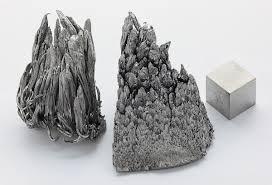
Yttrium (Y), often grouped with the heavy rare earth elements in processing and applications due to its chemical behavior, is traded primarily as yttrium oxide (Y₂O₃). Its value lies in thermal stability, ionic conductivity, and optical performance. It is essential for:
- Aerospace & Defense: Strengthening nickel-based superalloys in jet engines and turbines
- Lasers & Optics: Core material for YAG lasers used in industrial, medical, and defense systems
- Semiconductors & Electronics: High-k dielectrics, substrates, and phosphors
- Energy Systems: Solid oxide fuel cells and high-temperature ceramics
These uses have few viable substitutes without performance losses, making yttrium highly price-inelastic during supply disruptions.
Why Prices Skyrocketed
The primary driver was Chinese export licensing introduced by the Ministry of Commerce of the People’s Republic of China, which sharply reduced outbound shipments. Traders reported severe shortages and multi-month delays as licensed volumes fell and inventories thinned. The controls were widely interpreted by market participants as occurring amid escalating U.S.–China trade tensions. While some rare earth restrictions later eased, yttrium remained constrained.
Where Yttrium Comes From—and the Real Bottleneck
Yttrium occurs alongside heavy rare earths in ion-adsorption clays and select hard-rock deposits. However, separation and oxide refining—not mining—determine supply. China dominates this processing stage. Outside China, capacity remains limited and slow to qualify, often requiring 18–36 months even when feedstock is available.
Market Response—and Its Limits
Projects in South Africa, including efforts by RainbowRare Earths, aim to provide non-Chinese supply. In the United States,ReElement Technologies and others are pursuing domestic yttrium oxide production using modular separation and recycled feedstocks. These efforts are credible but insufficient to stabilize prices in the near term.
REEx Takeaway
Yttrium’s 2025 surge is not speculative froth. It is a case study in managed scarcity driven by policy, processing concentration, and low short-term elasticity. Until non-Chinese separation scales meaningfully, volatility—and strategic vulnerability—will persist.
**
©!-- /wp:paragraph -->


0 Comments