
Highlights
- India's parliamentary committee recommends targeted budgetary support for IREL to accelerate domestic rare earth exploration.
- This recommendation is in response to China's tightening export controls and global supply chain vulnerabilities.
- India's Geological Survey has initiated nearly 200 rare earth element (REE) projects.
- IREL operates with a capacity of 600,000 tonnes, yet critical gaps remain in:
- Separation chemistry
- Magnet manufacturing
- Radioactive byproduct management
- The recommendation indicates geopolitical intent rather than a commercial breakthrough.
- India aims for supply chain optionality but is still years from producing magnet-grade materials at scale.
India’s parliamentary nudge to strengthen IREL (India) lands at a moment when rare earths are no longer an abstract industrial policy talking point but a live geopolitical pressure point. The Standing Committee on Coal, Mines, and Steel’s (opens in a new tab) recommendation—reported via Press Trust of India and syndicated by Business Standard—urges targeted budgetary support to accelerate domestic rare earth exploration and mining. On its face, the call is sober, incremental, and overdue.
Table of Contents
The Grain of Truth Beneath the Bureaucracy
What’s notable is not the recommendation itself, but why it’s happening now.
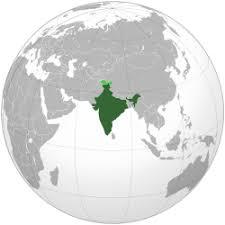
The factual core is solid. IREL remains India’s only active miner and refiner of rare earth ores, operating under the Department of Atomic Energy due to uranium- and thorium-bearing mineral streams. India’s Geological Survey has indeed ramped up exploration—nearly 200 REE projects over three years—while IREL operates separation and refining assets in Odisha and Kerala with a reported capacity of roughly 600,000 tonnes per year of associated heavy minerals.
Equally accurate is the macro framing: rare earths are indispensable to defense systems, EV motors, wind turbines, and electronics—and difficult to extract economically. India’s import dependence, particularly on downstream processing and magnet-grade materials, is real.
Where the Story Softens Reality
What the article doesn’t confront is more revealing than what it includes. Parliamentary “urging” is not execution. Budgetary support alone does not resolve India’s structural constraints: radioactive byproducts, slow permitting, limited solvent extraction expertise, and—critically—the absence of a domestic rare earth magnet industry at scale.
There is also a subtle optimism bias embedded in phrases like “prioritise exploration” and “international collaboration.” India has discussed both for over a decade. Progress has been measured in committees formed, not magnets produced.
The Strategic Subtext Investors Should See
This is less a breakthrough than a signal. India is reacting to China’s tightening grip on rare earth exports and watching how the U.S., Japan, and Europe weaponize industrial policy. The parliamentary panel is effectively saying: we can no longer afford institutional drift.
For global investors and policymakers, the takeaway is clear. India wants optionality in the rare earth supply chain—but remains years away from being a true alternative source for magnet-grade materials. Until processing, separation chemistry, and downstream manufacturing are tackled head-on, IREL’s expansion will matter more geopolitically than commercially.
India is waking up. The market should stay awake—but cautious.
© 2025 Rare Earth Exchanges™ – Accelerating Transparency, Accuracy, and Insight Across the Rare Earth & Critical Minerals Supply Chain.


0 Comments
Discuss this article