
Highlights
- Japan launches a feasibility test in January 2026 to extract rare earth-rich mud from 6,000 meters below the Pacific near Minamitorishima.
- The test will utilize the deep-sea vessel Chikyu to assess technical viability before any commercial operation.
- The project targets heavy rare earths like dysprosium and terbium, which are critical for defense technology.
- Economic viability, scalable processing, and environmental impact remain unproven, focusing on exploring long-term optionality rather than immediate output.
- While Japan seeks supply chain independence from China, true dominance requires advances in midstream processing and magnet manufacturing.
- Successful extraction alone won't break China's bottleneck without massive downstream investment.
Japan is preparing to test the limits of both geology and geopolitics. Beginning January 2026, researchers will attempt to extract rare earth–rich mud from 6,000 meters below the Pacific, near Minamitorishima, using the deep-sea vessel Chikyu. Reported by Nikkei Asia and NHK World, the project aims to assess whether seabed mud can become a viable rare earth element (REE) resource—and whether Japan can loosen China’s grip on the supply chain.
Table of Contents
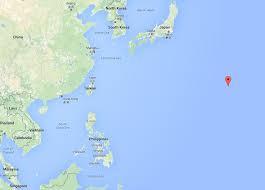
Minamitorishima
Minamitorishima (Marcus Island) is a remote Japanese coral atoll in the Pacific, famous as Japan's easternmost land and its only territory on the Pacific Plate, strategically important for its vast Exclusive Economic Zone (EEZ) rich in resources, and notable for its small size (~1.5 km²) and unique saucer-like shape. Governed as part of Tokyo's Ogasawara Subprefecture, it's a scientific outpost with limited personnel, known for its biodiversity and status as a key observation point for Japan's maritime boundaries.
Beneath the Waves: What Japan Is Actually Testing
This is not commercial mining. It is a feasibility experiment led by Japan’s Cabinet Office and Japan Agency for Marine-Earth Science and Technology (opens in a new tab) (JAMSTEC). Newly developed pipes and mining equipment will retrieve mud within Japan’s exclusive economic zone. Researchers will then attempt to separate and analyze REE concentrations. Only if extraction proves technically reliable will Japan proceed to further trials, tentatively planned for 2027.
That distinction matters. As program director Ishii Shoichi correctly notes, material is not a “resource” until it can be extracted consistently and economically.
Solid Ground: What Holds Up Under Scrutiny
The reporting is accurate on several fronts. Japan does possess seabed mud with elevated concentrations of heavy rare earth elements, including dysprosium and terbium—critical for magnets and defense technologies. The technical challenge of operating at 6,000 meters is real, and Chikyu is among the few vessels globally capable of such work.
It is also fair to frame this effort within Japan’s broader strategy to reduce dependence on Chinese REE processing and supply, especially after past export disruptions.
Where Hope Runs Ahead of Evidence
The leap from “test extraction” to “future resource” is speculative. No data yet proves economic viability, scalable processing, or acceptable environmental impact. Deep-sea mining remains unregulated at scale, environmentally controversial, and capital-intensive. Processing seabed mud into separated oxides—let alone magnets—remains an unresolved downstream challenge.
The Quiet Angle No One Should Miss
The subtle narrative tilt suggests supply security through discovery. In reality, China’s dominance lies not in geology but in midstream processing, separation chemistry, and magnet manufacturing. Even a successful extraction would not break that bottleneck without massive parallel investment.
Why This Matters to the REE Supply Chain
This project is about optionality, not output. It signals Japan’s willingness to fund long-horizon, high-risk alternatives while acknowledging technological uncertainty. For investors, it is a reminder: innovation moves faster than permitting, processing, and profits.
Sources: Nikkei Asia; NHK World, Dec. 23, 2025.
© 2025 Rare Earth Exchanges™ – Accelerating Transparency, Accuracy, and Insight Across the Rare Earth & Critical Minerals Supply Chain.


0 Comments