
Highlights
- New study reveals Arabian Peninsula's untapped potential for copper, lithium, and cobalt could help diversify global critical minerals supply chains currently dominated by China's 80% processing control.
- Research emphasizes that mining alone won't break supply chain dependence—China's dominance is industrial (refining/processing), not geological, requiring downstream investment beyond extraction.
- Saudi Arabia and Oman could become strategically important supplementary sources if exploration, processing capacity, and governance gaps are addressed through sustained industrial policy and capital.
In a wide-ranging review published in The Extractive Industries and Society (June 2026), lead author Muhammad Zaka Emad (opens in a new tab) of King Fahd University of Petroleum and Minerals (opens in a new tab), together with collaborators from regional and international institutions, examines whether the Arabian Peninsula could play a meaningful role in diversifying global critical mineral supply chains currently dominated by China.
Drawing on geological data, supply-risk analysis, and sustainability frameworks, the authors conclude that the Arabian Shield—spanning Saudi Arabia and Oman—hosts substantial untapped potential for copper, lithium, cobalt, nickel, phosphates, and associated critical minerals. While the study does not claim the region can replace China’s processing monopoly, it argues the Middle East could become a strategically important supplementary pillar if exploration, processing, and governance gaps are addressed.
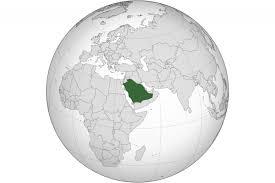
Table of Contents
Why Critical Minerals Matter—and Why Supply Chains Are Fragile
Critical minerals are essential inputs for electric vehicles, wind turbines, semiconductors, defense systems, and modern electronics. Demand is rising sharply as countries pursue energy-transition goals. The problem, as the study underscores, is concentration: more than 70% of global cobalt mining occurs in the Democratic Republic of Congo, while China controls roughly 80% of rare earth processing and a majority share of global critical-mineral refining capacity.
For lay readers, this means that even when minerals are mined elsewhere, they are often sent to China for chemical separation and refining—the most technically complex and strategically sensitive steps. This imbalance creates geopolitical, economic, and national-security risks.
Study Methods: A Broad Review, Not a New Discovery Campaign
This paper is a review article, not a field-drilling or feasibility study. The authors synthesize existing geological surveys, production statistics, policy documents, and sustainability case studies, combining:
- Global supply-risk assessments
- Geological analysis of the Arabian Shield (a Precambrian formation rich in metallic minerals)
- Case examples such as Saudi Arabia’s Ma’aden phosphate operations
- Policy frameworks including Saudi Vision 2030 and Oman’s mining strategy
- Emerging exploration tools such as AI-assisted remote sensing
The goal is to assess strategic potential, not to quantify near-term production volumes.
Key Findings: Opportunity Exists—but Mostly Upstream
The authors identify several important trends:
- The Arabian Peninsula hosts mineralized systems comparable to other major mining regions, particularly for copper, phosphates, and battery-related metals.
- Relative political stability and capital availability reduce some risks seen in higher-volatility jurisdictions.
- Government-led diversification efforts aim to reduce reliance on hydrocarbons and position mining as a “third pillar” of economic growth.
- Advanced exploration technologies could accelerate discovery while reducing environmental disturbance.
However, the paper implicitly reinforces a critical reality: most of the region’s potential lies upstream. Mining alone does not resolve supply-chain dependence if processing and refining remain external.
The China Question: Monopoly by Processing, Not Mining
One of the study’s most consequential acknowledgments—though not its central focus—is that China’s dominance is industrial, not geological. China built decades of chemical processing capacity, tolerated environmental costs, and absorbed losses that market-driven systems typically reject.
The Arabian Peninsula, as described, could diversify where minerals are sourced, but without large-scale investment in separation, refining, and downstream manufacturing, China’s midstream leverage remains intact. This distinction is crucial and often lost in public discourse.
Implications: Strategic Optionality, Not a Silver Bullet
If developed responsibly, the Arabian Peninsula could:
- Provide alternative sources of key minerals
- Reduce over-reliance on high-risk jurisdictions
- Align mining growth with ESG and circular-economy principles
- Attract Western and Asian partners seeking supply diversification
But the study also implies that realizing this vision would require industrial policy, workforce development, and sustained capital, not geology alone—points Rare Earth Exchanges™ often raises. And this is especially so with the announcement of the U.S. Pentagon joint venture with state-owned Ma’aden, along with a partnership with U.S.-based MP Materials.
Limitations and Open Questions
Several limitations deserve attention:
- The paper does not provide project-level economics or timelines.
- Processing and refining capacity is discussed conceptually, not operationally.
- ESG alignment is aspirational and dependent on enforcement, not policy statements alone.
- Geopolitical trade-offs and export-control dynamics are not fully explored.
In short, this is a strategic survey, not an execution roadmap.
Potential Without Power Is Not Security
This study contributes valuable context to the global critical minerals debate. It correctly identifies the Arabian Peninsula as an underexplored and geopolitically relevant region with long-term promise. But it also—perhaps unintentionally—reinforces a core truth: diversifying mining without rebuilding processing does not break China’s grip.
The Arabian Peninsula may become part of the solution—but only if upstream opportunity is matched by downstream ambition.
Citation: Emad, M.Z. et al. Global trends and untapped potential of critical minerals for a sustainable future in the Arabian Peninsula. The Extractive Industries and Society, Volume 26, June 2026, Article 101840. https://doi.org/10.1016/j.exis.2025.101840 (opens in a new tab)
© 2025 Rare Earth Exchanges™ – Accelerating Transparency, Accuracy, and Insight Across the Rare Earth & Critical Minerals Supply Chain.


0 Comments
Discuss this article