
Highlights
- China, Japan, and South Korea are establishing a strategic Arctic presence through scientific research stations and commercial activities on Svalbard, normalizing non-Arctic state involvement between 2015-2025.
- Meyer's thesis argues these nations are reshaping Arctic governance through practice rather than law, using science as a legitimizing mechanism to build long-term positioning.
- For critical minerals, the study reveals a key pattern: control over Arctic access precedes resource control, with implications for future rare earth competition and supply chain leverage.
As Arctic geopolitics intensify, a new master’s thesis (opens in a new tab) by Jacob Alexander Meyer offers a timely, structured examination of how China, Japan, and South Korea have become consequential—if still indirect—actors in the Arctic through their expanding footprint on Svalbard, (opens in a new tab) the Norwegian archipelago governed under the 1920 Svalbard Treaty (opens in a new tab).
For rare earth and critical mineral observers, the perspective might provide relevant context on how science, commerce, and diplomacy are increasingly fused as instruments of long-term strategic positioning.
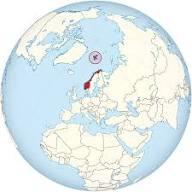
Table of Contents
Core Thesis and Assumptions
Meyer’s central argument is that Asian states’ Arctic policies are not abstract strategies but are actively expressed through concrete behavior on Svalbard. The thesis assumes that:
- Scientific research functions as a legitimizing mechanism, allowing non-Arctic states to establish a durable presence despite the treaty’s silence on science.
- States operate through a mix of classical realist logic (power, access, positioning) and constructivist norm-building, particularly by shaping accepted practices around research and cooperation.
- Svalbard serves as a microcosm of Arctic governance stress, where legal ambiguity enables incremental political change without treaty revision.
Key Findings
Between 2015 and 2025, China, Japan, and South Korea each expanded activities on Svalbard through:
- Research stations and scientific collaboration are framed as neutral but strategically persistent.
- Commercial and logistical engagement, often adjacent to shipping, resource awareness, and future economic optionality.
- Diplomatic signaling, emphasizing multilateralism while quietly testing governance boundaries.
Meyer finds that although these states share overlapping scientific interests, their cumulative presence has altered the political landscape of Svalbard by normalizing non-Arctic state involvement—effectively reshaping governance through practice rather than law.
Limitations and Gaps
The thesis is qualitative and interpretive, relying on policy analysis and case studies rather than quantitative trade or investment data. It does not directly model rare earth extraction, processing, or supply-chain economics, nor does it assess military dimensions. As a master’s thesis, its conclusions are theory-driven, not predictive.
Implications for Rare Earth and Critical Minerals
For Rare Earth Exchanges™, the study underscores a critical insight: control over Arctic access may precede control over Arctic resources. While Svalbard is not currently a rare earth production hub, the normalization of Asian state presence via science and commerce mirrors patterns seen elsewhere—presence first, leverage later. For Western policymakers, the findings highlight how governance frameworks can be reshaped quietly, with long-term consequences for Arctic resource competition, shipping routes, and strategic minerals access.
Disclaimer: This analysis summarizes an academic master’s thesis. Conclusions reflect the author’s interpretations and should be evaluated alongside additional empirical research and policy sources.
©!-- /wp:paragraph -->


0 Comments