
Highlights
- Rio Tinto is reportedly preparing a €1–1.5 billion lawsuit against Serbia after the government cancelled the Jadar Valley lithium project in 2022 following mass environmental protests.
- The scrapped project could have supplied up to one-third of Europe's lithium needs for EV batteries, positioning Serbia as a critical supplier in the clean-energy transition.
- The case highlights how regulatory reversals and political instability can disrupt critical minerals supply chains and deter foreign investment in strategically important resource projects.
An abandoned Serbian lithium project is back in the spotlight amid claims that mining giant Rio Tinto is preparing to seek €1–1.5 billion in compensation, according to reporting attributed to Serbia’s opposition leader and cited by Serbian Monitor (opens in a new tab). The Jadar Valley lithium project (opens in a new tab)—once touted as one of Europe’s most significant prospective lithium developments—was halted by Serbia’s government in 2022 after mass environmental protests. Now, a prominent opposition figure warns that the country may face a legal and financial reckoning. What follows is a careful parsing of what is known, what remains speculative, and why this episode matters for the critical minerals supply chain.
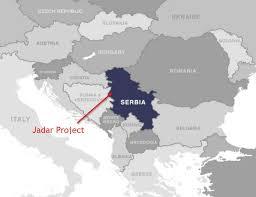
Table of Contents
A High-Stakes Claim in the Jadar Valley
Rio Tinto’s scrapped Jadar project was a multibillion-euro venture that could have positioned Serbia as a major supplier to Europe’s electric-vehicle battery industry. Dragan Đilas, leader of Serbia’s Freedom and Justice Party, claims the Anglo-Australian miner is preparing a lawsuit seeking up to €1.5 billion in damages for sunk costs and lost profits following the project’s cancellation.
Đilas says “reliable sources” indicate Rio Tinto intends to recover expenses incurred after Belgrade revoked exploration and development approvals. The scale of the figure is not implausible: Jadar was expected to produce roughly 58,000 tonnes per year of battery-grade lithium carbonate equivalent, a level that would have made it one of Europe’s largest lithium sources, according to prior Reuters reporting. Serbia’s government, responding to sustained public opposition, formally cancelled the project in early 2022, leaving Rio’s investment stranded and the legal status unresolved.
Promises, Protests, and Political Fallout
Public opposition to the mine was intense and sustained, with polls at the time suggesting overwhelming resistance to lithium mining in the Jadar region. Đilas alleges that senior Serbian officials—including President Aleksandar Vučić and former Prime Minister Ana Brnabić—gave Rio Tinto both written and verbal assurances that the project would proceed. He argues these commitments induced the company to invest and are therefore binding.
That claim sits at the heart of the political dispute. While verbal assurances can matter under certain legal doctrines, their enforceability under international investment law typically depends on evidence of reliance and formal authorization—details that remain undisclosed. Đilas frames the potential lawsuit as the consequence of political overreach: leaders allegedly courted a foreign investor, then reversed course under public pressure, potentially exposing the state to a massive payout.
He rejects any attempt to blame protesters, arguing that responsibility lies with government decision-makers. The result is a familiar Belgrade tableau: environmental activism, executive authority, and foreign capital colliding in a public blame game.
Between Fact and Spin: Parsing the Claims
Several facts are not in dispute. Serbia canceled the Jadar project in 2022. Rio Tinto did publicly state at the time that it was reviewing the legal basis of the government’s decision, signaling that a dispute was possible. From that perspective, the idea that Rio could pursue legal action—and that potential damages could exceed €1 billion given the project’s scale—is plausible.
What remains unverified is whether Rio Tinto has actually prepared or intends to file a claim. Thus far, the allegation rests entirely on Đilas’s statements. Rio Tinto has not confirmed any lawsuit, and Serbian officials have not publicly responded. Đilas’s political incentives are clear, and his framing places full responsibility on the current leadership. There is no clear evidence of misinformation, but there is obvious selective framing. Until a claim is formally filed or documentation released, this remains a political warning shot rather than a confirmed legal action.
Ripples in the Critical Minerals Supply Chain
Beyond Serbian politics, the implications are broader. Lithium is foundational to the EV and battery industries, and Europe’s ambition to secure a domestic supply suffered a serious setback when Jadar was cancelled—an action analysts have said could have eliminated a substantial share, often cited as up to one-third, of Europe’s future lithium supply under certain scenarios. The episode illustrates how regulatory reversals, local activism, and political miscalculation can abruptly choke off critical minerals supply even as demand accelerates.
If Rio Tinto ultimately seeks compensation, the message to investors will be clear: jurisdictions that reverse course on strategically important resource projects risk reputational damage and costly financial fallout. For Western economies trying to reduce dependence on China for lithium and rare earths, the Jadar saga underscores a hard truth—geology is only half the equation. Policy stability, legal clarity, and community consent are now equally decisive.
In the race to secure critical minerals, the road to a clean-energy future remains uneven when politics, profits, and public trust collide.
©!-- /wp:paragraph -->


0 Comments