
Highlights
- China established a national working group to accelerate the industrial-scale application of rare-earth-enhanced steel.
- The group brings together government agencies, steelmakers, rare earth producers, and research institutes.
- The initiative focuses on moving from laboratory results to large-scale commercial deployment.
- Emphasis is placed on cerium-iron alloys, high-end equipment steel, and corrosion-resistant structural applications.
- This state-backed systems approach aims to secure China's value-added dominance in advanced steel grades for infrastructure, heavy equipment, and defense applications.
- The initiative potentially raises barriers for Western steelmakers.
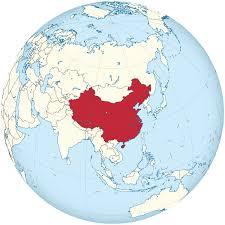
China has launched a new national working group aimed at accelerating the industrial-scale application of rare–earth–enhanced steel, signaling a coordinated effort to convert the country’s rare-earth resource dominance into downstream materials leadership.
According to China Iron and Steel Association, (opens in a new tab) the working group was formally established at a January 6 meeting in Beijing, co-organized with Inner Mongolia Baotou Steel Union Co Ltd, Shanghai University, and the association’s metallurgy science and technology development center.
The initiative brings together government agencies, steelmakers, rare earth producers, universities, and research institutes, and is structured around two technical subgroups:
- rare earth steel for engineering equipment, and
- rare earth steel for construction and structural applications.
Chinese officials describe the goal as creating a more standardized and systematic framework for rare earth steel development, with an emphasis on moving from laboratory results to large-scale, repeatable commercial deployment.
Gan Yong, (opens in a new tab) an academician of the Chinese Academy of Engineering, said China’s dual status as the world’s largest steel producer and a dominant holder of rare earth resources gives it a unique strategic advantage. While he acknowledged that the metallurgical mechanisms of rare earth elements in steel remain complex, he emphasized that China has accumulated extensive application data over years of experimentation.
Gan highlighted future priorities: low-cost, scalable demonstrations, the development of stable product families, and what he described as a potential “second generation” of low-cost, high-performance steel—a phrase that signals ambition rather than a finalized commercial breakthrough.
Another academy member, Huang Xiaowei, pointed to recent progress in cerium–iron alloy modifiers, rare earth steels for high-end equipment, and corrosion-resistant structural steel. Notably, cerium is a high-abundance rare earth element, suggesting a deliberate focus on using less strategically sensitive materials while still enhancing performance.
She called for tighter integration across the full industrial chain—upstream rare earth supply, midstream alloying and processing, and downstream applications—along with new product standards and application guidelines to enable wider adoption.
Why this matters for Western industry and investors
This announcement is not about a single product launch. It reflects a state-backed systems approach to materials innovation—linking rare earth extraction, alloy design, standards-setting, and end-use deployment. For the U.S. and Europe as Rare Earth Exchanges™ has chronicled, the implication is clear: China is working to lock in value-added dominance not just in rare earth processing, but in advanced steel grades used in infrastructure, heavy equipment, and defense-adjacent applications.
If successful, this effort could raise barriers to entry for Western steelmakers and reinforce China’s leverage in both traditional and next-generation industrial materials—particularly where cost, scale, and standards converge.
CISA
The China Iron and Steel Association (CISA) is China’s nationwide steel industry organization and functions as a state-aligned coordinating body rather than an independent trade association. Guided explicitly by Communist Party policies and authorized by government agencies, CISA acts as a bridge between the state and steel enterprises, helping shape industrial planning, capacity control, standards, trade policy, and international engagement. Its remit includes collecting and publishing official industry data, participating in policy and regulatory development, coordinating responses to anti-dumping and trade disputes, supervising certain production and export activities, and vetting major investments and technology initiatives. In practice, CISA serves as a quasi-regulatory instrument of China’s industrial policy, signaling government priorities and aligning the behavior of state-owned and major private steel producers at home and abroad.
Disclaimer: This news item originates from Chinese association, a state-affiliated organization. The claims and progress described should be independently verified through technical publications, commercial deployments, or third-party industry analysis.
©!-- /wp:paragraph -->


0 Comments