
Highlights
- Metalex Africa's $1.41M USTDA-funded feasibility study aims to expand Kazozu Mine output by 25,000 metric tons of copper-cobalt concentrates, testing whether Western firms can re-enter upstream mining in systems shaped by Chinese capital.
- Zambia anchors 70-75% of export earnings in copper and holds strategic cobalt deposits, positioning itself as a cornerstone jurisdiction for energy transition minerals despite limited rare earth production capabilities.
- China controls 70-80% of global cobalt refining and dominates Zambian processing infrastructure, but US firms have an opening to secure transparent, ESG-aligned upstream assets and diversify critical mineral supply chains.
Zambia sits at a strategic hinge in the global energy transition. Long known for copper, increasingly relevant for cobalt, and quietly prospective for a wider slate of critical minerals, the country is becoming a proving ground for whether Western firms can re-enter upstream mining in a system long shaped by Chinese capital, processing, and offtake. The Metalex Cobalt and Copper Production Expansion is not just a project—it is a test case.
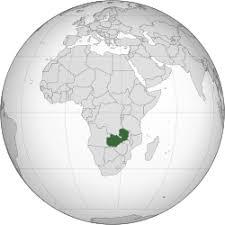
Table of Contents
A Project Designed for Scale—and Scrutiny
Metalex Africa Zambia Limited (opens in a new tab) has launched a U.S.-backed request for proposals (opens in a new tab) via the U.S. Trade and Development Agency (USTDA) (opens in a new tab) to advance a full bankable feasibility study for expanding operations at the Kazozu Mine in northwestern Zambia. Funded by a $1.41 million grant from the U.S. Trade and Development Agency, the study spans exploration, metallurgy, processing design, energy supply, logistics, ESG and climate resilience, offtake strategy, and financing.
The goal is to increase output by up to ~25,000 metric tons of copper–cobalt concentrates—an important distinction. This is upstream material, not refined metal. In today’s supply-chain politics, that distinction defines both the opportunity and the constraint.
Metalex, a Zambia-based operator with U.S. incorporation and African operations, represents the kind of hybrid firm U.S. policy increasingly favors: commercially driven, locally embedded, but aligned with Western transparency, financing, and governance norms.
Zambia Beyond Copper: What’s Real, What’s Early
Zambia is not a rare earth heavyweight—and claims otherwise should be treated skeptically. But it does host a credible portfolio of critical minerals beyond copper and cobalt:
- Manganese: Commercial deposits, particularly in Luapula and Central Provinces, with production largely in raw ore or simple concentrates.
- Nickel: Produced mainly as a copper byproduct; volumes are modest but real.
- Lithium: Pegmatite-hosted discoveries in southern Zambia (Choma Belt). Promising, but still early-stage.
- Graphite: Flake graphite occurrences in eastern Zambia; exploration to early development.
- Tantalum/Niobium (coltan): Artisanal to exploration-stage occurrences; not yet an export pillar.
- Rare Earth Elements: Carbonatite-linked prospects such as Nkombwa Hill show geological interest, but no defined reserves or operating REE mines.
The nuance matters: Zambia’s strategic value today lies in base metals and battery inputs, not magnet-grade rare earth separation.
Why Copper and Cobalt Still Anchor the Story
Copper remains Zambia’s economic backbone, accounting for roughly 70–75% of export earnings. Globally, it is indispensable to electrification—EVs, grids, renewables, data centers—and demand is projected to rise sharply through the 2030s.
Cobalt, meanwhile, is smaller in volume but outsized in strategic importance. Used in lithium-ion batteries, aerospace alloys, and defense applications, it is produced in Zambia as a byproduct of copper, lowering geological risk. Together with the DRC, Zambia sits atop the world’s most important cobalt-bearing belt.
In short: copper pays the bills; cobalt shapes geopolitics.
China’s Position: Not Absolute Control, but Structural Advantage
China’s presence in Zambia is deep, durable, and often misunderstood. Chinese firms do not own “everything,” but they shape the system.
- Major mining and smelting assets are operated or financed by Chinese state-linked companies, especially on the Copperbelt.
- Chinese-backed processors dominate intermediate stages—concentrates, blister copper, cobalt intermediates.
- Historically, much Zambian cobalt has flowed into China-dominated global refining chains, where China controls roughly 70–80% of cobalt chemical refining worldwide.
This is influence through processing, offtake, and finance, not just mine ownership. Zambia is now attempting to retain more value domestically—including cobalt sulfate refining—but China remains the incumbent processor of scale.
Why U.S. Firms Can’t Sit This Out
For U.S. companies, Zambia offers something rare: scale without fragility. Compared with many resource jurisdictions, it has a relatively stable legal framework, a long mining history, and an explicit desire to diversify partners beyond China.
Strategically, Zambia aligns with U.S. priorities to:
- Secure copper for electrification and other uses.
- Diversify cobalt supply outside single-country dependence.
- Build transparent, ESG-aligned upstream assets.
- Lay groundwork for future non-Chinese refining and offtake.
Projects like Metalex matter not because they instantly displace China—they won’t—but because they re-anchor Western participation upstream, create bankable assets, and reopen pathways for alternative processing and offtake over time.
The Takeaway
Zambia is not the next rare earth superpower. It is something more concrete—and more useful: a cornerstone copper–cobalt jurisdiction at the heart of the energy transition. China remains deeply embedded, especially in processing, but the door is open—deliberately—for U.S. firms willing to engage early, seriously, and commercially.
Metalex’s USTDA-backed expansion is exactly the kind of project where that engagement can begin. See the RFP (opens in a new tab).
© 2026 Rare Earth Exchanges™ – Accelerating Transparency, Accuracy, and Insight Across the Rare Earth & Critical Minerals Supply Chain.


0 Comments