
Highlights
- China's Yuecheng model embeds Communist Party committees directly into industrial chains to address overcapacity by engineering domestic demand at the city level rather than by slowing production.
- Sector-specific Party committees coordinate municipal procurement, financing, R&D, and urban deployment of integrated circuits, drones, and medical devices—driving internal demand for rare earths.
- Western supply-side strategies face a coordinated demand-creation system in which Chinese cities become guaranteed customers, absorbing surplus and sustaining manufacturing dominance.
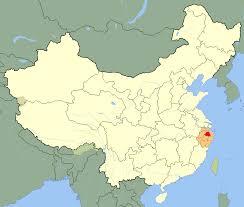
China is revealing how it plans to keep factories running despite global oversupply: by turning cities into engines of demand. A February 6 report from Zhejiang Province’s Shaoxing City (Yuecheng District) describes a governance model that embeds Communist Party organizations directly into industrial chains—linking production, innovation, finance, talent, and urban deployment. The goalis not just to make more products, but to ensure they are used,especially in strategic sectors like integrated circuits, medical devices, drones, and advanced manufacturing that depend heavily on rare earths and critical materials.
What’s Actually New Here
This is not routine party propaganda. The Yuecheng model formalizes what Rare Earth Exchanges™ has tracked since our launch in late 2024: China seeks to solve overcapacity by engineering demand at home (along with expansion abroad). Party committees are no longer distant overseers; they act as operational hubs coordinating land use, permitting, R&D, funding, talent housing, and—crucially—downstream deployment.
Yuecheng has established sector-specific industrial party committees for four priority chains: integrated circuits, low-altitude economy (drones), medical devices, and traditional rice wine. These committees actively orchestrate:
- Demand creation via municipal procurement and urban services
- Financing through large, state-backed industrial and innovation funds
- Commercialization by aligning universities, research institutes, and manufacturers
- Talent attraction through subsidized housing, rent-to-own programs, and executive residences
This is industrial policy with street-level execution.
The Strategic Subtext: Surplus Meets Structure
China faces a structural surplus problem across advanced manufacturing. Beijing’s answer is not to slow output, but to prime the pump internally—especially through urban greenification, digitization, and development of other targeted sectors such as life sciences. Integrated circuits are scaled through city deployment. Medical devices are pulled into healthcare systems. Drones move fromdemos to routine urban services. Even legacy industries like handcrafted rice wine are being modernized to stabilize employment and rural incomes.
Cities become living laboratories and guaranteed customers, absorbing surplus capacity while sustaining industrial momentum.
Why Rare Earths Are Implicated
This model has direct implications for rare-earth demand. Magnets, electronics, medical devices, drones, and smart infrastructure all rely on rare-earth materials. By institutionalizing downstream use—even if exports soften—China can stabilize domestic demand for rare earths and related materials, reinforcing its dominance in processing and manufacturing.
Implications for the U.S. and the West
The contrast is stark. Western strategies emphasize supply-side tools—subsidies, stockpiles, permits. China is pairing supply with coordinated demand creation. Competing with this model requires more than incentives. It requires aligned urban deployment, faster commercialization, and integrated downstream pathways—areas where Western systems remain fragmented.
Disclaimer: This article is based on reporting from Chinese state-affiliated media and government sources. The initiatives described should be independently verified, and their scalability and economic efficiency assessed using third-party data before drawing firm conclusions.


0 Comments
No replies yet
Loading new replies...
Moderator
Join the full discussion at the Rare Earth Exchanges Forum →