
Highlights
- Chevron quietly assembled 125,000 acres of lithium-bearing brine rights in the Smackover Formation across Texas and Arkansas, using direct lithium extraction instead of traditional mining.
- Multiple energy majors, including ExxonMobil (300,000+ acres), are racing to prove commercial viability of Smackover DLE, though no project has yet achieved sustained basin-scale economics.
- The Smackover strategy signals a larger trend: repurposing legacy hydrocarbon basins as critical-mineral infrastructure, leveraging existing wells, pipelines, and regulatory frameworks for strategic supply chain security.
Chevron didn’t call a press conference. It didn’t ring the opening bell. It simply went shopping—last year quietly assembling roughly 125,000 acres of lithium-bearing brine rights across northeast Texas and southwest Arkansas. The target is the Smackover Formation, and the tool of choice is direct lithium extraction(DLE). In plain English: Chevron is betting that an old oil rock canbecome a new battery rock—without digging a hole in the ground.
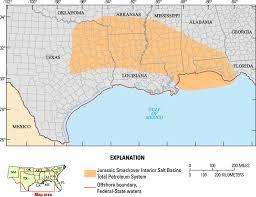
Smackover, Explained Like You’re at the Dinner Table
The Smackover Formation is a deep, ancient limestone layer stretching from Texas through Arkansas and into the Southeast. For nearly a century, it has been prized for oil, gas, and bromine. What matters now is the hot,salty water trapped inside it—brine that contains dissolvedlithium. Unlike hard-rock mining, extracting lithium from brine means pumping fluids to the surface, separating the lithium, and reinjecting what’s left. No pits. No evaporation ponds. Mostly pipes, chemistry, and patience.
When the Geology and the Story Actually Line Up
The fundamentals here are real. Smackover is laterally extensive, well characterized chemically, and among the most-studied subsurface formations in North America, thanks to decades of petroleum drilling. Lithium has been directly measured in these brines. Chevron’s acreage position is large by early-stage lithium standards, and DLE is widely viewed as the only viable extraction method in the humid U.S. South.
Chevronis is also not alone. ExxonMobil has disclosed more than 300,000 net acresof Smackover brine rights in Arkansas and has reported production of battery-grade lithium at pilot scale. Standard Lithium, partnered with Equinor, has advanced a southwest Arkansas project through definitive feasibility. This is no longer a whiteboard exercise.
The Awkward Chapter: Execution
Here’s the unglamorous truth. No Smackover DLE project has yet proven sustained, basin-scale commercial economics. Not Chevron’s. Not Exxon’s. Not anyone’s. DLE works in principle. Whether it works cheaply, repeatedly, and at an industrial scale remains unresolved.
Chevron’s entry reduces financial risk, not technical risk. History suggests supermajors often move deliberately—sometimes too deliberately—while smalleroperators iterate faster. Skeptics who argue this is a subsidy-dependentniche may be right on cost curves, but they miss a larger pattern: strategic supply chains routinely accept higher costs when security, resilience, and domestic control matter.
Why This Matters Beyond Lithium
For Rare Earth Exchanges™ readers (and remember we are looking beyond the elements to critical minerals), this is the deeper signal. Smackover shows how legacy hydrocarbon basins are being reinterpreted as critical-mineral infrastructure—leveraging existing wells, pipelines, power, and regulatory familiarity. Today it’s lithium. Tomorrow it could be co-produced critical elements, including rare earths, where chemistry and scale align.
Chevron didn’t buy headlines. It bought optionality.


0 Comments
No replies yet
Loading new replies...
Moderator
Join the full discussion at the Rare Earth Exchanges Forum →