
Highlights
- German research initiative NAFTech is developing an axial-flux synchronous reluctance motor (AF-SynRM) that eliminates rare-earth permanent magnets, combining compact torque density with a magnet-free design through 2027.
- The project claims up to 50% material cost reduction, though actual savings remain unproven at automotive scale, as substitution often redistributes costs to copper, electrical steel, or inverter complexity.
- Magnet-free motor research represents a credible hedge rather than a displacement threat to rare earth magnet markets, likely targeting cost-sensitive vehicle segments before challenging premium platforms reliant on NdFeB magnets.
A German government-funded research initiative (opens in a new tab) called NAFTech is developing an axial-flux electric motor that eliminates rare-earth permanent magnets. The project announced (opens in a new tab) in Elective—“Sustainable Axial-Flux Machines Considering Tolerance-Affected Manufacturing Technologies”—is led by Production Engineering of E-Mobility Components (PEM) at pubic research university RWTH Aachen (opens in a new tab), in collaboration with the Institute for Electrical Energy Conversion at the University of Stuttgart (opens in a new tab) and FAPS at FAUErlangen (opens in a new tab). The two-year program (2025–2027) seeks to combine the compact torque density of axial-flux machines with the magnet-free design of synchronous reluctance motors.
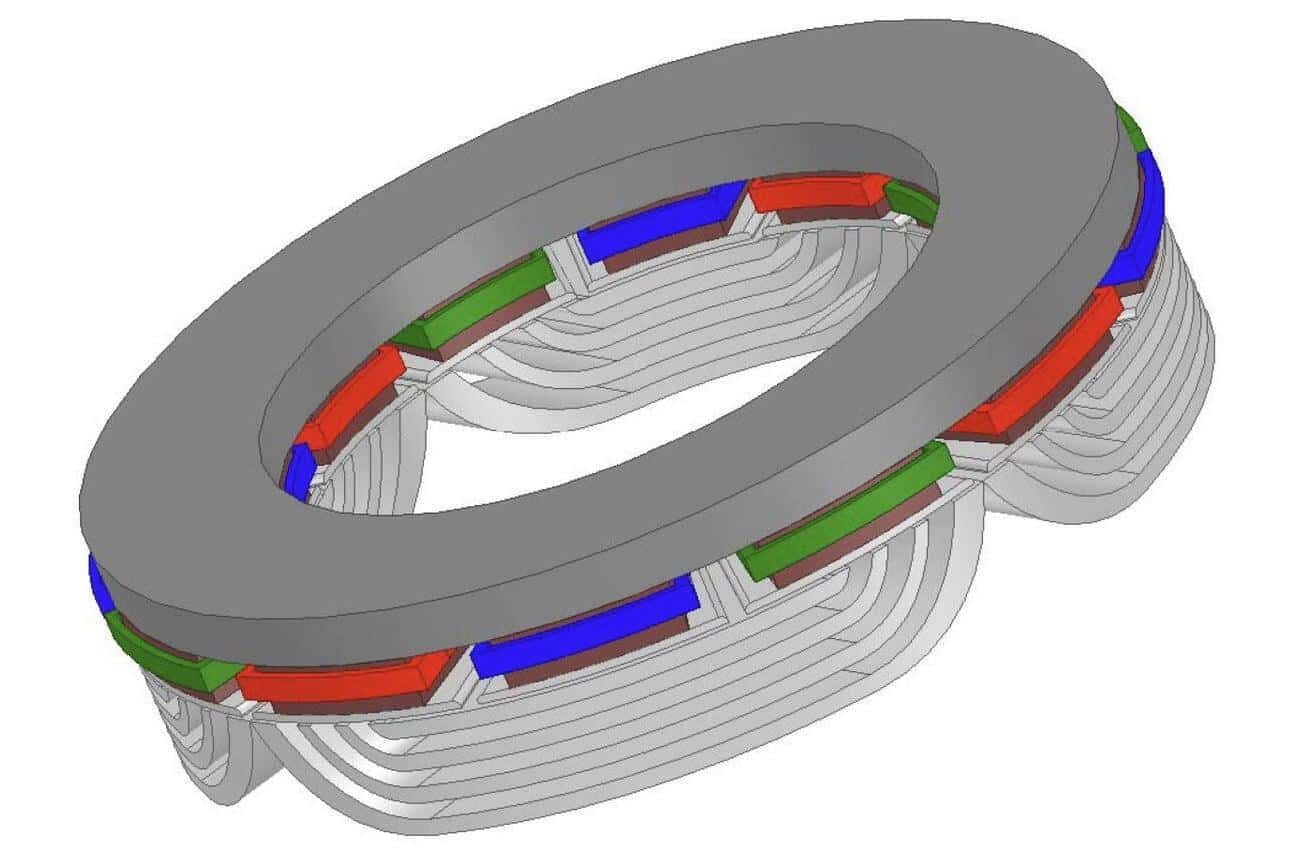
Rare Earth Exchanges™ take: Germany-based engineers are attempting to build a powerful EV motor without relying on neodymium-based magnets. That matters because most high-performance electric vehicles today use NdFeB permanent magnets that contain rare-earth elements.
According to Professor Achim Kampker, Head of PEM (opens in a new tab) “Axial flow machines are currently characterized by relatively low production volumes, manufacturing processes that are not yet fully developed, and special requirements in terms of tolerances and design processes.”
Where the Engineering Case Holds
The technical foundation is sound. Radial-flux synchronous reluctance machines (RF-SynRM) already operate without magnets but often trade off torque density and packaging efficiency. Axial-flux machines deliver compact geometry and high torque density but typically rely on rare-earth magnets.
NAFTech’s axial-flux synchronous reluctance concept (AF-SynRM) attempts to bridge that gap. Its integrated approach—linking electromagnetic topology, tolerance-aware manufacturing, and partial demonstrator validation—is consistent with serious industrial research. There is no indication of technical misrepresentation in the project description.
Professor Achim Kampker, Head of PEM

Where Optimism Outpaces Evidence
Several investor-relevant caveats deserve emphasis as this is early stage:
- Claims of “up to 50% material cost reduction” hinge on magnet cost being the dominant variable. In many EV systems, magnets are significant but not singular cost drivers.
- Magnet elimination may increase copper mass, electrical steel complexity, or inverter sophistication. Substitution often redistributes cost rather than eliminating it.
- Axial-flux production remains far less industrialized than radial-flux manufacturing, which benefits from decades of tooling, scale, and supply-chain maturity.
Most importantly, this is a research project—not a commercial production roadmap. Torque-density parity, efficiency across duty cycles, thermal robustness, and OEM qualification remain unproven at automotive scale.
The Rare Earth Demand Reality
Magnet-free motor research tends to accelerate during periods of rare-earth price volatility. Historically, such innovation has created design options rather than wholesale displacement. High-performance EVs, aerospace systems, and defense platforms prioritize efficiency and power density—domains where NdFeB magnets remain structurally advantaged.
If AF-SynRM succeeds, it is more likely to gain market share in cost-sensitive or smaller-vehicle segments before challenging premium platforms.

Source: IEEE Xplore
Why REEx Readers Should Care
NAFTech reinforces a central supply-chain truth: rare earth demand is elastic, but not infinitely so. Geopolitical pressure and price spikes stimulate substitution research. Yet system-level tradeoffs determine adoption.
For now, magnet-free axial-flux machines represent a credible hedge—not a collapse thesis—for rare earth magnet markets.


0 Comments
No replies yet
Loading new replies...
Moderator
Join the full discussion at the Rare Earth Exchanges Forum →