
Highlights
- Tungsten prices hit record highs in January 2026 as China’s export licensing regime tightened global supply, exposing structural vulnerability in manufacturing sectors dependent on this critical mineral with unique properties.
- China dominates both mining (80%+ global production) and chemical processing of tungsten, controlling the entire value chain from concentrate to carbide—giving Beijing strategic leverage beyond raw material extraction.
- Kazakhstan’s Cove Capital–Tau-Ken Samruk joint venture announced a 1.4 million tonne tungsten project targeting 12,000 tpa output, but strategic independence requires building competitive downstream refining capacity, not just mining scale.
Tungsten, a critical mineral, is not glamorous, but it is indispensable. It has the highest melting point of all metals (3,422°C), extreme density, and exceptional hardness when alloyed as tungsten carbide. It is foundational to machine tools, drill bits, mining equipment, aerospace components, turbines, armor-piercing munitions, and advanced electronics.
When tungsten supply tightens, manufacturing tightens with it. In January 2026, Reuters reported tungsten prices hitting record highs, with ammonium paratungstate (APT)—the primary chemical precursor—surging as buyers reacted to China’s expanded export licensing regime. That price move was not speculative froth; it reflected structural vulnerability in global supply.
Who Mines It — And Who Controls the Chemistry
Mining remains heavily concentrated. According to U.S. Geological Survey data (2022–2024 range), China accounts for roughly 80%+ of global mined tungsten production. Vietnam is a distant second, followed by Russia and several smaller producers, including Bolivia, Rwanda, Austria, Spain, and Portugal.
But mining volume alone does not confer leverage. Processing does.
China dominates the chemical conversion stack: concentrate → APT → tungsten oxide → metal powder → carbide. This midstream and downstream integration gives Beijing pricing and policy influence far beyond its mining share alone.
Vietnam’s Nui Phao complex is strategically significant precisely because it houses one of the largest APT facilities outside China. Western governments have shown concern about potential Chinese strategic interest in that asset—an implicit acknowledgment that refining capacity is the real chokepoint.
In February 2025, China introduced additional export licensing controls on tungsten and related materials. While not a blanket ban, the permitting framework effectively inserted a regulatory throttle into global supply. The 2026 price spike is a predictable outcome of that architecture.
Kazakhstan’s Big Swing: Scale Meets Execution Risk
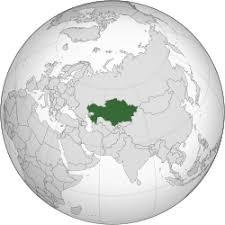
The Cove Capital (opens in a new tab) Kaz–Tau-Ken Samruk (opens in a new tab) joint venture announced (opens in a new tab) February 13, 2026, cites 1.4 million tonnes of WO₃ (JORC-compliant) and planned output of 12,000 tonnes per annum—roughly 15% of current global production. On paper, that scale is credible relative to global output estimates.
What is less certain is the timeline and downstream integration. A 12,000 tpa mine does not automatically translate into strategic independence unless Kazakhstan successfully builds competitive APT and refining capacity. If output leaves as concentrate, value—and leverage—leaks downstream.
Recent news from the ventures leans heavily on geopolitical framing and government backing. The resource figures appear technically grounded. The strategic narrative, however, assumes flawless execution in a capital-intensive, technically demanding market that has historically been prone to cost overruns and price cyclicality.
For investors, the message is clear: tungsten security will be won or lost in refineries, not press conferences.
About Tau-Ken Samruk
Tau-Ken Samruk is the national mining company of Kazakhstan, overseeing the efficient development of the country’s mineral resources. Committed to innovation and sustainability, Tau-Ken Samruk collaborates with domestic and international partners to enhance the competitiveness of Kazakhstan’s mining sector and support economic growth.
Cove Capital LLC
Cove Capital, founded in 2015, is a mining-focused firm with its head offices in New York and Melbourne, Australia. Since 2018, the company has concentrated on critical minerals—identifying, investing in, and developing projects that support U.S. and allied supply chains. Under the leadership of Pini Althaus, Cove Capital brings deep sector knowledge and hands-on development experience across exploration, mining, processing, and offtakes.


0 Comments
No replies yet
Loading new replies...
Moderator
Join the full discussion at the Rare Earth Exchanges Forum →