
- Traxys announces a $1 billion investment in Uzbekistan's critical minerals sector targeting 150 tons per year of tungsten and molybdenum, but key technical specifications, ore grades, and processing routes remain undisclosed.
- The deal represents a structured supply-chain financing strategy rather than traditional mining, as Traxys leverages its specialty metals trading platform to diversify Western sourcing away from China's 80% tungsten market dominance.
- Until independent reserve verification, metallurgical data, and bankable feasibility studies emerge, this remains a framework agreement requiring close monitoring of processing integration, offtake geography, and capital structure.
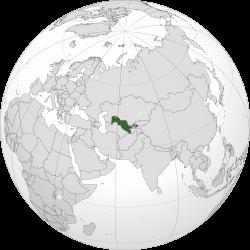
On February 18 in Washington, Shavkat Mirziyoyev (opens in a new tab) met with U.S. business leaders, culminating in a headline announcement: Traxys intends to invest $1 billion into Uzbekistan’s critical minerals sector (opens in a new tab). The agreement references tungsten, molybdenum, and potential black shale deposits, alongside expanded cooperation with Navoiyuran State Enterprise (opens in a new tab) and the Uzbekistan Plant of Technological Metals (opens in a new tab). A Traxys representative office in Tashkent is reportedly imminent, with technical delegations preparing next steps.
The headline production target: 150 tons per year.
For Rare Earth Exchanges™ readers, the issue is not whether this matters — but what, precisely, it represents.
The $1 Billion Question: Scale, Scope, Substance
The announcement immediately raises technical and financial questions:
- 150 tons per year of what? Tungsten concentrate? Ammonium paratungstate (APT)? Molybdenum oxide? Rare earth intermediates?
- Is the $1 billion figure firm project-level CAPEX, structured offtake-backed financing, or a high-level investment ceiling?
- Does the plan include downstream separation, metallization, alloying, or strictly upstream extraction?
In specialty metals, tonnage without specification is narrative, not data.
For context, according to the U.S. Geological Survey Mineral Commodity Summaries, global tungsten mine production typically ranges between 80,000 and 90,000 metric tons annually, with China accounting for roughly 80% of supply.
If Uzbekistan scales meaningful output, it could diversify Western sourcing.
But 150 tons — depending on product form — is modest in global mining terms unless referring to high-purity specialty material.
Why Traxys? Follow the Capital, Not the Ore
Traxys is not a traditional miner. It operates as a global trading, logistics, and financing platform embedded in specialty metals supply chains. Industry reporting from outlets such as Fastmarkets and S&P Global has long noted Traxys’ role in structuring long-term offtake agreements paired with project finance — particularly in tungsten, ferroalloys, and battery metals.
That history suggests this move may resemble a structured supply-chain financing strategy more than a vertically integrated mining build-out.
If accurate, the Uzbekistan initiative may be less about owning geology and more about securing diversified supply flows aligned with Western industrial demand.
Uzbekistan’s Resource Potential: Real — But Uneven
Uzbekistan is historically known for uranium and gold production. Multilateral institutions, including the World Bank and the Asian Development Bank, have highlighted the country’s efforts to modernize mining governance and attract foreign capital.
The proposed “cluster approach” in tungsten and molybdenum suggests industrial concentration — similar to regional development models seen in Kazakhstan.
However, black shale exploration adds complexity. Such deposits can host vanadium, molybdenum, and rare earth elements, but they are technically challenging, often capital-intensive, and environmentally sensitive.
Key unknowns remain:
- Ore grade and recoverability
- Processing flowsheet
- Refining location
- Export destinations
- Chinese processing exposure, if any
Without feasibility studies or reserve disclosures, valuation remains speculative.
Geopolitics in the Background
As the U.S., EU, and Japan push supply-chain diversification strategies away from China, Central Asia is re-emerging as a strategic corridor. Critical minerals frameworks increasingly identify secondary jurisdictions capable of scaling refractory metals production.
If Traxys secures long-term offtake from Uzbekistan, it could create a quiet but strategically meaningful node in Western-aligned tungsten and molybdenum supply chains. But investors should resist headline inflation.
Until resource statements (JORC or NI 43-101 equivalents), metallurgical data, and financing structures are disclosed, this remains a framework agreement — not yet a bankable industrial pivot.
What Rare Earth Exchanges Will Watch
- Independent reserve verification
- Processing route (APT, oxide, alloy?)
- Downstream integration plans
- Offtake geography
- Capital stack structure
- Realistic development timeline
The critical minerals race is no longer defined by press conferences. It is defined by metallurgical execution, financing discipline, and geopolitical durability.
Traxys brings capital sophistication. Uzbekistan brings geological potential.
The open question: Does this evolve into a specialty metals platform — or remain a diplomatic headline?
Rare Earth Exchanges will track closely.


0 Comments
No replies yet
Loading new replies...
Moderator
Join the full discussion at the Rare Earth Exchanges Forum →