
Highlights
- India's AI infrastructure depends on rare earth magnets that power data centers, EVs, robotics, and defense systems—but true independence requires mastering complex separation chemistry and processing, not just mining ore.
- China controls approximately 90% of rare earth separation capacity, the real strategic leverage point where industrial-scale solvent extraction and chemical expertise create the actual supply chain choke point.
- AI-driven data centers introduce a new structural demand driver for rare earth magnets beyond EVs and wind, making magnet security a critical component of India's national AI strategy and industrial policy.
A recent Businessline article (opens in a new tab) argues that India’s artificial intelligence ambitions depend on rare earth magnets that power data centers, electric vehicles, wind turbines, robotics, and defense systems. That central claim is correct. AI is not only software and chips; it is physical infrastructure. However, while the piece accurately describes China’s dominance in processing and the strategic nature of rare earth elements (REEs), it simplifies key supply chain constraints and leans heavily into resource nationalism without fully addressing the chemical and capital realities required to build true mine-to-magnet independence.
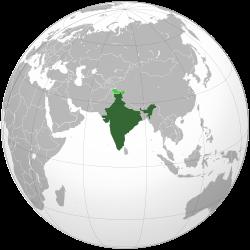
Why is India Important? The world’s most populated nation at this point (or soon passing China), soon to become the world’s fourth biggest economy and, importantly, the world’s largest democracy. India is the second leading English-speaking nation.
AI Runs on Code. It Also Runs on Magnets.
At India’s AI Impact Summit, (opens in a new tab) global technology leaders emphasized models, chips, and hyperscale data centers. Attention is correctly focused to the physical layer underneath: rare earth permanent magnets. Neodymium-iron-boron (NdFeB) magnets power the high-efficiency motors that drive cooling systems in data centers. They also sit inside EV drivetrains, wind turbines, robotics, and advanced defense systems.
This is accurate. Without neodymium (Nd), praseodymium (Pr), and in many cases dysprosium (Dy) and terbium (Tb), modern high-performance motors lose efficiency and power density. As AI scales into robotics and automation, magnet demand becomes structurally embedded in digital infrastructure.
The Real Choke Point: Processing, Not Ore
The article correctly cites roughly 390,000 tonnes of global rare earth production and highlights China’s dominance in refining, often estimated near 90 percent of separation capacity. This is the real strategic leverage point. Mining alone does not confer control. Separation does.
What the Businessline piece does not fully unpack is the complexity of that processing layer. Industrial-scale solvent extraction remains the only commercially proven method for large-scale rare earth separation. It requires dozens to hundreds of mixer-settler stages, chemical expertise, and years of operational refinement. Building mine-to-magnet capacity means mastering separation chemistry, metallization, alloy production, and magnet fabrication—not simply owning deposits.
India’s 6.9 million tonnes of reserves are meaningful. But reserves are not refined oxides, and refined oxides are not finished magnets. Investors should keep those distinctions clear.
Strategic Framing: Strong Case, Selective Optimism
Yes, rare earths are strategic rather than purely economic. A market valued at under $7 billion annually underpins trillions in downstream industries. That asymmetry explains policy activism in the United States, Australia, and India.
However, references to Greenland, Kenya’s Mrima Hill, and Ukraine risk blurring geology with supply chain readiness. Ore tonnage does not equal bankable, separated output. Many high-profile deposits lack financing, processing infrastructure, or downstream integration.
What’s Notable in the AI Context
The most important takeaway is the evolution of demand-side dynamics. Rare earth magnets have long been framed as “EV and wind metals.” AI-driven data centersintroduce another structural demand driver. Cooling systems, precisionautomation, and robotics all intensify magnet use.
For India, the implication is clear: if AI is a national strategy, magnet security becomes an industrial policy. But localization without deep processing capabilities exposes it to Chinese pricing benchmarks and chemical know-how.
The leverage in rare earths is chemical, not geological. The race is industrial, not rhetorical. Countries that master separation, metallurgy, and magnet manufacturing will shape the next phase of AI infrastructure. Those who stop at mining headlines will remain price takers in someone else’s system.


0 Comments
No replies yet
Loading new replies...
Moderator
Join the full discussion at the Rare Earth Exchanges Forum →