
Highlights
- Oak Ridge National Laboratory researchers developed a process to extract rare earth elements from mining waste, achieving over 92% purity using sequential leaching and two-stage solvent extraction with industry-standard chemicals.
- The study demonstrates that low-grade mine tailings containing just 2.4% total rare earths can be significantly upgraded into commercial-grade products, potentially creating a domestic supply source without new mining.
- This proof-of-concept addresses the rare earth supply bottleneck through innovative chemical processing rather than new extraction, though real-world validation and pilot-scale testing remain necessary next steps.
A new study led by Dong A. Kang (opens in a new tab) of Oak Ridge National Laboratory (opens in a new tab) (ORNL), working alongside Blake Trusty, Shailesh Dangwal, Benjamin T. Manard, Mariappan Parans Paranthaman, Ramesh R. Bhave, and Syed Z. Islam under UT-Battelle (opens in a new tab) and U.S. Department of Energy (opens in a new tab) support, presents a promising method to recover rare earth elements (REEs) from mine tailings—waste material left behind after mining. Published in Separation and Purification Technology, the team demonstrates that simulated tailings containing approximately 2.4 wt% total rare earths (TREEs)—about 0.6 wt% light REEs (LREEs) and 1.8 wt% heavy REEs (HREEs)—can be upgraded into solid products exceeding 92% purity using a carefully designed combination of sequential leaching and staged solvent extraction. In simple terms, material once considered waste may become a secondary domestic source of the metals that power electric vehicles, wind turbines, advanced electronics, and defense systems.
Study Methods: A Smarter Chemical Roadmap
The researchers designed an integrated “flowsheet”—a process roadmap—that combines chemistry and separation engineering:
Sequential Leaching
Instead of dissolving all elements at once, the team used controlled acidity adjustments (pH management) to selectively concentrate rare earths while leaving many impurities behind. Compared to a single-step acid leach, this approach roughly doubled the rare earth concentration in solution and reduced impurity levels by about half.
Donga Kang is a Postdoctoral Research Associate at Oak Ridge National Laboratory and Lead Author

Two-Stage Solvent Extraction
Usingindustry-standard extractants—Cyanex 572, tributyl phosphate(TBP), and D2EHPA—the researchers separated heavy rare earths (such as dysprosium and yttrium) from light rare earths (such as lanthanum, cerium, and neodymium). Final oxalate precipitation produced rare earth solids containing approximately 92.0 wt% HREEs (95.7 wt% TREEs) and 92.8 wt% LREEs (94.0 wt% TREEs).
Importantly, the experiments were conducted on a simulated mine-tailing concentrate modeled after material from the Pea Ridge iron mine in Missouri, avoiding complications from trace radioactive elements present in real tailings.
Key Findings and Why They Matter
- Low-grade tailings can be significantly upgraded.
- Heavy andlight rare earths can be separated with high purity.
- Sequential chemistry improves enrichment efficiency.
- Process optimization involves tradeoffs (e.g., increased extractant levels improve recovery but can co-extract impurities like calcium).
Note that this research suggests the U.S. may not need to rely exclusively on new mining projects. Existing mine waste could potentially serve as a domestic feedstock, reducing environmental disturbance while strengthening supply security. And there are, of course, commercial ventures up and running focusing on recycling from Phoenix Tailings and ReElement Technologies to Mkango Resources and Evolution Metals and Technologies, as well as others.
Study Limitations
This remains a proof-of-concept study using simulated material. Real mine tailings contain variability, potential radioactive elements, and complex scaling challenges not fully addressed here. Industrial solvent extraction systems require substantial capital investment, chemical handling infrastructure, and environmental compliance.
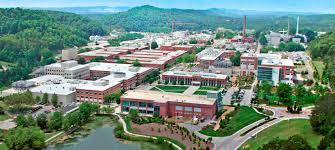
Oak Ridge National Laboratory
Implications and What Comes Next
The rare earth bottleneck today is not geology—it is chemical processing capacity. This study reinforces that innovative process design may unlock domestic supply from secondary resources. Next steps include validation with real tailings, pilot-scale demonstrations, techno-economic analysis, and environmental life-cycle assessment.
If proven scalable, such flowsheets could meaningfully support U.S. rare earth supply chain resilience.
Citation: Kang, D.A., Trusty, B., Dangwal, S., Manard, B.T., Paranthaman, M.P., Bhave, R.R., Islam, S.Z., et al. (2026). Process design for recovering rare-earth elements from mine tailings with low rare-earth concentrations via sequential leaching and solvent extraction. Separation and Purification Technology, 392, 137161. https://doi.org/10.1016/j.seppur.2026.137161 (opens in a new tab)


0 Comments
No replies yet
Loading new replies...
Moderator
Join the full discussion at the Rare Earth Exchanges Forum →