
Highlights
- Serra Verde's Pela Ema project entered commercial production in early 2024, targeting 6,500 tonnes per year of rare earth oxides by 2027 with $565M DFC financing and potential to double run-of-mine output before 2030.
- The company produces Mixed Rare Earth Carbonate (MREC), an intermediate product that requires separation into qualified magnet feed—a critical midstream step that determines true supply chain independence from China.
- Despite credible mine expansion plans and U.S. backing, Serra Verde's investability hinges on answering key questions about separation capacity, offtake contracts, pricing mechanisms, and the ability to scale hydrometallurgical processing.
Serra Verde’s (opens in a new tab) Pela Ema project (opens in a new tab) in Brazil is advancing as one of the most closely watched ex-China rare earth developments. The company says it began commercial production in early 2024, is targeting 6,500 tonnes per year of rare earth oxides by 2027, and may double run-of-mine output before 2030. Backed by substantial U.S. DFC financing, the story is compelling. But investors must distinguish mine expansion headlines from the harder midstream reality: separation, specifications, and qualified magnet feed.
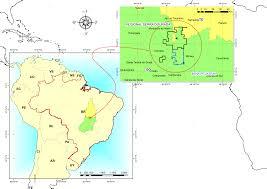
Source: Clientes Interativa
What the Public Record Confirms
Serra Verde states it entered commercial production at Pela Ema in early 2024. Phase I is framed as at least 5,000 tonnes per year of rare earth oxides (REO) over a 25-year mine life. In public commentary, management references a ramp toward 6,500 t/y by 2027 as optimization progresses.
The company also evaluates a Phase II expansion that “could facilitate” doubling run-of-mine (ROM) before the end of the decade. That phrasing is important: it signals resource potential and optionality—not a fully funded, engineered expansion plan.
Equally important: Serra Verde produces Mixed Rare Earth Carbonate (MREC). This is an intermediate product. It is not separated NdPr, Dy, or Tb oxide ready for magnet metal production.
The Financing Headline — and the Fine Print
Public announcements highlight a US$565 million loan agreement with the U.S. International Development Finance Corporation (DFC) to support optimization and expansion.
The Brazilian rare-earth producer secured the $565 million financing package announced on February 5-6, 2026. This package includes a $100 million top-up to an initial $465 million debt facility that was agreed upon in November 2025
The Ex-China Supply Chain Reality
Serra Verde’s strategic appeal lies in its ionic clay deposit, associated with heavy rare earth elements such as dysprosium and terbium. Yet production of MREC does not equal supply chain independence.
Reporting has noted that Serra Verde previously relied on Chinese processing arrangements during early commercialization and later shortened those agreements as alternative separation capacity is anticipated. The supply chain hinge remains: where is the MREC separated, under what specifications, and with what binding offtake commitments?
The Questions That Decide Value
Serious investors should ask:
- Where will separation occur—and at what contracted TREO grades and impurity thresholds?
- What volumes are contractually committed before 2027?
- What pricing mechanisms govern sales—index-linked, fixed, or floor-protected?
- If ROM doubles, can hydrometallurgical circuits, reagent supply, and water systems scale accordingly?
Mine expansion is visible. Midstream qualification is decisive.
Bottom Line
The production timeline, ramp target, and DFC backing are credible andverifiable.
But rare earth value is created at separation and qualification—not at the pit.
Serra Verde’s trajectory is real. Its investability hinges on the midstream bridge.
Until MREC becomes a qualified magnet feed at scale, the story remains promising—but unfinished.


0 Comments
No replies yet
Loading new replies...
Moderator
Join the full discussion at the Rare Earth Exchanges Forum →