
- Japan successfully retrieved rare-earth-rich mud from 6,000 meters below the Pacific near Minamitorishima, targeting heavy rare earths like dysprosium and terbium to counter China’s ~90% refining dominance.
- While the geological promise is real, commercial production faces significant hurdles: full-scale supply may not materialize until after 2028, with extraordinary capex/opex costs and unresolved environmental permitting for seabed mining.
- The true bottleneck remains refining capacity, not extraction—retrieving mud is only step one, and China’s structural advantage in solvent extraction and magnet manufacturing persists until Japan builds a competitive processing ecosystem.
Japan has retrieved rare-earth-rich mud from 6,000 meters below the Pacific near Minamitorishima in a bid to counter China’s dominance. The Financial Times frames it as a bold move to secure supply chains after new Chinese export curbs. Rare Earth Exchanges examines what is technically real, what is politically amplified, and what investors must understand about timelines, costs, and separation bottlenecks.
Japan’s Deep-Sea Gambit: Strategic Breakthrough or Strategic Theater?
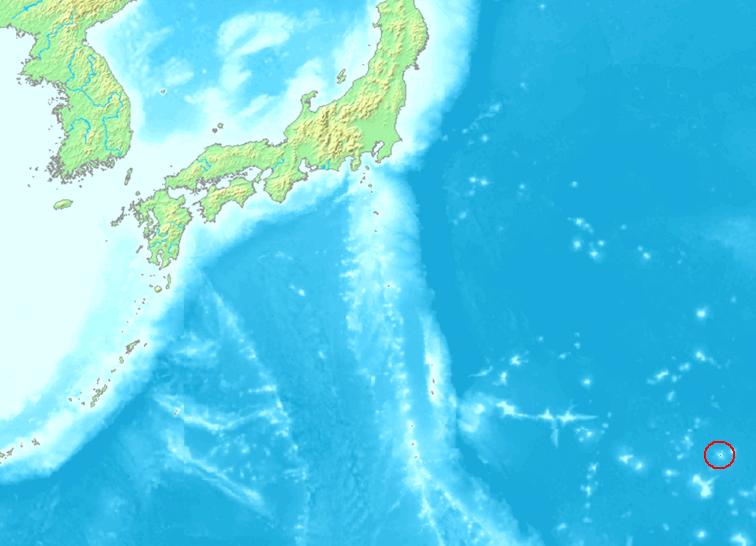
Japan has successfully retrieved rare-earth-bearing mud from the seabed near Minamitorishima. The location sits inside Japan’s EEZ. The mud reportedly contains high concentrations of heavy rare earth elements (HREEs) such as dysprosium, terbium, and yttrium.
The timing matters. China controls roughly 60% of global mining and over 90% of refining and magnet production. Recent export tightening reinforces long-standing geopolitical risk.
Those facts are real.
What is not real—yet—is anything near commercial production. And the FT does not put enough attention into those details.
The Geological Promise — and the Industrial Reality
Japan identified these deposits in 2011. A 350-ton-per-day mud lifting test is planned. Full-scale supply, according to officials, may not contribute meaningfully until after 2028.
That timeline is critical.
Industrial-scale rare earth separation remains dominated by solvent extraction (SX). It is capital-intensive, chemically complex, and environmentally sensitive. Deep-sea mud still requires dewatering, cracking, separation, refining, and magnet manufacturing.
Retrieving mud is not the same as producing separated oxides at scale.
The article acknowledges cost concerns, but again, underplays the processing bottleneck. Mining is only step one. Refining is where China’s leverage truly sits.
Heavy Rare Earths: The Strategic Prize
Japan’s interest centers on HREEs, where China’s dominance is strongest. If concentrations are economically viable, Minamitorishima could become a strategic hedge. However, economics matter. At 6,000 meters depth, capex and opex will be extraordinary. Environmental permitting risks remain unresolved globally for seabed mining.
¥40 billion ($256.6m USD) has already been spent on exploration. That is meaningful but modest compared to the billions required for full industrial deployment.
Diplomatic Signal vs. Supply Shock
The FT quotes industry voices suggesting the project may serve as geopolitical signaling. That interpretation deserves weight. Prime Minister Sanae Takaichi’s outreach to Washington aligns with broader U.S.-Japan frameworks for critical minerals cooperation. Signaling to Beijing is part of the strategy. But investors must separate political messaging from supply chain displacement.
No near-term volume replaces Chinese refined output.
What’s Notable for the Supply Chain
- Japan is prioritizing HREE security.
- Governments are willing to underwrite extreme extraction methods.
- Refining capacity remains the true chokepoint.
- Seabed mining is shifting from theory to pilot scale.
This is not ashort-term solution. It is a long-durationhedge.
The real question is not whether Japan can lift mud. It is whether Japan can build a competitive refining and magnet ecosystem to match it.
Until then, China’s structural advantage persists.


0 Comments
No replies yet
Loading new replies...
Moderator
Join the full discussion at the Rare Earth Exchanges Forum →