
Highlights
- Baogang Group is shifting from equipment-level automation to a unified “mine brain” platform, with 28 major pieces of equipment at Baiyun Iron Mine already upgraded for remote control.
- Current digitization remains fragmented across data silos; Baogang aims to integrate geological modeling, production scheduling, equipment monitoring, and financial metrics into one system.
- The transformation includes domestic substitution of foreign mining components and predictive maintenance, reflecting China’s broader industrial policy on digitalization and supply chain control.
Baogang Group, one of China’s largest state-owned steel and mining enterprises, says it is entering a second phase of digital transformation: shifting from equipment-level automation to a unified, system-wide “mine brain” platform designed to manage operations across its iron ore assets. How far has the state-owned enterprise really gone? The vision is ambitious, but what’s the delta between vision and reality?
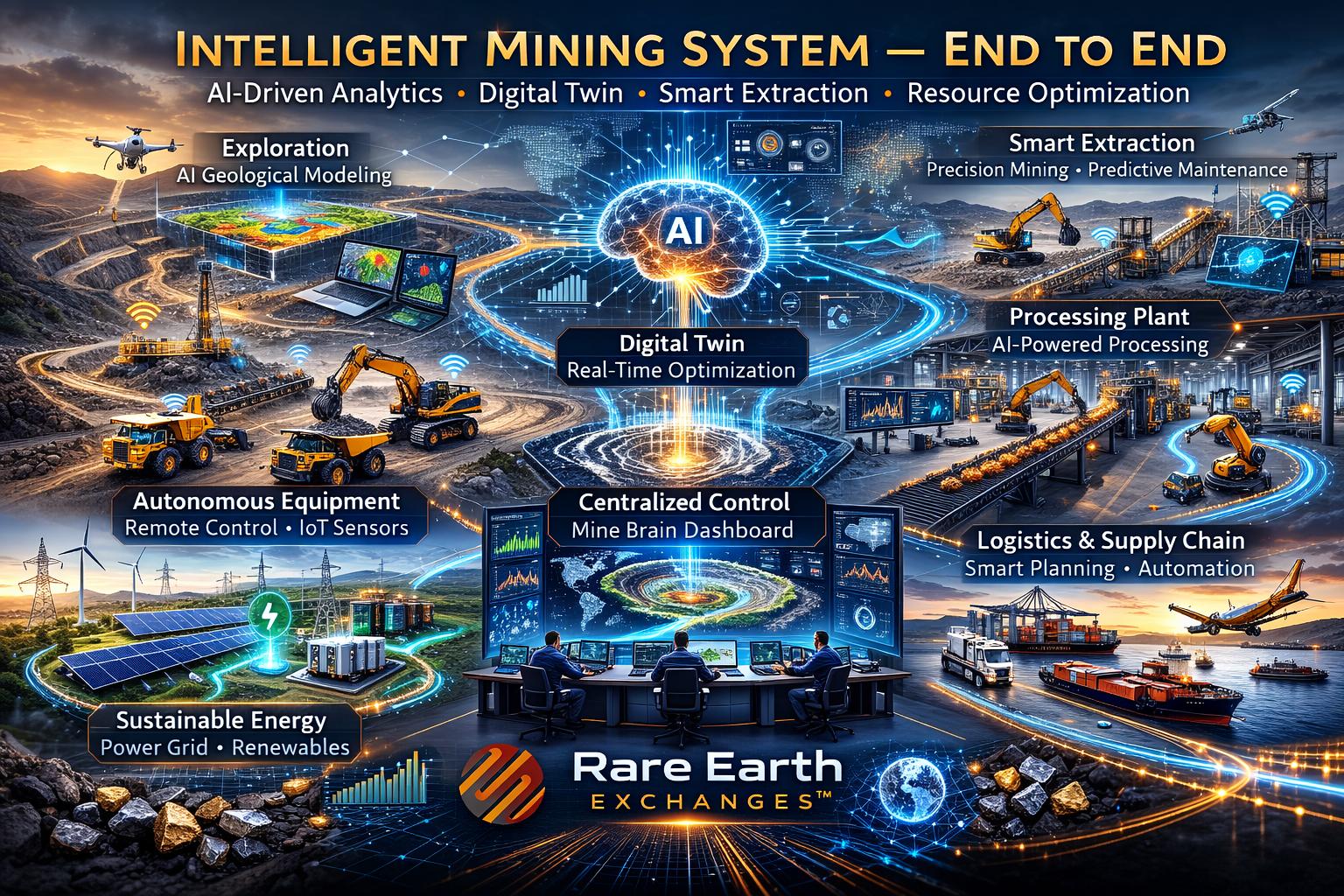
According to reporting from Baogang’s official media outlet, the company’s Baiyun Iron Mine has already completed (opens in a new tab) remote-control upgrades on 28 major pieces of equipment, including electric shovels, drilling rigs, waste dumpers, and crushers. It has also built a centralized intelligent control center integrating utilities such as water, electricity, and heating. This marks a tangible move from manual, operator-dependent control toward scaled remote and automated operations.
However, Baogang openly acknowledges that most current upgrades remain concentrated at the machine or process level. Data across geology, mining design, dispatch, ore blending, energy management, safety systems, and business operations are still fragmented. And this is where Rare Earth Exchanges™ suspects much of the digitization announcements are as much signaling as executed upgrades. The company’s next objective is to break these “data silos” by building an industrial internet-based platform that integrates geological modeling, production scheduling, equipment monitoring, energy use, and financial metrics into a unified decision-support system.
The goal is not merely automation, but coordinated intelligence. Baogang describes the platform as a comprehensive smart mining management system capable of optimizing the entire production chain — from exploration to beneficiation — using big data analytics, predictive maintenance, digital twin modeling, and real-time operational control. Its Barun Mining division is reportedly developing a high-standard remote operations center and intelligent mineral processing systems to support this transition.
In parallel, Baogang is accelerating domestic substitution of key mining components such as haul truck engines and shovel inverters, reducing reliance on foreign suppliers. Combined with predictive maintenance and digital twin integration, this shift aims to move the company from reactive repairs to proactive equipment health management — improving uptime, cost control, and supply chain security.
For Western observers, the strategic signal matters. If fully executed, this kind of system-level integration could lower production costs, reduce downtime, enhance safety, and tighten control over upstream raw-material extraction — including iron ore and potentially rare-earth-linked assets under Baogang’s broader corporate umbrella. It reflects China’s broader industrial policy, which emphasizes digitalization, resilience, and domestic technology control.
Baogang Group holds a controlling stake in China Northern Rare Earth Group High-Tech Co., Ltd. (commonly known as Northern Rare Earth), which operates the world's largest rare-earth deposit at Bayan Obo. As of early 2025, Baogang Group held approximately 38.03% of Northern Rare Earth's shares, thereby controlling a significant portion of China's light rare earth production.
Important note: This report originates from Baogang Group’s own state-owned media channel. Implementation claims, performance gains, and timelines should be independently verified before drawing firm commercial conclusions. Even so, the trajectory is clear: China is not limiting digital transformation to factories — it is extending it deep into the mine itself.


0 Comments
No replies yet
Loading new replies...
Moderator
Join the full discussion at the Rare Earth Exchanges Forum →