
Highlights
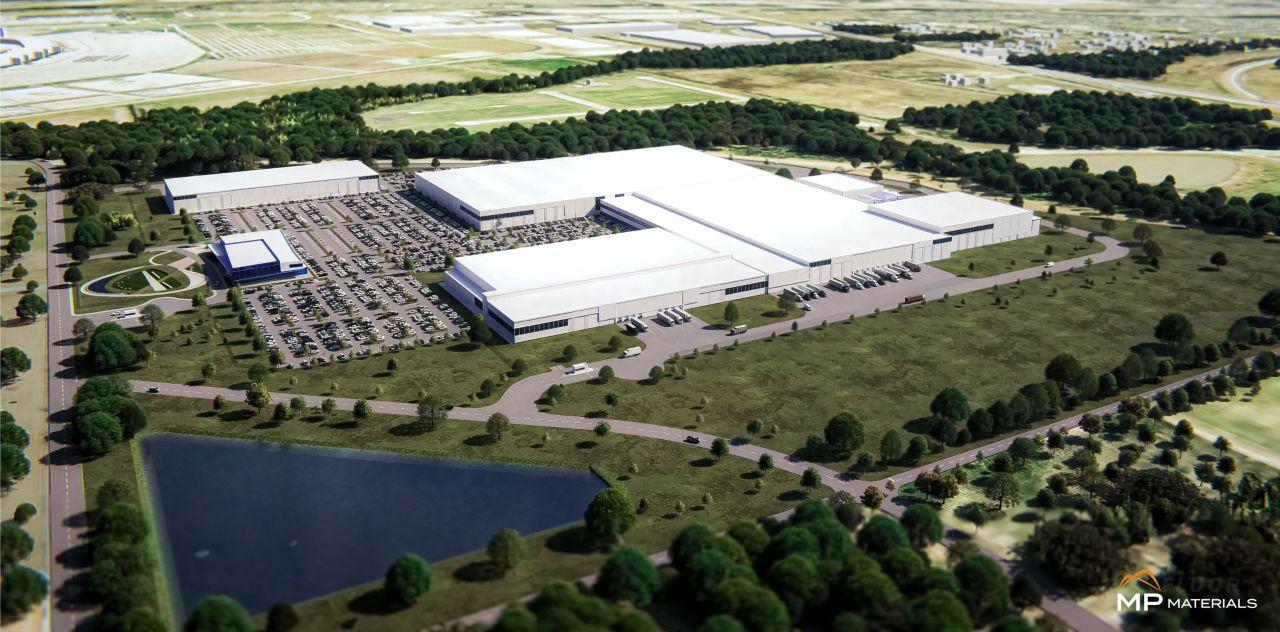
- MP Materials plans a $1.25B+ magnet campus in Northlake, Texas, targeting 10,000 metric tons per year of NdFeB magnets by 2028, with 1,500+ jobs, ~$200M in incentives, and a 10-year Pentagon offtake agreement.
- The project leverages vertical integration from mining at Mountain Pass through metallization, alloying, and finished magnets, positioning MP to anchor the largest integrated U.S. magnet platform in decades.
- Execution risks remain substantial: scaling precision powder metallurgy to compete with China's 30-year ecosystem advantage requires demonstrating sustained throughput, yield, and cost parity year after year.
In plain terms: MP Materials plans to build a massive new magnet campus in Northlake, Texas, targeting ~10,000 metric tons per year of NdFeB magnets once fully ramped. The project carries a $1.25B+ investment, 1,500+ jobs, ~$200M in incentives, and a 10-year Pentagon offtake. Groundbreaking is imminent; commissioning is slated for 2028.
If delivered, 10X would anchor the largest integrated U.S. magnet platform in decades.
What’s Concrete — and Credible
Integration is real. MP controls mining and processing at Mountain Pass, plus metallization, alloying, sintering, finished magnets, and recycling in Texas and California. That vertical integration matters in a market long dominated by Chinese state-backed champions.
Demand certainty helps. A Pentagon offtake commitment and long-term agreements (e.g., GM; Apple collaboration) reduce commercial risk and support capital deployment.
Technology claims align with industry trends. MP’s Grain Boundary Diffusion (GBD) process aims to reduce or eliminate heavy rare earths (Dy, Tb) while maintaining coercivity and thermal stability. That is directionally consistent with global efforts to de-risk heavy REE supply.
The Hard Part: Scaling Precision Chemistry
Magnets are not commodity steel. They require mastery of powder metallurgy, atmosphere control, grain engineering, and tight quality yields. Scaling to ~10,000 tpa is ambitious. China’s capacity dominance reflects 30 years of ecosystem buildout—suppliers, tooling, talent, and process IP.
Execution risks remain:
- On-time construction and commissioning (2028 target)
- Securing and maintaining high-purity feedstock at scale
- Yield, scrap, and cost competitiveness vs. Asia
- Sustaining heavy REE reduction without performance trade-offs
Forward-looking statements apply.
Incentives, Optics, and Industrial Policy
Texas incentives (~$200M over a decade) and a federal offtake underscore modern U.S. industrial policy. The press release leans heavily into independence rhetoric. That is understandable—and strategic.
But independence is not declared; it is delivered.
10X is forward-leaning because it tackles the most difficult node in the chain: magnet manufacturing at scale. If successful, it could materially shift U.S. bargaining power in defense, EVs, robotics, AI data centers, and semiconductors.
And investors should watch milestones, not headlines. We are all cheering for this national security-relevant effort!
Taking the issue off the table requires throughput, yield, and cost parity—year after year.


0 Comments
No replies yet
Loading new replies...
Moderator
Join the full discussion at the Rare Earth Exchanges Forum →