
Highlights
- China's Rare Earth Price Index reached 306.4 on February 26, 2026—more than triple the 2010 baseline—with renewed acceleration driven primarily by heavy rare earth oxides like terbium and dysprosium used in EV motors, wind turbines, and defense systems.
- Heavy rare earths are rising sharply while light rare earths remain flat, signaling either tightening feedstock availability or strong magnet-sector demand amid China's continued processing dominance.
- Western heavy rare earth separation capacity remains nascent, leaving magnet supply chains exposed to upstream pricing power and reinforcing high processing concentration risk outside China.
China’s Rare Earth Price Index rose to 306.4 on February 26, 2026, according to the China Association of Rare Earth Industry (ACREI). The index uses 2010 as its base year (100) and is calculated from average daily transaction data reported by domestic rare earth enterprises.
At 306.4, the index reflects price levels more than three times the 2010 baseline — and the trend line shows renewed acceleration into early 2026.
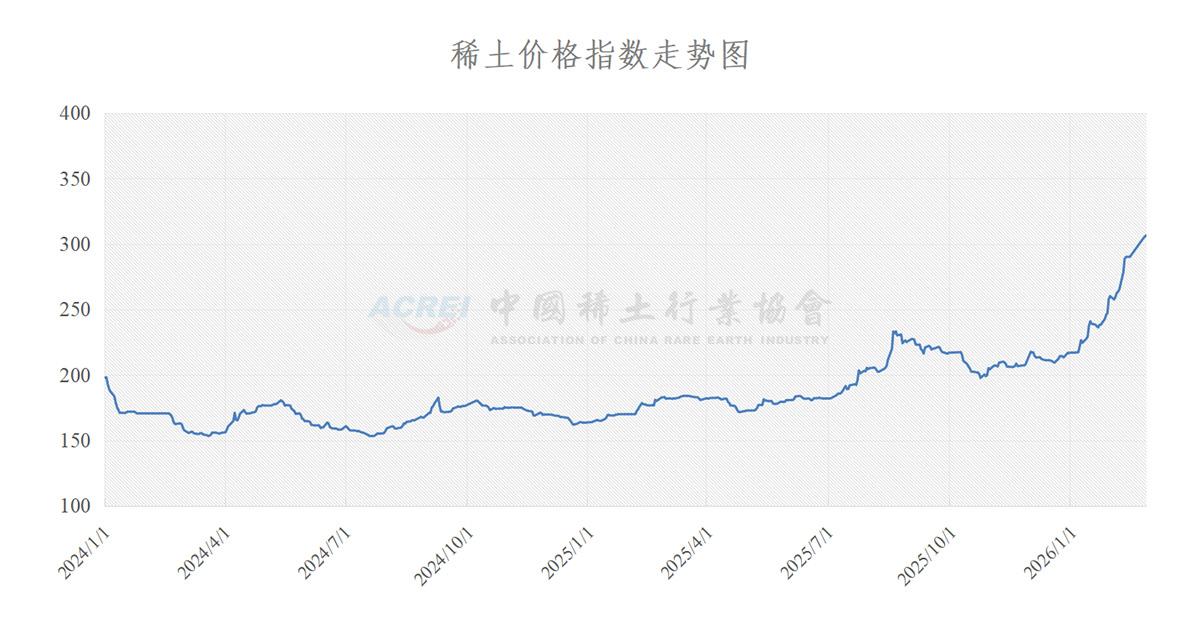
The message is clear: pricing momentum has returned, led by heavy rare earths.
What Is Moving — and What Is Not
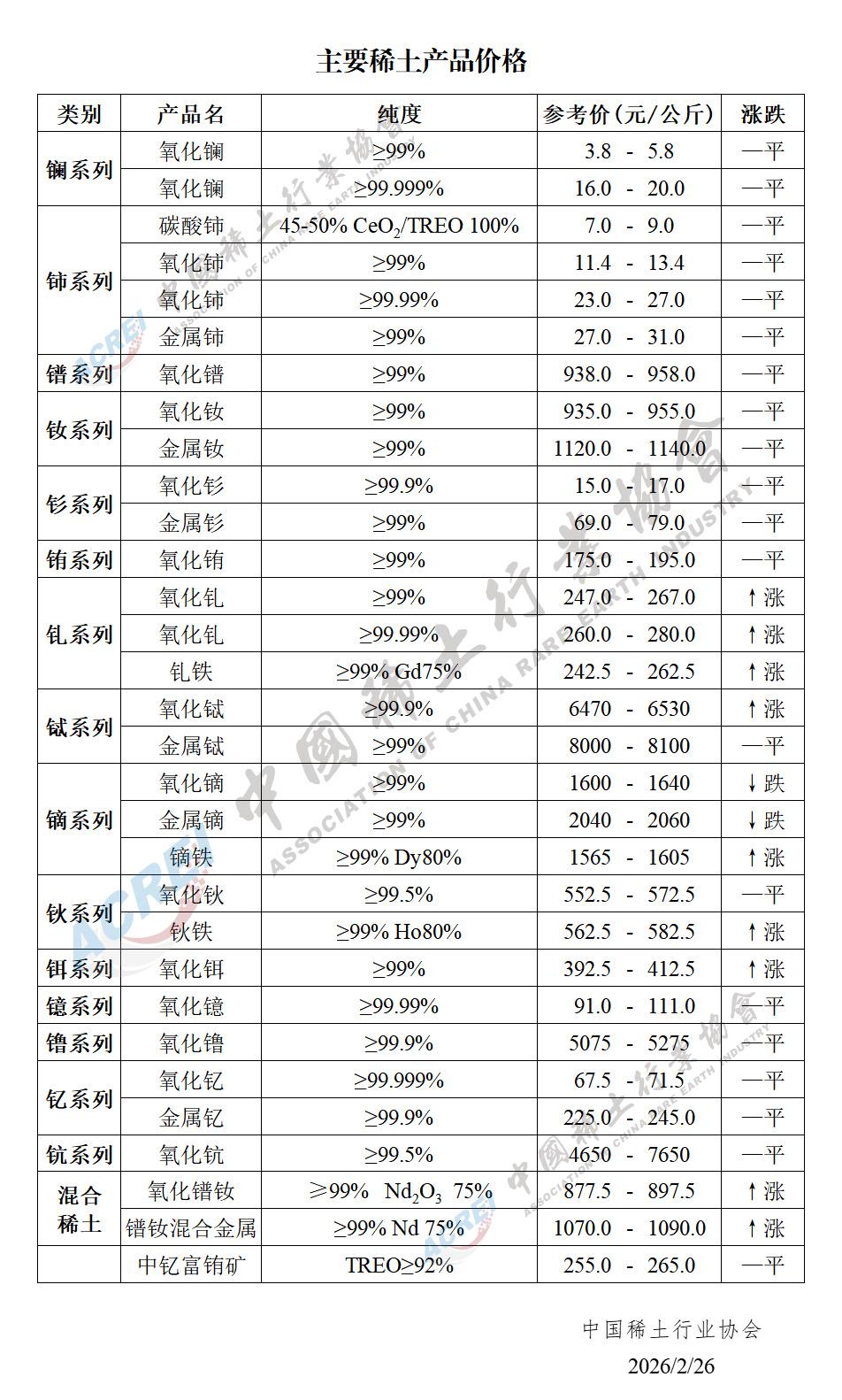
The strength is concentrated in heavy rare earth oxides and magnet-related materials, including:
- Terbium oxide – up
- Dysprosium iron alloy (Dy80%) – up
- Gadolinium oxide (≥99% and ≥99.99%) – up
- Holmium iron (Ho80%) – up
- NdPr oxide (75% Nd₂O₃) and Nd-based alloys – rising
By contrast, several light rare-earth products — including cerium oxide, lanthanum oxide, and some yttrium and samarium products — were reported to be flat or unchanged.
This divergence matters. Heavy rare earths such as dysprosium and terbium are critical inputs for high-temperature permanent magnets used in electric vehicles, wind turbines, defense systems, robotics, and advanced industrial motors. When heavy elements rise while light elements stall, it typically signals either tightening feedstock availability, stronger magnet-sector demand, or both.
Strategic Implications for the U.S. and Western Markets
Heavyrare earth processing remains overwhelmingly concentrated in China. Separation capacity for dysprosium, terbium, and other heavy elements outside China is still limited and largely pre-commercial.
This latest pricing data reinforces three structural realities:
- Processing concentration risk remains high.
- Western heavy rare earth separation capacity is still nascent.
- Magnet supply chains remain exposed to upstream pricing power.
No technological breakthroughs are reported in this release. The development is market-based, but markets in rare earths are rarely divorced from policy and industrial strategy.
When heavy rare earth prices move decisively, downstream sectors feel it.
Disclosure and Data Considerations
This pricing information is published by the China Association of Rare Earth Industry, a state-linked industry organization. The association notes that the data is collected from domestic enterprises for reference purposes only and does not constitute investment advice.
As with all state-originated commodity data, figures should be independently verified through third-party market intelligence sources before being relied upon for procurement or investment decisions.
In rare earth markets, pricing signals often reflect structural leverage. And today’s signal is firming — particularly in the heavy segment that matters most to advanced manufacturing.


0 Comments
No replies yet
Loading new replies...
Moderator
Join the full discussion at the Rare Earth Exchanges Forum →