
- Energy Fuels ended 2025 with over $900M liquidity from convertible notes, produced 1.015M lbs U3O8 at $23–30/lb costs versus ~ $90/lb prices, and guides 1.5–2.5M lbs for 2026—providing cash flow to fund rare earth expansion.
- The company achieved 99.9% purity dysprosium oxide and magnet-grade NdPr validation, but Phase 2 rare earth expansion (6,000+ tonnes/year NdPr) lacks a Final Investment Decision, with commercial production pushed to 2027.
- The investment case hinges on Phase 2 FID execution, securing long-term monazite feedstock, White Mesa permitting approvals, and resolving Madagascar Toliara project political/regulatory uncertainties.
Energy Fuels’ 2025 results and 2026 guidance reinforce its position as one of the most strategically important U.S. uranium and emerging rare earth midstream players. For investors, the release presents a dual narrative: strong liquidity and operational execution in uranium, alongside forward-looking rare earth expansion that remains contingent on capital deployment, permitting, and feedstock security.
Balance Sheet: Financial Strength with Convertible Complexity
Energy Fuels ended 2025 with $927.4 million in working capital and described liquidity of “over $900 million.” This position was materially strengthened by the upsized $700 million 0.75% convertible senior notes due 2031. The company structured capped call transactions to increase the effective conversion price, reducing dilution risk up to the cap.
This balance sheet is a strategic asset. Few Western rare earth processors possess this level of liquidity. However, the convertible structure still introduces potential dilution if the equity performs strongly.
Profitability remains negative. The company reported a 2025 net loss of approximately $86 million, wider than 2024’s loss, largely due to increased SG&A following acquisitions, higher exploration and development spending, and certain one-time charges. Uranium pricing was also modestly weaker on average year-over-year.
Uranium Segment:Globally Competitive Cost Profile
Energy Fuels produced 1.015 million pounds of finished U3O8 in 2025, exceeding guidance. For 2026, it guides to 1.5–2.5 million pounds processed and 1.5–2.0 million pounds sold. The company expects total weighted-average production costs during the current mill run to be approximately $23–$30 per pound (mining/transport plus milling). With uranium prices near $90/lb, this margin profile is globally competitive and offers meaningful cash flow potential to support rare-earth expansion.
Rare Earth Segment: Proof-of-Process Achieved, Scale Still Pending
Energy Fuels reported production of separated dysprosium oxide at 99.9% purity and previously demonstrated that its NdPr oxide was converted into commercial-scale permanent magnets through a South Korean manufacturer validation chain. These are important technical milestones.
However, the major scale expansion — the planned Phase 2 circuit targeting over 6,000 tonnes per year of NdPr, plus meaningful volumes of dysprosium and terbium — has not yet reached a Final Investment Decision (FID). The company also revised timelines for heavy REE commercial production to 2027 as it expands Phase 1 enhancements.
Phase 2 feasibility metrics are compelling on paper, but without FID, they remain projected economics rather than sanctioned capacity.
Key Investor Questions
- What specific commercial offtake agreements will underpin Phase 2 FID?
- How secure is long-term monazite or MREC feedstock at expanded volumes?
- Will permitting and regulatory approvals for expanded REE circuits at White Mesa proceed on schedule?
- What is the realistic path to fiscal stability and FID at the Vara Mada project in Madagascar, given political transition and required parliamentary approvals?
Bottom Line
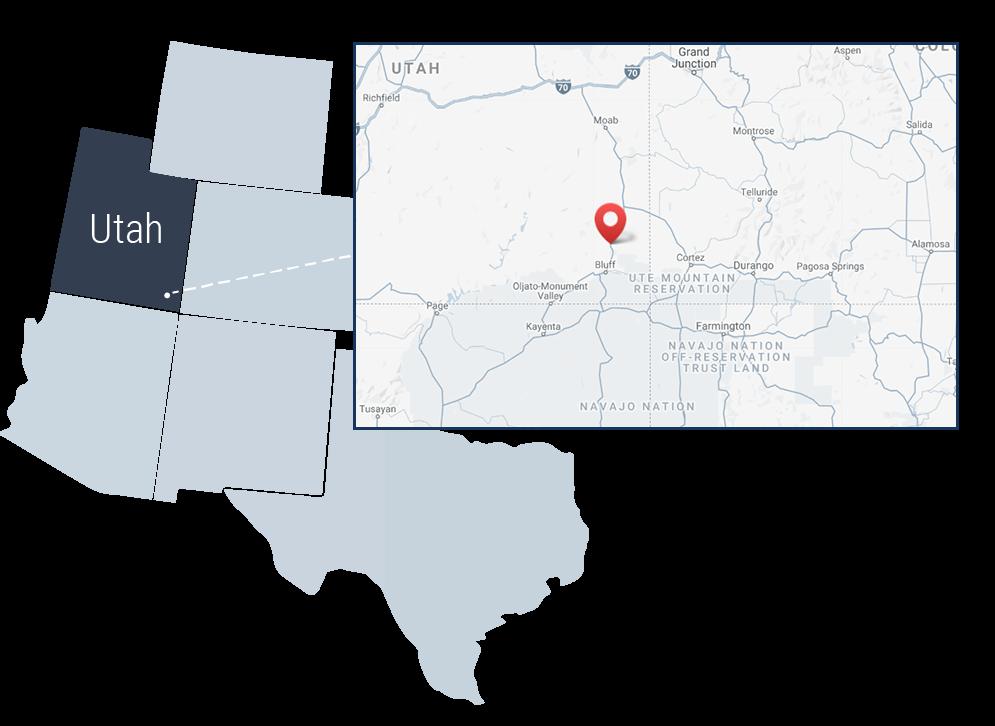
Energy Fuels stands out in the U.S. midstream rare earth landscape because it already operates the White Mesa Mill and is generating uranium cash flow. Its liquidity is real. Its heavy REE technical progress is real.
But industrial resilience is measured by sustained commercial throughput, not feasibility studies.
The investment case now hinges on capital discipline, feedstock security, permitting execution, and formal sanctioning of Phase 2—in other words, a lot of execution.
Source: Energy Fuels press release, Feb. 26, 2026.


0 Comments
No replies yet
Loading new replies...
Moderator
Join the full discussion at the Rare Earth Exchanges Forum →