
Highlights
- China's Ministry of Commerce placed certain Japanese entities on Export Control and Watch Lists, citing concerns over Japan's military expansion and potential revision of its Three Non-Nuclear Principles.
- The restrictions apply to dual-use items—goods with both civilian and military applications—but do not constitute a broad export ban and target only listed entities.
- This move demonstrates China's continued formalization of export controls tied to national security, underscoring the strategic importance of diversified supply chains for critical materials.
China’s Ministry of Commerce (opens in a new tab) (MOFCOM) announced on February 26 that it has placed certain Japanese entities on its Export Control List and Watch List, describing the action as “fully justified, reasonable, and lawful.” The statement, reported by Xinhua and circulated via the China Rare Earth Industry Association, links the decision to what Beijing characterizes as Japan’s accelerating military expansion and potential revision of its “Three Non-Nuclear Principles.”
MOFCOM spokesperson He Yongqian stated that the move is intended to prevent what China calls “re-militarization” and nuclear ambitions, which it says threaten regional and global peace. The listings apply specifically to dual-use items — goods and technologies with both civilian and military applications — as defined under China’s Export Control Law, Dual-Use Export Control Regulations, and the official Dual-Use Control List.
He Yongqian, MOFCOM
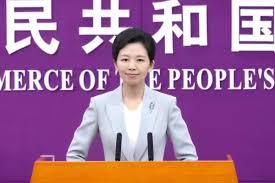
Source: X
When asked whether the restrictions include rare-earth materials, the spokesperson did not single out any specific products. Instead, she focused on the legal framework governing dual-use exports. This means the measures apply only to controlled dual-use items and only in transactions involving the listed entities. Rare Earth Exchanges™ recently reported on China identifying about 20 Japanese companies for possible scrutiny.
The ministry emphasized that the action targets a limited number of Japanese firms and does not affect normal China–Japan trade. “Law-abiding and compliant Japanese entities need not worry,” the spokesperson said.
What’s relevant for the West? Well, the key development is structural rather than immediate. China continues to formalize and deploy export controls within a legal framework tied to national security and non-proliferation. Rare earth elements, widely classified as dual-use due to their role in defense systems, advanced electronics, and precision manufacturing, remain strategically sensitive under such frameworks.
This announcement does not amount to a broad rare earth export ban. However, it underscores Beijing’s willingness to selectively restrict dual-use exports on national security grounds — reinforcing the strategic importance of diversified supply chains for critical minerals and advanced materials.
Disclaimer: This report is based on information published by Xinhua, a state-affiliated Chinese news agency. The information should be independently verified and interpreted within the broader context of China’s export control policy and geopolitical positioning.


0 Comments
No replies yet
Loading new replies...
Moderator
Join the full discussion at the Rare Earth Exchanges Forum →