
Highlights
- MP Materials announces a 120-acre Northlake, Texas magnet campus targeting 2028 commissioning with ~10,000 metric ton annual U.S. capacity, backed by $200M Texas incentives and federal price protection agreements that provided material Q4 2025 profit support.
- Critical execution risk centers on heavy rare earth access—U.S. remains 100% import reliant for dysprosium and terbium essential for high-performance magnets, with DoD procurement backstops explicitly written into federal contracts signaling unresolved supply constraints.
- Market values MP at $10.4B (~40x Price/Sales) despite negative cash flows and margins, pricing in national security premium and federal partnership rather than current fundamentals, with 15% short interest reflecting skepticism on heavy rare earth access, qualification timelines, and policy continuity risks.
This Rare Earth Exchanges™ investigation dissects MP Materials’ February 2026 disclosures (opens in a new tab) surrounding its proposed “10X” magnet campus in Northlake, Texas. We separate Securities Exchange Commission (SEC)-filed fact from headline-level ambition and examine the constraint that press releases rarely linger on: heavy rare earth access, qualification discipline, and time. For investors and policymakers, the question is not whether magnets can be made in America—it is whether they can be made at scale, at spec, and at speed.
Mountain Pass Mine
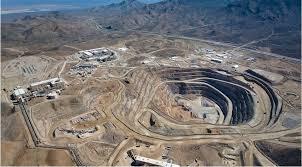
Source: MP Materials
Executive Summary
MP has selected a 120-acre site in Northlake, Texas, to build a second U.S. rare earth magnet campus, targeting commissioning in 2028. Engineering workis underway. Roughly $200 million in Texas incentives sit behind theplan.
Fourth quarter 2025 profitability was materially supported by a federally backed NdPr price floor—proof that industrial policy now flows directly into earnings.
But here is the sober counterpoint:
Magnets are not commodities. They are precision components. High-performance NdFeB magnets—especially for EVs, aerospace, and defense—often require dysprosium and terbium to maintain coercivity under heat. The United States remains nearly 100% net import reliant for heavy rare earth compounds and metals. The U.S. Geological Survey reports no sustained commercial-scale heavy rare earth production in 2025.
Commissioning is not a capacity. It is the beginning of the ramp.
Facts, Not Vibes
1. Independence Is Real Progress
MP produced its first NdFeB magnets on commercial equipment at its Fort Worth “Independence” facility and has been selling magnetic precursor products. General Motors is positioned as the first domestic magnet customer in this narrative of vertical integration.
This is tangible progress, and MP should be commended.
2. “10X” Is a Platform Claim, Not a Single-Plant Output Number
MP frames 2028 as a commissioning milestone and speaks of a ~10,000 metric ton annual U.S. magnet capacity across its system. Investors should note that the figure refers to total platform capacity across facilities—not necessarily the Northlake plant alone.
The difference matters.
3. The Government Partnership Is Structural—Not Symbolic
MP’s filings describe agreements with the U.S. government—referred to in the annual disclosure as the “Department of War (DoW), formerly known as the Department of Defense.”
Under the NdPr price floor, the government pays the quarterly shortfall below $110/kg. Once 10X reaches full production capacity, MP shares 30% ofupside above that level.
This is not a subsidy in the traditional sense. It functions more like a swap—downside protection in exchange for capped upside.
4. Earnings Quality Deserves Scrutiny
MP’s auditor flagged accounting for the Price Protection Agreement as a critical audit matter, citing complex contract terms and valuation judgment. When profitability is materially shaped by bespoke government instruments, the composition of earnings becomes part of the investment thesis.
The Heavy-Rare Choke Point
Here is the fulcrum. MP discloses that its DoW agreements include the expansion of heavy rare earth separation at Mountain Pass. The DoW will assist in procuring heavy rare-earth feedstock required for magnet production at 10X. Working capital tied to heavy rare stockpiling and forward purchases can be reimbursed through the Commercial Operation Date, with no annual cap.
That clause is the tell.
If heavy rare supply were fully solved in-house, procurement backstops would not need to be written so explicitly into federal contracts. The U.S. remains structurally exposed in dysprosium and terbium. These elements are not decorative. They are the thermal insurance policy inside high-performance magnets.
Without reliable heavy rare access, scale claims become theoretical.
The Deal That De-Risks—and Warps
The DoW offtake structure is muscular. It includes an annual EBITDA floor of $140 million after a defined production milestone date, plus reimbursement for certain pre-operation costs, including design modifications tied to DoW specifications.
Demand certainty. Margin certainty.
This is why 2028 is even plausible.
But it also introduces a new variable: policy continuity. Appropriations, oversight, legal challenges, or political change could reshape the risk landscape. Resilience built on contract is sturdier than rhetoric—but less permanent than geology.
Where Delay Risk Hides
The public timeline says 2028. The hidden timeline says qualification.
- Commissioning does not equal commercial output. Magnet plants ramp.
- Qualification cycles—especially for automotive and defense—can outlast construction schedules.
- Heavy rare feedstock availability remains an open variable. It could be a more serious problem than it appears.
- MP discloses a binding arbitration dispute with a general contractor that could be material depending on the outcome.
Execution is rarely linear.
Narrative Hygiene
One number has already grown in the retelling. Apple prepayments are $200 million in aggregate, milestone-based—not $500 million. The other amounts could come later, given that the first tranche is a prepayment.
The Rare Earth Exchanges™ Verdict
MP’s 2028 magnet sprint is not a fantasy. It is not automatic either.
It is conditional.
Theconditions are:
- Heavy rare earth access, separation, and refining at scale
- Qualification discipline across demanding OEM customers, namely, the automobile and defense
- Policy continuity over multiple election cycles—that in an ever more volatile America.
If those hold, 10X becomes a cornerstone of American magnet independence, and we can all celebrate. But if they wobble, “commissioning” risks becoming delayed, rather than capacity in the bank.
Note that industrial policy can accelerate physics. It cannot repeal it. So investors need to monitor carefully. MP Materials, as America’s rare earth treasure trove, benefits from the security premium.
And in rare earths, geology and thermodynamics still cast the final vote.
Financial Summaries
MP is trading at a roughly $10.4 billion market capitalization on approximately $275 million in trailing twelve-month revenue, implying a Price/Sales multiple above 40x and an Enterprise Value/Revenue multiple near 41x, based on the reported enterprise value of approximately $9.5 billion. Thatis not a conventional mining multiple. It reflects a strategic-asset valuation.
On a trailing basis, profitability remains negative: roughly –31% net margin, –20% operating margin, –$155 million in operating cash flow, and approximately –$272 million in levered free cash flow. Trailing EBITDA remains negative (approximately –$56 million TTM), even though quarterly results were supported by price-protection income. In other words, the current valuation is not anchored in present earnings power but in forward strategic positioning.
The balance sheet is strong. MP reports approximately $1.83 billion in cash and short-term investments against roughly $999 million in total debt, with a current ratio above 7x, providing substantial liquidity runway. Importantly, MP benefits from a federally backed NdPr price floor agreement, which materially reduces downside commodity risk and cushions volatility in realized pricing. Investors are clearly pricing in a national security premium—an expectation that government contracts, price protection mechanisms, and magnet offtake agreements will convert today’s negative cash flows into structurally supported future earnings.
However, some valuation metrics require clarification. A reported trailing P/E near 21x reflects GAAP net income in the most recent quarter but is not representative of full trailing twelve-month profitability, which remains negative. Meanwhile, a forward P/E above 1,000x signals extremely thin projected near-term earnings relative to market capitalization, underscoring that the stock’s valuation is driven more by long-term expectations than near-term fundamentals.
The stockhas appreciated approximately 161% over the past 52 weeks, significantly outperforming the S&P 500’s ~18% gain. Yet short interest remains elevated at roughly 15% of float, suggesting that a meaningful portion of the market questions execution risk, policy durability, or the heavy rare-earth constraints. The ownership structure reinforces the strategic framing: insiders hold roughly 20%, and institutions nearly 65%.
The market is valuing MP not merely as a rare-earth mine, but as a potential U.S. magnet infrastructure anchor—pricing in vertical integration, heavy rare-earth capability expansion, and sustained federal partnership. The risk is straightforward: if heavy rare earth access, qualification timelines, or policy continuity (think political volatility as well) falter, valuation could compress toward traditional industrial metrics.
The opportunity is equally clear: if 10X scales on schedule under federal offtake protection and margin support, MP could evolve from a policy-supported strategic bet into a durable, state-aligned industrial franchise at some point, say in several years to a decade, to rival one of the Chinese state-backed enterprises.


0 Comments