
- U.S. officials arrived in force at Africa's Mining Indaba, signaling a strategic shift to treat African critical minerals as industrial and national security priority—but financing alone won't dislodge China's control.
- China controls ~90% of rare earth separation, refining, and magnet manufacturing—the real bottleneck isn't mining, but downstream processing, chemistry, compliance, and qualified supply chains.
- For Africa to gain leverage and the U.S. to succeed, the focus must shift from capital pledges to building midstream capacity: permitted facilities, trained operators, and local value-add processing.
This Rare Earth Exchanges™ analysis reviews a South China Morning Post (SCMP) report (opens in a new tab) on Washington’s “multi-billion-dollar” push in Africa to secure critical minerals and reduce reliance on China. We validate what is technically accurate about rare earth chokepoints, flag where the narrative compresses complexity, and explain what’s truly notable for the rare earth supply chain. Built for retail and institutional investors who prefer processing reality over conference optics. Disclaimer: SCMP is a Hong Kong–based outlet; like all geopolitical coverage, its framing can reflect editorial incentives and regional narrative currents—verify claims with primary sources.
Breakdown-- Big Delegations, Bigger Bottlenecks
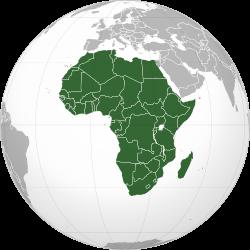
At Africa’s Mining Indaba in Cape Town, U.S. officials and financiers arrived in force, signaling that Africa is now part of America’s industrial and national security strategy—not just aid and diplomacy. The SCMP piece argues Washington may offer billions in financing to “buy” access to Africa’s minerals, but money alone won’t dislodge China’s dominance in rare earths and critical minerals. That tension is real: the contest is not only about mines, but about who controls the downstream machine.
The Unromantic Truth: Processing Is Power
SCMP is directionally correct on the central structural fact: China’s advantage is strongest in separation, refining, and magnet manufacturing, not just ore extraction. Multiple independent analyses estimate China controls roughly ~90% of separation/processing and a very large share of downstream magnet capacity. That downstream concentration is the leverage point investors should watch.
Rare earths are not a simple “dig and ship” commodity. They are a chemistry-and-compliance business: solvent extraction trains, purification, metallization, alloying, QA specs, waste handling, and long customer qualification cycles.
Where the Story Smooths the Edges
The phrase “near monopoly on production and processing” is rhetorically clean but technically uneven. China dominates processing far more than mining. Mining exists outside China (notably the U.S. and Australia), yet material often still routes through Chinese separation capacity—because that is where the industrial bottleneck sits.
Also, “money buys minerals” is only half the equation. Financing can accelerate projects, but it does not instantly create trained operators, permitted facilities, or qualified supply chains. That industrial policy challenge REEx often cites.
What’s Notable for the Rare Earth Supply Chain
This is a signal that the U.S. is treating Africa as strategic industrial terrain—and that Africa may gain bargaining power if it insists on local value-add (processing, refining, manufacturing). The market should track plants, permits, and offtake terms, not podium photos.
Bottom line: the right geology and capital start the race; execution know-how, resolve, and midstream capability finish it.


1 Comment
1 reply
Loading new replies...
Active member
Join the full discussion at the Rare Earth Exchanges Forum →