
Highlights
- Andhra Pradesh controls 25% of India's beach sand minerals—ilmenite, rutile, zircon, and monazite—aiming to build downstream manufacturing and reduce reliance on China-linked supply chains.
- Monazite contains light rare earths and thorium, but India's atomic energy laws tightly regulate processing, meaning state ambition faces federal oversight and industrial complexity.
- Mining beach sands is geology; China's strategic advantage lies in rare earth separation chemistry and magnet manufacturing, which India must scale to achieve true supply chain independence.
What about Andhra Pradesh’s plan to develop beach sand minerals—ilmenite, rutile, zircon, and monazite—to reduce India’s reliance on China-linked supply chains? Rare Earth Exchanges™ (REEx) examines the geology of coastal Andhra, plus clarifies what is technically accurate, while probing whether mining ambition can translate into rare earth and magnet manufacturing capacity. Built for investors who understand that separation chemistry—not sand volume—defines power.
Big Sands, Bigger Ambitions
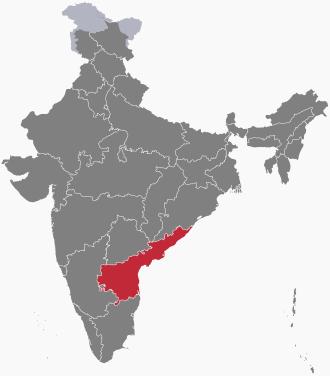
The government of Andhra Pradesh, on India’s southeastern coast along the Bay of Bengal, plans to unlock its beach sand minerals and build a downstream manufacturing hub. The goal: cut India’s dependence on China for rare earth materials, titanium dioxide pigment, and magnets used in EVs, wind turbines, and defense systems.
The state claims roughly 25% of India’s beach sand mineral resources. That is significant. The harder question is whether those sands can become industrial capacity.
The Geology: Why Coastal Andhra Matters
Andhra’s deposits are concentrated along districts such as Srikakulam, Vizianagaram, Visakhapatnam, East Godavari, and Nellore. These are classic heavy mineral placer deposits, formed by longshore drift and wave concentration of dense minerals eroded from inland metamorphic and igneous terrains of the Eastern Ghats.
The sands are rich in:
- Ilmenite & rutile (titanium feedstocks)
- Zircon (ceramics, foundry, nuclear cladding)
- Monazite (rare earth elements + thorium)
Monazite is the strategic piece. It contains light rare earths and measurable thorium, which triggers India’s atomic energy regulatory framework.
Where the Article Is Solid
It is accurate that India imports a large portion of titanium dioxide pigment and remains dependent on imported rare earth magnets. It is also true that monazite can be processed into rare earth oxides essential for electronics and clean energy.
However, India’s beach sand mining and monazite handling are tightlyregulated under federal atomic energy laws. Processing is not purely astate decision.
Where Ambition Meets Industrial Friction
An article in Hindustan Times (opens in a new tab) suggests that developing these sands will reduce dependence on China-dominated supply chains. That is only partially correct.
Mining to mineral separation to rare earth cracking to solvent extraction to metallization to magnet fabrication goes the process. Each step requires capital, chemical infrastructure, skilled operators, and environmental compliance. China’s advantage lies particularly in industrial-scale solvent extraction and magnet manufacturing, not simply ore access.
Demand for magnets may grow 15% annually in India. But demand growth does not equal domestic production capability.
The Strategic Signal
Andhra’s move reflects India’s broader industrial policy pivot: move from resource exporter to value-added producer. If India scales rare earth separation and magnet sintering domestically, it meaningfully strengthens non-China supply chains.
If not, the sands risk becoming another upstream feedstock story.
Beach minerals are geological. The real strategic leverage is chemistry.


0 Comments
No replies yet
Loading new replies...
Moderator
Join the full discussion at the Rare Earth Exchanges Forum →