
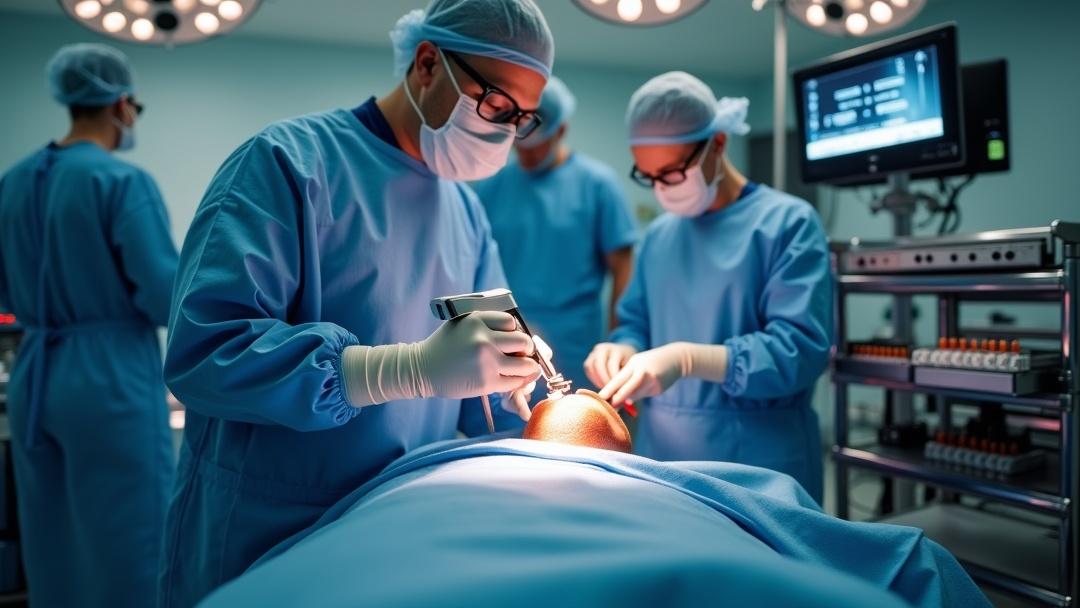
Medical lasers revolutionized healthcare by replacing scalpels and broad-spectrum light sources with precise, wavelength-specific energy delivery that reduces bleeding, minimizes tissue damage, and speeds recovery. These sophisticated devices rely heavily on rare earth elements (REEs) for their core components—from neodymium-doped crystals generating specific wavelengths to high-performance magnets enabling precise beam steering. This article explores how REEs make medical lasers possible, traces their journey from mine to operating room, and examines why supply chain security matters for healthcare delivery.
Table of Contents
How did medical lasers change healthcare—and why do rare earths matter?
Before medical lasers came along, doctors relied on scalpels, hot cautery tools, and broad light sources that often caused excessive bleeding and damaged surrounding tissue. These older methods meant longer recovery times and less precise treatment areas. Patients faced more discomfort, and surgeons had limited options for delicate procedures.
The introduction of medical lasers revolutionized healthcare by giving doctors unprecedented control over energy delivery. These devices can target specific tissues based on how different wavelengths interact with water, blood, or pigment in the body. The first working laser was demonstrated in 1960 (opens in a new tab), and medical applications quickly followed as researchers discovered how precise light beams could cut, seal blood vessels, or resurface skin with minimal damage to surrounding areas.
Today's medical lasers enable minimally invasive treatments across multiple specialties. Eye surgeons use them for vision correction. Dermatologists remove tattoos and treat skin conditions. Urologists break up kidney stones without major surgery. Dentists perform cavity removal with less drilling. These advances mean smaller incisions, faster healing, and often better outcomes for patients.
The secret behind these sophisticated devices lies partly in rare earth elements (REEs). These special materials make laser systems more efficient, stable, and compact. They appear in the crystals that generate laser light, the magnets that control beam positioning, and the optical components that manage heat and light transmission.
Rare Earth Role
Which elements are used and why
Several rare earth elements play critical roles in medical laser technology. Neodymium (Nd) powers the widely-used Nd:YAG solid-state lasers that emit light at 1064 nanometers. This wavelength penetrates tissue effectively, making it useful for everything from eye surgery to tumor treatment.
Erbium (Er) appears in Er:YAG lasers that emit at 2940 nanometers, a wavelength strongly absorbed by water. Since human tissue contains lots of water, these lasers excel at precise surface ablation for skin resurfacing and dental work.
Holmium (Ho) creates Ho:YAG lasers operating around 2100 nanometers. These systems have become the gold standard for breaking up kidney stones and treating enlarged prostates because they can deliver energy through flexible fibers inserted into the body.
Ytterbium (Yb) serves as a dopant in high-efficiency fiber lasers operating near 1030-1080 nanometers. These newer systems offer excellent energy efficiency and can handle high power levels while staying relatively cool.
Yttrium (Y) forms the backbone of YAG (yttrium aluminum garnet) crystals, providing the structural framework that hosts other rare earth dopants. Without this stable crystal structure, many medical lasers wouldn't function properly.
Beyond the laser crystals themselves, rare earths enable critical support systems. Dysprosium (Dy) and terbium (Tb) strengthen magnets used in beam steering systems, helping them maintain performance even when equipment heats up during extended procedures. Samarium (Sm) combines with cobalt to create SmCo magnets that resist corrosion and work reliably at high temperatures.
How it works
The process starts when electrical energy pumps into a rare earth-doped crystal or fiber. The rare earth atoms absorb this energy and release it as laser light at a specific wavelength determined by the element used. This predictable wavelength is crucial because different body tissues absorb different colors of light.
Rare earth magnets in the scanning systems move mirrors rapidly and precisely to direct the laser beam exactly where needed. These powerful magnets, often made from neodymium-iron-boron (NdFeB) alloys, pack tremendous strength into small packages. This allows manufacturers to build compact handpieces that surgeons can control easily.
Temperature management relies on rare earth materials too. The magnets must maintain their strength even as nearby electronics generate heat. Special rare earth additives help magnets resist demagnetization at elevated temperatures, ensuring the laser stays calibrated throughout long procedures.
Even the displays and aiming beams use rare earths. Europium (Eu), terbium (Tb), and yttrium-based phosphors create the bright, stable colors in control panels and targeting systems that help operators position treatments accurately.
Journey from Mine to Product
Supply chain steps
The journey begins at mines where rare earth ores are extracted and concentrated. These ores undergo complex chemical separation to isolate individual rare earth oxides. Each element requires specific separation techniques because their chemical properties are so similar.
For laser crystals, ultra-pure rare earth oxides go through careful crystal growth processes. Manufacturers heat the materials to extreme temperatures, then slowly cool them over days or weeks to form perfect crystal structures. Any impurities or defects can ruin the laser's performance.
The magnet production path converts rare earth oxides into metals, then combines them with iron and boron or cobalt. These alloys are melted, rapidly cooled, ground into powder, pressed into shapes, and sintered at high temperatures. Finally, they receive protective coatings to prevent corrosion.
Both crystals and magnets undergo rigorous quality testing before integration into medical devices. Manufacturers check optical properties, magnetic strength, temperature stability, and dozens of other parameters. Only materials meeting strict specifications move forward to device assembly.
The final laser system brings together pump diodes, optics, cooling systems, control electronics, and safety interlocks. Each component must work perfectly with the others. Quality assurance teams verify output power, beam quality, safety systems, and regulatory compliance before devices ship to hospitals and clinics.
Typical chokepoints
Separation capacity creates the biggest bottleneck in the supply chain. Converting mixed rare earth concentrates into pure individual elements requires specialized facilities with complex solvent extraction systems. Only a few countries have significant separation capacity.
Heavy rare earths like dysprosium and terbium face especially tight supplies. These elements are less common and harder to extract than light rare earths. Medical device manufacturers compete with electric vehicle and wind turbine producers for these scarce materials.
Specialized manufacturing steps also constrain production. Growing flawless laser crystals takes weeks and has limited yield rates. Magnet sintering requires precise temperature control and atmosphere management. Optical coating processes demand ultra-clean environments and specialized equipment. Any quality issues at these stages can delay device production by months.
Statistics & Societal Impact
Quantitative snapshot
The global medical laser market reached approximately $6 billion in 2023 and continues growing as procedures become more common and new applications emerge. This growth reflects both technological advances and increasing patient demand for minimally invasive treatments.
Millions of laser eye surgeries have been performed worldwide, with procedures like LASIK becoming routine in many countries. Dermatology practices report steady increases in laser treatments for both medical and cosmetic indications.
The rare earth content in medical lasers varies by component. Magnetic assemblies in scanning systems typically contain grams to hundreds of grams of rare earth elements, depending on the number and size of motors. Laser crystals and fibers use smaller amounts, often just traces to a few grams of dopants, but these materials must be extremely pure.
Safety incidents remain relatively rare when proper protocols are followed (opens in a new tab), but risks include eye injuries, skin burns, and respiratory hazards from surgical smoke. Proper training, protective equipment, and controlled environments significantly reduce these dangers.
Downstream effects
Medical lasers have transformed patient experiences across many procedures. Cataract surgery patients often return home the same day with minimal discomfort. Kidney stone treatments that once required major surgery now happen through natural body openings. Skin resurfacing procedures create controlled healing that wasn't possible with older chemical or mechanical methods.
Healthcare facilities have adapted their infrastructure to support laser medicine. This includes specialized treatment rooms with proper ventilation, window coverings, and warning systems. Staff undergo regular safety training and certification. Maintenance schedules ensure devices stay properly calibrated.
The economic impact extends beyond device sales. Shorter procedure times and faster recoveries can reduce healthcare costs. Outpatient laser treatments free up hospital beds. However, the initial equipment investment and ongoing maintenance represent significant expenses that facilities must carefully evaluate against expected procedure volumes and reimbursement rates.
Innovators & History
Key breakthroughs
The ruby laser's invention in 1960 by Theodore Maiman sparked immediate medical interest. Within a year, researchers were experimenting with laser light for eye treatments. Early work showed that different wavelengths could selectively target specific tissues without damaging surrounding areas.
The development of Nd:YAG lasers in the 1960s expanded medical possibilities. These solid-state systems proved more reliable and versatile than earlier gas lasers. Doctors could adjust pulse duration and power levels to achieve different tissue effects.
Fiber optic delivery systems revolutionized laser medicine in the 1970s and 1980s (opens in a new tab). Flexible fibers allowed surgeons to deliver laser energy deep inside the body through endoscopes. This enabled treatments for internal organs without major incisions.
The establishment of laser safety standards like the ANSI Z136 series created consistent safety practices across healthcare facilities. These standards classify laser hazards, specify protective measures, and guide training requirements.
From lab to product
Converting laboratory lasers into medical devices required extensive engineering. Early systems were room-sized and required constant adjustment. Engineers had to create compact, stable designs that could withstand daily clinical use.
Reliability improvements came through better materials and manufacturing processes. Diode-pumped solid-state lasers replaced lamp-pumped systems, improving efficiency and reducing maintenance. Advanced coatings on optical components reduced damage from high-power beams.
Clinical validation took years for each new application. Researchers had to determine optimal wavelengths, pulse durations, and power levels for different procedures. Safety studies established treatment parameters and identified contraindications. Regulatory approval processes ensured devices met safety and efficacy standards before reaching patients.
Why It Matters Now
Current drivers
Demand for laser procedures continues rising across both necessary medical treatments and elective cosmetic applications. Aging populations drive growth in cataract surgery, BPH treatment, and skin lesion removal. Younger patients seek laser treatments for vision correction, hair removal, and skin rejuvenation.
Technology improvements make procedures faster and more comfortable. Better cooling systems reduce pain during treatments. Computerized scanning patterns ensure uniform coverage. Real-time feedback systems help operators optimize settings for individual patients.
Healthcare delivery trends favor laser treatments. Insurance coverage has expanded for many laser procedures. Outpatient surgery centers offer convenient locations for treatments that once required hospital stays. Patient satisfaction scores often favor minimally invasive laser procedures over traditional surgery.
Security & policy context
Concentration of rare earth processing in certain countries creates supply chain vulnerabilities (opens in a new tab) for medical device manufacturers. Geopolitical tensions or natural disasters could disrupt material supplies, potentially delaying device production or increasing costs.
Governments and industry are investing in alternative supply chains, including new separation facilities and recycling programs. However, medical devices face unique challenges because any material changes might require extensive revalidation and regulatory review.
Healthcare providers must balance these supply considerations with patient care needs. Facilities might need to maintain larger parts inventories or develop contingency plans for equipment failures. Service contracts become more critical when replacement components face long lead times.
Future Outlook
Materials & design trends
Research aims to reduce dependence on heavy rare earths through improved magnet designs. New manufacturing techniques like grain boundary diffusion can enhance magnet performance while using less dysprosium and terbium. These advances could ease supply pressures and reduce costs.
Laser technology continues evolving with more efficient designs. All-fiber laser architectures eliminate some alignment issues and improve reliability. New dopant combinations might enable previously impossible wavelengths for specialized treatments.
Recycling efforts for medical devices face unique challenges. Unlike consumer electronics, medical equipment must meet strict contamination control standards. End-of-life recovery programs must balance material recovery with proper handling of biohazardous components.
5–10 year scenario
Medical laser demand will likely grow steadily as procedures become more accepted and accessible. New applications in regenerative medicine, drug delivery, and diagnostics could expand the market further. However, this growth might strain supplies of specialized components.
Manufacturing capacity for critical components like optical coatings and laser crystals may struggle to keep pace with demand. Medical device companies might need to secure long-term supply agreements or invest in vertical integration to ensure component availability.
Risk mitigation strategies will become more sophisticated. Manufacturers might redesign products to use more abundant materials where possible. Hospitals and clinics will need robust service contracts and backup equipment plans. Industry collaboration on standards and best practices could help manage supply chain challenges while maintaining quality and safety.
The balance between innovation and stability will define the next decade of medical laser development. While new technologies promise better patient outcomes, the industry must ensure reliable access to both current and future devices. Success will require careful coordination among miners, material processors, device manufacturers, healthcare providers, and policymakers.
Conclusion
Medical lasers exemplify how rare earth elements enable transformative healthcare technologies through their unique optical and magnetic properties. As these devices become increasingly central to modern medicine—from routine dermatologic procedures to complex surgical interventions—understanding their REE dependencies becomes critical for ensuring reliable healthcare delivery. The intersection of clinical innovation, materials science, and supply chain security will shape how medical lasers evolve to meet growing patient needs while navigating resource constraints. Healthcare stakeholders must balance performance requirements with supply resilience, making informed decisions about technology adoption, maintenance strategies, and long-term sustainability in an increasingly complex global materials landscape.
FAQs
Are medical lasers the same as cosmetic spa lasers?
Medical lasers are typically higher-powered, tightly controlled devices intended for use under medical supervision with defined safety interlocks and clinical protocols, while spa devices may be lower-powered or in different regulatory categories. The key difference lies in operator qualifications, facility controls, and whether the device is cleared/approved for specific indications in your region.
Do rare earths affect patient results directly?
Rare earths affect performance indirectly by enabling stable wavelengths, efficient energy delivery, and precise scanning or fiber coupling, improving consistency between sessions. However, patient outcomes still depend heavily on diagnosis, clinician settings, tissue characteristics, and aftercare adherence—materials advantages don't eliminate clinical variability or risk.
Why do different laser types matter clinically?
Different wavelengths and pulse styles are absorbed differently by water, hemoglobin, and melanin, allowing the same laser concept to achieve varied goals like cutting, coagulation, resurfacing, or stone fragmentation. Matching laser type to target tissue reduces unnecessary heating of surrounding structures but requires proper training and patient selection.
Is supply-chain risk for REEs a real issue for hospitals and clinics?
Yes, primarily through service parts availability and manufacturing lead times for magnets, optics, or doped gain media requiring specialized production and long qualification cycles. Clinics typically experience this as longer repair times or delayed installations, making maintenance contracts and parts logistics as important as initial purchase decisions.
What credentials and safety standards should be involved with medical laser use?
Facilities need documented training, appropriate protective eyewear, controlled-area practices, and maintenance/calibration routines consistent with recognized laser safety standards like ANSI Z136 series. Patients should seek appropriately licensed clinicians (often board-certified in relevant specialties) and settings that explain risks, alternatives, and expected recovery without guaranteeing outcomes.
