
Highlights
- Kunming University reports a breakthrough in thermal barrier coatings that doubles fracture toughness to 5.0 MPa·m½ while reducing thermal conductivity to 1.32 W/m·K—about half that of conventional yttria-stabilized zirconia.
- The team used a “ferroelastic domain + high-density dislocation” strategy with spark plasma sintering to engineer atomic-scale microstructures that break the traditional trade-off between toughness and heat insulation in ceramics.
- For aerospace and defense applications, the technology could enable higher operating temperatures, longer component lifetimes, and improved fuel efficiency in jet engines and gas turbines, pending scalability verification.
A team at Kunming University of Science and Technology (opens in a new tab) (KUST) reports progress toward a long-standing goal in thermal barrier coatings (TBCs): improving fracture toughness without sacrificing low thermal conductivity. In Advanced Materials, KUST’s Professors Chen Lin and Feng Jing and colleagues describe a “ferroelastic domain + high-density dislocation” strategy in ferroelastic oxide ceramics that they say breaks the usual trade-off between toughness and heat insulation—two properties that typically work against each other in brittle oxide ceramics used to protect hot-section components in jet engines, gas turbines, and other extreme-temperature systems.
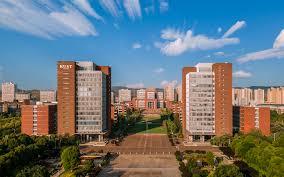
Kunming University of Science and Technology
Background (Downstream R&D & Materials Science)
TBCs act as thermal shields for turbine blades and related parts. The core materials dilemma is simple: ceramics that insulate well (low thermal conductivity) are often too brittle, while tougher ceramics tend to transmit heat more efficiently. According to the authors, their approach addresses this coupling by engineering microstructure at the atomic scale. Using spark plasma sintering (SPS) followed by high-temperature heat treatment, the team introduced very high dislocation densities (reported at 10⁸–10¹⁰ mm⁻²) and formed “semi-coherent-like” interfaces within a composite ceramic. Aberration-corrected transmission electron microscopy was used to characterize these features and support the proposed mechanism.
Findings
The authors report a peak fracture toughness of 5.0 MPa·m½—about a 100% increase versus their single-phase baseline and roughly 1.4× higher than conventional yttria-stabilized zirconia (YSZ), the workhorse TBC material. They also report that dislocations serve as strong phonon-scattering centers, lowering high-temperature thermal conductivity to 1.32 W/m·K—approximately half of what they cite for YSZ systems.
Implications for the West
For U.S. and allied aerospace, power generation, and defense supply chains, the potential implication is performance leverage: if the processing route proves scalable and durable under real thermal cycling, coatings based on this concept could enable hotter operating regimes, longer component lifetimes, and efficiency gains—benefits that translate directly into fuel burn, maintenance economics, and propulsion reliability.
KUST was listed as the lead and corresponding institution. First authors include an undergraduate alumnus (Class of 2024) and a current doctoral student; corresponding authors include Chen Lin, Feng Jing, and Tsinghua University’s Professor Shen Yang. The work reports support from China’s National Natural Science Foundation and regional talent/innovation programs.
Disclaimer: This item is based on information published by a Chinese university and affiliated media. The claims should be independently verified—ideally through the peer-reviewed paper, replication, and third-party testing—before informing commercial, investment, or policy decisions.


0 Comments
No replies yet
Loading new replies...
Moderator
Join the full discussion at the Rare Earth Exchanges Forum →