
Highlights
- China Minmetals and Hunan province unveiled a National Technological Innovation Center for strategic rare metal minerals on January 31, 2026, strengthening state control over critical materials like lithium, cobalt, and tungsten.
- The center represents deeper institutional alignment between a major state-owned enterprise and a strategically important province, focusing on resource extraction optimization and advanced processing technologies.
- This development accelerates China's domestic R&D infrastructure for critical minerals as Western nations expand efforts to secure alternative supplies and reduce dependence on Chinese sources.
China Minmetals and the Hunan provincial government have jointly unveiled a new National Technological Innovation Center for the Efficient Development of Strategic Rare Metal Minerals, signaling a coordinated push to strengthen China’s upstream control and technological leadership in critical minerals. According to a February 9, 2026, release (opens in a new tab) from China Minmetals, the working meeting and unveiling ceremony took place on January 31 in Changsha, Hunan. Senior executives from the state-owned mining giant—including Chairman Chen Dexin and General Manager Zhu Kebing—attended alongside top provincial leaders, including Hunan Party Secretary Shen Xiaoming and Governor Mao Weiming.
R&D Downstream
The new innovation center, led by China Minmetals, is focused on improving the “efficient development” of strategic rare metal mineral resources—a category that typically includes lithium, cobalt, tungsten, rare earth elements, and other minerals essential to energy transition technologies, advanced manufacturing, and defense systems. The unveiling also included two affiliated corporate entities: Minmetals Hunan Metal Minerals Co., Ltd., and Minmetals National Innovation Center Technology (Hunan) Co., Ltd.
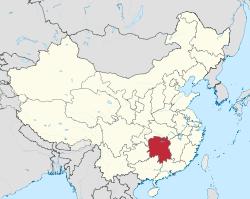
For business observers, the key takeaway is institutional alignment. This is not simply a laboratory opening; it represents deeper integration between a major central state-owned enterprise and a strategically important province that hosts significant mineral processing, materials science, and metallurgical capabilities. Officials emphasized that Hunan is the province where Minmetals maintains its most comprehensive industrial layout and longest-standing cooperation base.
The language of “strategic rare metal minerals” and “efficient development” suggests a focus on optimizing resource extraction, advanced processing technologies, and potentially substitution or materials innovation—all critical levers for tightening global supply chains. As the U.S. and allies expand industrial policy tools and funding mechanisms to secure alternative supplies of critical minerals, China continues to reinforce domestic R&D and provincial-industrial coordination.
Western Implications
What are the implications for Western stakeholders tracking mineral security? Rare Earth Exchanges™ suggests that the development underscores China’s continued investment not only in overseas assets but also in domestic innovation infrastructure tied directly to critical materials. Such centers can accelerate commercialization, reduce production bottlenecks, and improve cost competitiveness in global markets. As we have discussed, this also aligns with the ongoing CCP planning to accelerate industrial breakthroughs downstream.
Disclaimer: This summary is based on a release published by China Minmetals, a Chinese state-owned enterprise. Statements regarding scope, impact, and strategic objectives should be independently verified through additional sources before informing business or policy decisions.


0 Comments
No replies yet
Loading new replies...
Moderator
Join the full discussion at the Rare Earth Exchanges Forum →