
- The Dominican Republic announced 150 million tons of rare earth deposits in Pedernales province, but critical details remain unclear: is this mineralized rock or recoverable rare earth oxides (REO)?
- The real constraint isn't discovery—it's separation capacity. Without a domestic processing infrastructure, concentrates exported abroad limit strategic autonomy and economic benefit.
- Investors should distinguish geological headlines from supply chain reality: grade, recovery rates, metallurgy, and processing plans determine commercial viability, not tonnage alone.
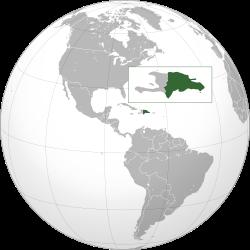
On Friday, Reuters reported (opens in a new tab) that the Dominican Republic identified more than 150 million tons of rare earth deposits. Herein, Rare Earth Exchanges distinguishes between geological tonnage and economically recoverable rare earth oxides (REO), clarifies what “gross deposits” actually imply, and raises the structural questions mainstream coverage often omits—grade, metallurgy, recovery rates, separation capacity, capital intensity, and geopolitical leverage. For retail and institutional investors alike, this is about moving from headline excitement to supply chain reality.
The Big Number: 150 Million Tons
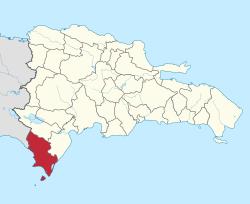
Reuters reports that Dominican President Luis Abinader (opens in a new tab) announced preliminary studies identifying “gross deposits exceeding 150 million tons” of rare earth elements in Pedernales province. The government plans to complete assessments this year and certify reserves next year.
At first glance, 150 million tons sounds transformational. It suggests scale. It signals geopolitical interest. The United States has already expressed support for development.
But the critical question Reuters does not press is simple:
150 million tons of mineralized rock—or 150 million tons of rare earth oxides?
Those are very different things.
Pedernales Province, DR
Gross Deposits vs. Economic Reserves
“Gross deposits” typically refers to total mineralized material in the ground. It does not mean proven reserves. It does not mean separated rare earth oxides (REO). It does not mean economically recoverable product.
Investors need clarity on fundamentals:
- What is the average total rare earth oxide (TREO) grade?
- What is the heavy rare earth distribution (dysprosium, terbium, yttrium)?
- What are metallurgical recovery rates?
- What is the strip ratio and expected operating cost profile?
- What is the host geology—ionic clay, carbonatite, laterite, or another formation?
Without grade and recovery data, tonnage alone is an incomplete metric. A lower-grade 150-million-ton resource can be less commercially attractive than a smaller, higher-grade deposit with favorable metallurgy.
The Structural Constraint: Processing Capacity
Even assuming commercial viability, the real constraint in rare earth supply chains is not discovery. It is separation.
Industrial-scale solvent extraction remains the only commercially proven method for large-scale rare earth separation. That capacity is still overwhelmingly concentrated in China. Reuters does not address whether the Dominican Republic intends to build domestic separation infrastructure.
If concentrates are exported for refining abroad, strategic autonomy becomes limited.
Key questions:
- Who will finance and operate a multi-stage separation facility?
- How will environmental permitting and tailings management be handled?
- Does the Dominican Republic have the chemical and industrial base required?
These are supply chain questions—not political ones.
Geopolitics: Signal or Substance?
The recent Reuters report emphasizes U.S. interest and national sovereignty language. That framing is understandable. Rare earth diversification is a Western policy priority. But investors should distinguish signaling from execution.
Is this a long-term industrial strategy?
A capital attraction campaign?
Or an early-stage geological announcement amplified by geopolitics?
Investor Takeaway: Headlines Are Not Supply Chains
The Dominican announcement is strategically interesting. A Caribbean rare earth development would diversify geography. That alone matters.
But until grade, recovery economics, and processing plans are disclosed, this remains a geological headline—not a validated supply chain breakthrough.
In rare earth markets, tonnage attracts attention.
Processing capacity determines power.


0 Comments
No replies yet
Loading new replies...
Moderator
Join the full discussion at the Rare Earth Exchanges Forum →