
Highlights
- Singapore-listed Southern Alliance Mining has invested over RM100 million into a 2,161-hectare ionic clay rare earth project in Gerik, Malaysia, targeting 2,500–5,000 tonnes of REO annually to escape iron ore price volatility.
- While SAM's heavy rare earth exposure and in-situ leaching approach offer strategic advantages, the company remains structurally constrained by China's 85–90% control of global separation capacity, limiting pricing leverage.
- True supply chain resilience requires moving beyond mining into midstream separation chemistry and processing infrastructure—where Malaysia shows potential but China still dominates economic value capture.
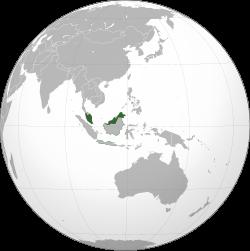
Singapore-listed Southern Alliance Mining (SAM) (opens in a new tab) is repositioning away from iron ore volatility toward rare earth element (REE) production in Gerik, Malaysia. After widening losses tied to weaker iron ore prices, the company has invested more than RM100 million into a 2,161-hectare ionic clay project targeting 2,500 tonnes of rare earth oxides (REO) annually — potentially expanding to 5,000 tonnes through phased development.
On paper, the move is logical. Rare earth demand is structural, not cyclical. Electric vehicles, wind turbines, advanced robotics, and defense systems all require magnet materials incorporating heavy rare earth elements. But sound strategy on paper does not guarantee execution in practice.
SAM was recently covered by TheBusiness Times (opens in a new tab). Rare Earth Exchanges has profiled the company and mine on several occasions. See “Same is the Place to be…”
The Geology Is Real. The Scale Is Constrained.
Ionic clay deposits extracted via in-situ leaching are legitimate and technically proven, first industrialized in southern China. The process avoids blasting and large-scale excavation, reducing visible land disturbance.
That is accurate.
However, scaledetermines strategic weight.
An output range of 2,500–5,000 tonnes REO annually is meaningful for a junior Southeast Asian producer — but could be considered modest in global terms. China exported more than 62,000 tonnes of rare earth products in 2025. Pricing power follows volume. Influence follows processing capacity.
Malaysia holds geological potential. It does not yet control the midstream. But with Lynas Rare Earths (opens in a new tab) already with a refinery in the nation, more could be on its way.
Heavy Rare Earth Exposure: Substance or Signal?
Management highlights “heavy rare earth exposure” as insulation from neodymium-praseodymium (NdPr) price swings. Partially true. Dysprosium and terbium command premiums because they enable high-temperature magnet performance.
But sophisticated investors ask in this business
- What is the precise basket composition?
- What percentage of the total rare earth distribution is heavy?
- What are the realized pricing terms under Chinese offtake arrangements?
Absent disclosed element-by-element breakdowns, “heavy exposure” remains directional rather than quantified.
The China Conversion Constraint
SAM currently sells its rare earth output primarily to China — not by preference, but by necessity. China controls roughly 85–90% of global rare earth separation capacity.
That fact is strategically decisive. If your refining counterparty sets conversion economics, your pricing leverage narrows. Malaysia may mine. China still refines — and refining captures margin.
Until Southeast Asia develops independent separation infrastructure at scale, upstream producers remain structurally price-takers.
Change could be on the way. Numerous mining and value-added processing discussions are unfolding in the Southeast Asian nation. Rare Earth Exchanges profiled DTEC MMT as an example of an entrepreneurial group, both Malaysian and American, investigating the nation’s resources.
Environmental Framing: Lower Impact, Higher Scrutiny
In-situ leaching generally carries lower surface disruption than hard-rock mining. That is technically correct. Yet ionic clay operations globally have faced groundwater management challenges.
The temporary suspension in late 2025 — even though lifted — underscores regulatory sensitivity. Although rumblings were that the incident was linked to other groups.
Malaysia’s overlapping state and federal jurisdictions add permitting complexity. Issues of land protection are concentrated at the state level in Malaysia.
Geology opens the door. Policy determines how wide it stays.
Strategic Implications
SAM’s pivot reflects a broader truth: iron ore is cyclical. Rare earths are strategic.
But mining alone does not create supply chain resilience.
Separation chemistry. Metallization. Magnet alloying. Downstream integration.
That is where economic gravity concentrates.
SAM has repositioned. Whether it becomes strategically relevant depends on scale, transparency, and midstream independence.
Free markets can energize competition.
But chemistry, scale, time, and government support likely decide.


0 Comments
No replies yet
Loading new replies...
Moderator
Join the full discussion at the Rare Earth Exchanges Forum →