
Highlights
- Brazil's Serra Verde became the first operation outside Asia to commercially produce heavy rare earths in 2024, backed by $565 million in U.S. financing to diversify supply chains away from China's 90% processing dominance.
- Despite holding nearly a quarter of global rare earth reserves, Brazil produced only 20 tonnes in 2024 versus China's 270,000, exposing the gap between geological wealth and industrial power.
- President Lula pledges domestic value chains with $8.9 billion in funding, but environmental constraints, processing bottlenecks, and Chinese asset acquisitions threaten to trap Latin America in raw material export dependency.
UPDATED: 05 MARCH 2026 - Serra Verde provided accurate numbers for this article.
In Minaçu, Goiás, Brazil, the global rare earth race is no longer abstract geopolitics. It is an industrial policy carved into ionic clay. Serra Verde’s Pela Ema project became, in 2024, the first operation outside Asia to commercially produce heavy rare earths used in EV motors and wind turbines. The claim is strategic: diversify supply chains away from China. The stakes are higher: who controls the minerals that power electrification, defense systems, and digital infrastructure?
According to the International Energy Agency, global demand for rare earths rose roughly 7% in 2024. China still dominates—about 70% of mining and nearly 90% of processing. After Beijing tightened export controls in October 2025 and Washington convened 54 nations at a Critical Minerals Ministerial in February, Latin America became contested terrain.
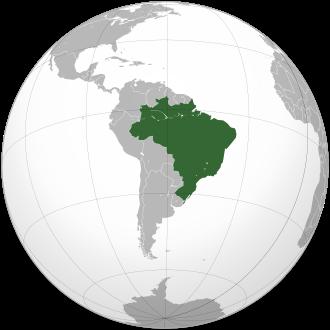
According to the Rio Times, Brazil alone holds nearly a quarter of known global reserves—second only to China. Yet production tells another story: roughly 20 tonnes in 2024 versus China’s 270,000. Reserves do not equal power. Processing does.
Washington Writes Checks, Beijing Buys Assets
In November 2025, the U.S. International Development Finance Corporation confirmed a $565 million financing package for Serra Verde, including an option for Washington to take an equity stake. That is not ordinary development finance. It is industrial statecraft.
Serra Verde renegotiated Chinese offtake agreements to expire eight years early and is expected to pivot toward Western buyers. The company targets 6,500 tonnes of rare earth oxide by 2027 and is assessing the potential for a Phase II expansion that could double run-of-mine production before 2030.
China is not retreating. China Nonferrous Metal Mining Group acquired Brazil’s Mineração Taboca in 2024. Rare earth exports to China reportedly tripled in the first half of 2025. In Chile, Aclara Resources and CAP are advancing the $148 million Penco Module project. In Minas Gerais, Australia’s Viridis Mining plans a refining hub.
This is not a green transition fairy tale. It is resource nationalism meets superpower rivalry.
Lula’s Industrial Promise vs. Extractive Reality
President Luiz Inácio Lula da Silva has pledged Brazil will not simply export raw critical minerals. The government is reviewing 56 projects and backing them with a 45.8 billion reais ($8.9 billion) fund.
The rhetoric is clear: build domestic value chains. The risk is familiar: Latin America exports raw materials while others capture downstream profits.
Consultants warn Brazil could repeat Australia and Canada’s pattern—mining at home, processing abroad. Environmental concerns add friction. Rare earth extraction requires open-pit mining, acid leaching, heavy water use, and careful management of thorium and uranium byproducts. In Chile and Argentina’s salt flats, groundwater stability is fragile.
Ambition collides with environmental law, local resistance, and technical bottlenecks in refining capacity. Processing—not mining—is the chokepoint.
Facts, Friction, and Bias Signals
Key facts: Brazil holds vast reserves; production remains negligible. The U.S. has deployed strategic finance. China continues acquisitions and trade flows. Environmental and processing constraints are real.
Speculation: That Latin America can rapidly displace Chinese processing dominance. Timelines to 2030 assume financing, permitting, and community consent proceed smoothly.
Identifiable bias: The framing emphasizes geopolitical competition—Washington vs. Beijing—while underexamining local community leverage and ecological tradeoffs. Industrial policy is presented as an opportunity; environmental risk appears as secondaryfriction.
The defining question remains: can Latin America convert geology into sovereignty without repeating extractive dependency?
Source: The Rio Times, March 3, 2026


0 Comments
No replies yet
Loading new replies...
Moderator
Join the full discussion at the Rare Earth Exchanges Forum →