
Highlights
- Laos holds significant heavy rare earth potential in ion-adsorption clay deposits in northern provinces, but lacks domestic refining capacity and a systematic national strategy, with Chinese investment dominating the sector.
- Ion-adsorption mining in Laos poses serious environmental risks, with 2024 reports of river contamination in Houaphanh Province highlighting governance challenges in rapid rare earth development.
- Laos faces a critical crossroads: strengthen environmental oversight and build domestic processing capacity, or remain a raw materials supplier with limited economic benefits and elevated environmental risks.
A newly published chapter by Phouphet Kyophilavong (opens in a new tab) of the National University of Laos (opens in a new tab), working with Han Phoumin (opens in a new tab) of the Economic Research Institute for ASEAN and East Asia (ERIA) (opens in a new tab) and collaborators from Lao universities and government ministries, argues that Laos holds meaningful potential for rare earth element development but currently captures limited economic value from the sector. Their study shows that most rare earth investment in Laos is linked to Chinese supply chains while domestic refining, separation, and value-added manufacturing remain largely absent.
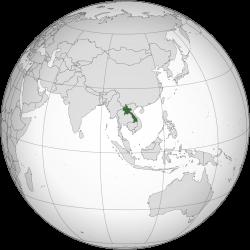
A Rare Earth Exchanges™ review of geological research published since 2015 suggests the country’s strongest potential lies in ion-adsorption clay deposits in northern Laos, a deposit type globally known for containing valuable heavy rare earth elements (HREEs) such as dysprosium and terbium.
Yet these deposits are environmentally sensitive and governance-intensive, meaning Laos now faces a critical crossroads: can it convert geological opportunity into long-term economic development, or will it become another upstream extraction zone feeding external processing hubs?
Phouphet Kyophilavong, National University of Laos, Research division, Faculty of Economics and Management, Faculty Member

Source: Acdemia.com
What the Anchor Study Found
Kyophilavong and colleagues conducted a policy and sectoral “situational analysis” of Laos’ mineral industry rather than a geological resource estimate.
Their conclusions highlight three structural realities:
- Laos lacks a systematic national strategy or comprehensive study on rare earth development.
- Foreign investment—primarily linked to Chinese firms—dominates exploration and extraction activity.
- The country has almost no midstream capacity, meaning refining, separation, and magnet manufacturing occur outside Laos.
As a result, rare earth investment has produced limited spillover benefits for the domestic economy, including weak integration with local firms and limited development of technical expertise.
The authors recommend policy reforms including:
- Diversifying foreign investment sources
- Strengthening regulatory and corporate governance frameworks
- Encouraging public–private partnerships
- Investing in domestic technical and geological expertise
Without these changes, the authors suggest Laos risks remaining a raw-materials supplier rather than a value-creating participant in the rare earth supply chain.
What Geological Research Since 2015 Reveals
For readers unfamiliar with the topic, rare earth elements are a group of 17 metals used in technologies ranging from smartphones and electric vehicles to missile guidance systems and wind turbines. The heavy rare earth elements—especially dysprosium, terbium, and yttrium—are particularly strategic because they enable permanent magnets to maintain strength under high temperatures.

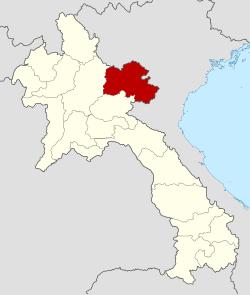
Most geological research suggests that Laos’s rare-earth potential lies in ion-adsorption clay deposits. These deposits form when granite rocks weather in humid climates, releasing rare-earth ions that become weakly bound to clay minerals. Although the deposits are generally low-grade, the metals can be extracted relatively easily by chemical leaching.
Houaphanh Province, Laos

A 2022 geological study led by Lü Liang reports that northern Lao provinces—particularly Xieng Khouang and Houaphanh—host deposits similar to southern China’s well-known ion-adsorption systems. The research identified ion-exchangeable rare earth concentrations of roughly 400–700 ppm and suggested the region could host hundreds of thousands of tonnes of rare earth oxides, though such figures remain preliminary and require further drilling and resource reporting.
Exploration technology is also evolving. A 2025 study (opens in a new tab) by Yakang Ye integrated satellite imagery, terrain analysis, and field mapping to identify six prospective exploration zones in Houaphanh Province, with field verification confirming multiple ion-adsorption ore bodies.
Meanwhile, a 2026 mineralogical study (opens in a new tab) led by Mingjun Xie at the Meng Khun deposit demonstrated that intense tropical weathering can produce heavy-rare-earth-enriched clay deposits even when the original host rock contains mostly light rare earth elements. If confirmed elsewhere, this finding could significantly expand exploration potential across northern Laos.
Environmental Risks and Controversies
Despite the geological promise, ion-adsorption mining is environmentally controversial.
Extraction typically involves in-situ leaching with ammonium-based solutions that dissolve rare earth ions from clay layers. If poorly controlled, these chemicals can contaminate groundwater and nearby rivers.
Environmental concerns have already surfaced in Laos. Reports in 2024 described river contamination linked to a rare earth mining operation in Houaphanh Province, with villagers alleging chemical discharge into local waterways. While remediation efforts reportedly followed, the incident highlights the environmental governance challenges associated with rapid rare earth development.
Satellite monitoring and policy research from institutions such as the Stimson Center, along with international reporting, indicate rare earth mining activity in Laos has expanded rapidly since around 2022, sometimes in remote or environmentally sensitive areas.
Legal and Governance Uncertainty
Regulatory clarity remains another challenge.
An English translation of Laos’ 2017 Law on Minerals contains language suggesting some rare earth minerals may fall within broader categories of restricted or controlled resources. While interpretations vary and enforcement appears uneven, the law underscores ongoing policy evolution around strategic minerals in Laos.
For investors, this means regulatory transparency and stable permitting processes will be critical if the country hopes to attract diversified international partners beyond Chinese operators.
Shared Limitations in the Evidence
Current research provides valuable insights but leaves significant gaps. The Kyophilavong study (opens in a new tab) focuses on policy and economic structure, not geological resource quantification. Geological studies remain site-specific and exploratory, meaning national-scale resource estimates remain uncertain. Investigative reporting and satellite analysis can detect mining expansion but cannot independently confirm ore grades, environmental compliance, or long-term remediation performance.
Across all perspectives, the most pressing need is transparent, mine-by-mine technical disclosure, including verified resource estimates and environmental monitoring data.
Prospects for Heavy Rare Earths in Laos
Laos’ heavy rare earth potential appears geologically credible but economically conditional. If the country strengthens environmental oversight, establishes standardized reporting, and develops partnerships that include domestic processing and technical capacity building, Laos could transform rare earth resources into a long-term development engine.
If those governance reforms fail to materialize, however, Laos risks becoming another upstream supplier feeding China-centered refining and magnet supply chains, with limited domestic economic benefit and elevated environmental risk.
Ultimately, Laos’ rare earth future will depend not only on geology—but on policy discipline, institutional capacity, and supply chain strategy.
Emerging Strategic Narratives for the Rare Earth Sector
This research also highlights three emerging storylines shaping the future of heavy rare earth supply in Southeast Asia:
The Myanmar–Laos HREE Corridor
Analysts increasingly describe northern Myanmar and Laos as forming an emerging heavy rare earth production belt supplying China’s refining industry. As environmental crackdowns and geopolitical shifts affect Myanmar production, Laos could become an increasingly important upstream source of HREE feedstock.
Ion-Adsorption Clays: The World’s Most Controversial Rare Earth Deposits
These deposits provide most of the world’s heavy rare earth supply, yet they are also among the most environmentally contentious. The same chemical leaching methods that make extraction economically viable can create significant groundwater and river contamination risks if poorly managed.
Why Laos Could Become the Next Heavy Rare Earth Battleground
With global demand for dysprosium and terbium rising—driven by electric vehicles, wind turbines, and defense technologies—countries with ion-adsorption deposits are gaining strategic importance. Laos sits at the intersection of Chinese supply chains, ASEAN mineral policy, and global efforts to diversify rare earth supply, positioning it as a potential flashpoint in the evolving geopolitics of critical minerals.
REEx has reached out to Professor Kyophilavong to further elaborate on findings. Any updates may be included in a future article.
Sources: Kyophilavong et al. (2026), The Promotion of Investment in the Rare Earth Elements Supply Chain in Laos; Lü Liang et al. (2022); Ye et al. (2025); Xie et al. (2026); Stimson Center analyses; Reuters reporting (2025–2026); Laos Law on Minerals (2017); Radio Free Asia (2024).


0 Comments
Discuss this article