
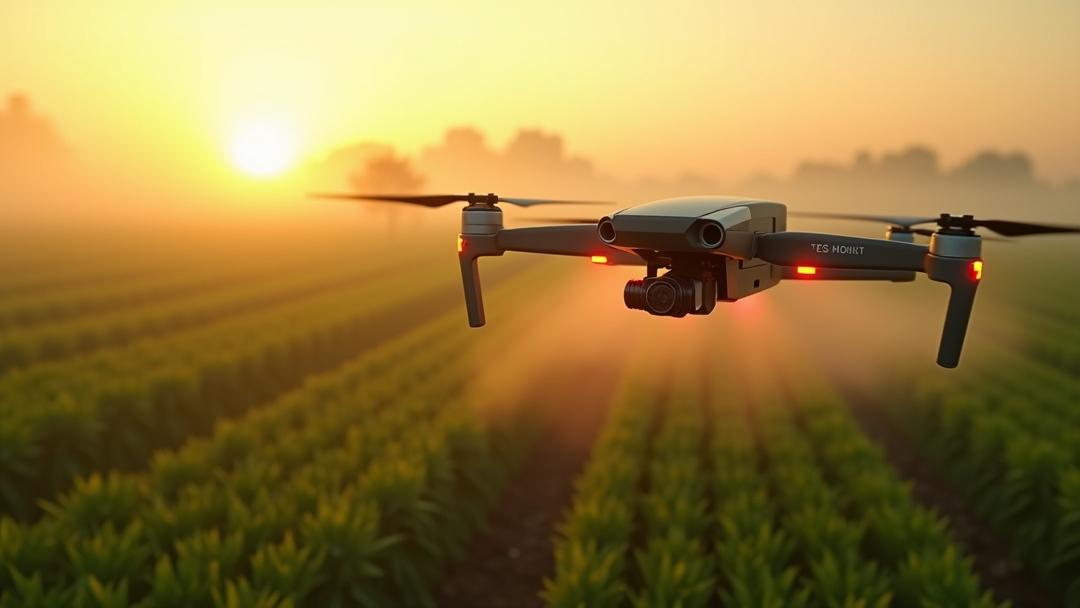
Before aerial robotics, growers relied on manned aircraft or ground rigs for blanket spraying and scouting, which meant coarse resolution, soil compaction, and limited windows during wet conditions. After agricultural drones, operators can fly low and slow with centimeter-level positioning, apply inputs precisely, and capture repeatable imagery, reducing overlaps and drift while opening more workable hours per season. Rare earth elements are embedded in the enabling parts: high-power-density permanent magnets in brushless motors, lanthanum-rich optical glass for lenses, phosphors in white LEDs for navigation, and rare-earth-doped optics in LiDAR payloads. This comprehensive guide explains how these subsystems work, what performance they unlock, and where supply risks lie from mine to magnet.
Table of Contents
How did agricultural drones change the way we use rare earth elements in farming?
When agricultural drones entered the scene, farmers had limited options for field monitoring and precise application. They relied on manned aircraft for aerial spraying, which meant flying high and fast with poor resolution. Ground equipment caused soil compaction and couldn't operate when fields were muddy. Timing windows were tight, and blanket applications wasted chemicals on healthy areas while missing problem spots.
Agricultural drones changed everything by bringing rare earth-powered precision to the field. These unmanned aircraft fly low and slow with centimeter-level GPS positioning, capturing detailed imagery and applying inputs exactly where needed. The secret lies in rare earth elements embedded throughout their systems—from the powerful magnets spinning their rotors to the specialized glass focusing their cameras.
Today's agricultural drones can operate in conditions that ground conventional equipment. They reduce chemical drift, open more workable hours per season, and deliver data that helps farmers make better decisions. This transformation wouldn't be possible without rare earth elements providing the compact power, clear optics, and reliable illumination these machines need.
Rare Earth Role in Agricultural Drones
Which Elements Power These Machines
The workhorse elements in agricultural drones are neodymium and praseodymium. These metals form the core of Nd-Fe-B permanent magnets that deliver energy products exceeding 35-50 MGOe—about ten times stronger than traditional ferrite magnets. This extraordinary strength enables compact motors that can lift heavy spray tanks while maintaining efficiency.
Temperature resistance comes from dysprosium and terbium additions. Even small amounts of these elements raise the magnets' coercivity (opens in a new tab), preventing them from losing magnetization when motors heat up during continuous spraying missions or operation in hot climates. Without these additions, motors would fail during demanding agricultural work.
Some specialized components use samarium-cobalt magnets instead. While these don't match NdFeB's maximum strength, they excel in extreme temperatures and resist corrosion better. You'll find them in endurance motors or actuators located near heat-generating electronic speed controllers.
The optical systems depend heavily on lanthanum. This element goes into high-index glass that reduces aberrations in compact camera lenses. Better glass means sharper images from smaller, lighter cameras—critical for drones that need to minimize weight while capturing field data.
Lighting systems use yttrium aluminum garnet doped with cerium, known as YAG:Ce. This phosphor converts blue LED light into white, creating the navigation lights and work illuminators that keep drones visible and safe during dawn and dusk operations.
Advanced mapping systems may include neodymium-doped YAG lasers or erbium-ytterbium doped fibers. These materials enable efficient laser emission at specific wavelengths for LiDAR ranging, helping drones measure crop height and create detailed terrain models.
How Rare Earths Make It Work
The propulsion system showcases rare earth magic most clearly. Those NdFeB magnets in the rotors create incredibly strong magnetic fields in tiny packages. This high thrust-to-weight ratio (opens in a new tab) means drones can carry heavier spray loads or larger batteries without becoming unwieldy. The dysprosium and terbium additions ensure motors keep working even when internal temperatures climb above 80-120°C during aggressive maneuvers or hot weather operations.
Spray pumps and valve actuators benefit from the same magnet technology. The high torque density and fast response of rare earth motors enable precise flow control. Farmers can adjust droplet size on the fly, maintaining consistent application rates even as the drone speeds up or slows down around obstacles. This precision reduces chemical waste and prevents drift to neighboring fields.
Camera systems rely on lanthanum glass to pack professional-quality optics into lightweight packages. The high refractive index with low dispersion means lenses can be smaller while still gathering plenty of light and maintaining sharpness across the frame. This enables drones to capture clear multispectral imagery even when flying in windy conditions that cause vibration and movement.
The YAG:Ce phosphor in LED lights provides stable white illumination with excellent efficiency. These lights last thousands of hours while drawing minimal power from the battery. Navigation lights keep the drone visible to operators and other aircraft, while work lights help pilots see their spray patterns during those critical early morning and late evening application windows.
Journey from Mine to Product
From Rock to Rare Earth
The journey starts at mines extracting bastnäsite, monazite, or ion-adsorption clays containing mixed rare earth elements. These ores undergo chemical processing to produce mixed rare earth oxides. Solvent extraction then separates individual oxides (opens in a new tab) like neodymium oxide, praseodymium oxide, dysprosium oxide, and lanthanum oxide.
Converting oxides into useful materials requires different paths for different components. Magnet production involves reducing the oxides to metals, then alloying them—neodymium and praseodymium with iron and boron for NdFeB magnets, or samarium with cobalt for SmCo magnets. Manufacturers sinter or rapidly solidify these alloys, then machine them to precise shapes and apply protective coatings.
Optical components follow a different route. Lanthanum-containing glass gets melted and formed into blanks, then precision ground and polished using cerium oxide slurries. Multiple coating layers enhance light transmission and reduce reflections. Phosphor manufacturers synthesize YAG:Ce powders and package them with blue LED chips to create white light sources.
Component manufacturers integrate these materials into motors, pumps, cameras, and lights. Drone makers then assemble everything into complete systems, conducting quality tests on thrust output, thermal performance, image quality, and electromagnetic interference before shipping to agricultural users.
Supply Chain Vulnerabilities
The rare earth supply chain has significant bottlenecks that affect drone availability and pricing. China processes about 90% of global rare earths, creating dependency for magnet and phosphor production. This concentration means policy changes or trade disputes can quickly impact component availability.
Heavy rare earth elements like dysprosium and terbium face particular constraints. The specialized facilities needed for high-coercivity magnet production—including sintering equipment and grain-boundary diffusion technology—exist in only a few locations globally. When demand spikes or export policies shift, drone manufacturers have limited alternatives.
Ion-adsorption clays provide most of the world's heavy rare earths, but supply remains volatile. Trade disruptions between Myanmar and China have repeatedly affected dysprosium availability, causing price swings that cascade through the drone motor supply chain and extend delivery times for agricultural equipment.
Statistics and Societal Impact
Market Growth and Scale
The numbers tell a compelling story about agricultural drones and their rare earth dependencies. The agricultural drone market reached $1.37 billion in 2023 (opens in a new tab) and continues growing at approximately 25% annually. This rapid expansion drives demand for rare earth magnets and optical components as manufacturers scale production.
The performance advantages of rare earth materials justify their use despite supply concerns. NdFeB magnets achieve energy products of 35-50 MGOe, delivering about ten times the magnetic strength of ferrite alternatives in the same volume. This density advantage proves critical for aerial platforms where every gram matters.
Processing concentration remains stark, with China controlling 90% of rare earth refining capacity. This dominance extends through the entire supply chain, affecting everything from raw material costs to finished motor availability. Meanwhile, cerium oxide remains the dominant glass polishing compound, underpinning lens manufacturing for drone cameras worldwide.
Real-World Agricultural Benefits
High-coercivity magnets translate directly into practical advantages for farmers. Motors that maintain efficiency under heat stress enable longer flight times per battery charge. This means covering more acres per hour during critical spray windows, with fewer stops for battery swaps or motor cool-downs.
Superior optics and lighting improve data quality for precision agriculture. Sharper images and consistent illumination enhance the accuracy of vegetation indices like NDVI, helping farmers identify problem areas earlier. Better data leads to more targeted treatments, reducing unnecessary chemical applications and lowering input costs.
The compact, reliable components enabled by rare earths make spot treatments practical at scale. Drones can apply chemicals precisely where needed, cutting total usage and reducing off-target drift. They also provide field access when wet soil conditions would trap or damage conventional ground equipment, extending the operational window for time-sensitive applications.
Service providers and cooperatives benefit from supply chain stability when rare earth components remain available. Consistent access to replacement parts and new equipment reduces downtime during peak season, ensuring farmers can get treatments applied when crops need them most.
Innovators and History
Breakthrough Moments in Drone Development
Modern agricultural drones are the product of steady advances in aviation, sensors, and automation. Much of today’s UAV technology traces back to pioneers like Abraham Karem, often called the father of modern UAVs, whose long-endurance drone designs proved what unmanned aircraft could do. In the late 1980s and 1990s, Yamaha’s R-50 and RMAX industrial unmanned helicopters brought drones directly into agriculture, showing that crop spraying and precision application could be done safely and efficiently without a pilot onboard.
The next major leap came when Frank Wang, founder of DJI, helped make GPS-stabilized multirotor drones widely accessible. This democratized aerial imaging and data collection, allowing farmers of all sizes to map fields, assess crop health, and respond to stress earlier than ever before.
By the 2010s, ag-focused drones were evolving from scouting tools into true field equipment. Today’s platforms can perform targeted spraying, seeding, fertilizing, and crop monitoring with centimeter-level precision. Automation, AI analytics, and swarm coordination are now turning drones into fully integrated components of digital farm management systems.
The trajectory is clear: larger payloads, smarter autonomy, and tighter integration with agronomic data — giving farmers better insight with fewer inputs, and transforming drones from “nice-to-have gadgets” into essential farm machinery.
From Laboratory to Farm Field
GM's Magnequench division pioneered melt-spun NdFeB powders for bonded magnets, while Hitachi and Sumitomo advanced sintered versions for maximum strength. These parallel development paths created options for different motor designs, first in model aircraft and later in commercial agricultural drones.
Optics companies industrialized lanthanum glass production and cerium oxide polishing to meet growing camera demand. Mass production techniques brought costs down while maintaining the optical quality needed for precision agriculture applications.
LED and laser manufacturers scaled up phosphor packaging and rare earth-doped gain media into rugged, field-ready components. These emitters now provide navigation lights, work illumination, and in some cases, LiDAR systems for advanced crop monitoring and terrain mapping.
Why It Matters Now
Current Agricultural Pressures
Modern farming faces mounting challenges that make drone technology increasingly valuable. Labor shortages limit the availability of skilled equipment operators, while narrowing weather windows demand faster, more flexible application methods. Drones equipped with rare earth components extend operational capabilities, allowing work during marginal conditions when traditional equipment sits idle.
Regulatory pressures continue tightening around chemical drift and worker exposure. Low-volume, targeted drone applications help farms meet these requirements while maintaining productivity. The stable motors and precise optics enabled by rare earths support spot spraying and border treatments that minimize off-target movement.
Battery improvements combine with rare earth motor efficiency to push practical limits further each year. Lower total system weight and increased flight endurance expand the acreage that one drone can cover per hour, bringing the technology closer to matching ground equipment productivity for many applications.
Security and Policy Considerations
Supply chain vulnerabilities have prompted government action to secure rare earth access. The concentration of processing and magnet manufacturing in China exposes agricultural drone supplies to geopolitical risks, spurring investment in alternative sources.
The United States and allies are funding new magnet production facilities to reduce dependency. Projects like MP Materials' U.S. magnet plant aim to create domestic capacity for critical industries including precision agriculture. Department of Energy and Defense Production Act initiatives support these efforts to stabilize component availability.
Regulatory frameworks continue evolving alongside the technology. FAA Part 107 rules and international equivalents affect payload limits, operations over people, and beyond-visual-line-of-sight flights. These regulations influence drone design requirements and the robustness needed from rare earth components.
Future Outlook
Technology and Material Innovations
Magnet manufacturers are pushing efficiency boundaries while reducing critical element usage. Grain-boundary diffusion and core-shell microstructures cut dysprosium and terbium requirements without sacrificing high-temperature performance. These advances help insulate drone production from heavy rare earth supply shocks.
Design strategies increasingly differentiate between critical and non-critical components. Propulsion motors still require the highest-performance NdFeB grades, but auxiliary actuators might use ferrite or SmCo alternatives. Advanced cooling systems and smart motor controllers also reduce thermal stress, preserving magnet performance with less rare earth content.
Optical systems continue adopting enhanced lanthanum glass formulations with improved coatings. Growth in interference filters provides alternatives to some rare earth-doped components for spectral selection. However, cerium oxide polishing remains the standard for achieving optical surface quality at production scales.
Recycling initiatives targeting production scrap and end-of-life products could eventually supplement primary rare earth supplies. Technical and economic challenges remain significant for small drone components, but larger-scale recycling infrastructure may eventually benefit the agricultural drone sector.
The Next Five to Ten Years
Agricultural drone fleets will likely expand significantly as autonomy improves and payloads increase. This growth will drive continued demand for high-performance rare earth magnets and optical components unless substitution technologies mature rapidly. Efficiency improvements may modestly reduce the rare earth intensity per drone, but total consumption will rise with fleet expansion.
Heavy rare earth supply bottlenecks for dysprosium and terbium will persist without breakthrough innovations in coercivity enhancement. Supply diversification efforts in Australia, the United States, and Europe can help mitigate risks but won't eliminate dependency entirely in the near term.
Policy support for domestic magnet manufacturing and circular economy initiatives should stabilize pricing and reduce lead time variability. This predictability will prove especially valuable during peak agricultural seasons when equipment availability directly impacts crop yields and farm profitability.
Conclusion
Rare earth elements fundamentally enable agricultural drones through high-power-density motors, precision optics, and advanced sensors that transform field operations. While supply chain concentration poses risks, ongoing innovations in grain-boundary diffusion, alternative materials, and domestic production capacity are building resilience. As farms increasingly rely on aerial robotics for precise application and monitoring, understanding the rare earth foundation becomes critical for stakeholders across the agricultural technology ecosystem. The next decade will test whether design optimization and supply diversification can keep pace with expanding drone adoption in global agriculture.
FAQs
How do rare earth magnets improve agricultural drone performance?
NdFeB magnets provide high energy density for compact, efficient brushless motors delivering more thrust per kilogram. With Dy/Tb additions or SmCo alternatives, motors maintain performance at elevated temperatures, supporting heavier spray payloads and longer missions without overheating.
Are all agricultural drones dependent on heavy rare earths like dysprosium?
Not always. Many designs minimize Dy/Tb through grain-boundary diffusion, improved cooling, and control algorithms. Some actuators can use ferrites or SmCo instead, reserving heavy-REE content for the most thermally stressed propulsion motors.
Where do the optics in drone cameras use rare earths?
Lanthanum-containing glass improves refractive index and lowers dispersion in compact lenses. CeO2 is widely used for optical polishing, while white LEDs rely on YAG:Ce phosphors for stable illumination in navigation and work lights.
Do mapping LiDARs on drones use rare earth elements?
Many small LiDARs employ rare-earth-doped lasers or fibers like Nd:YAG at 1064 nm, providing efficient, stable near-IR emission for lightweight, low-power ranging suitable for canopy models and terrain mapping.
What supply risks could affect agricultural drone availability?
Concentration of REE separation and magnet manufacturing in China, plus heavy-REE sourcing constraints, can cause price spikes or lead-time shocks. Onshoring magnet plants and optimizing designs for lower Dy/Tb content are key mitigations underway.
