
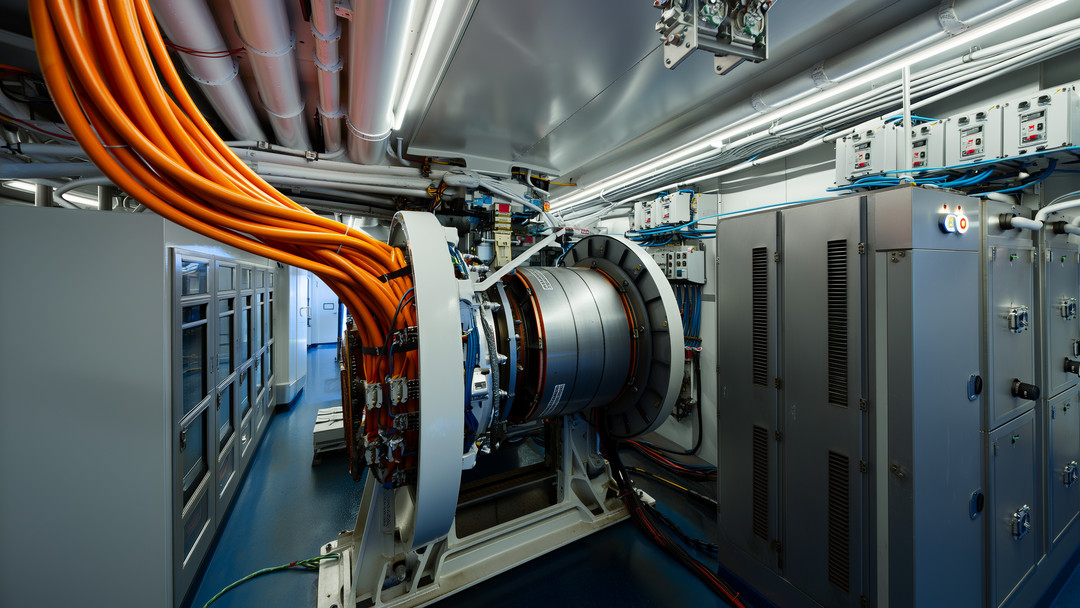
Traditional ships relied on mechanical shaft lines from diesel engines or steam turbines, which constrained machinery layout and made part-load operation inefficient and noisy, especially on vessels with large hotel loads or dynamic positioning. Electric ship propulsion decouples prime movers from propulsors by generating electrical power, conditioning it, and driving propulsion motors through variable-speed drives, improving controllability, redundancy options, and machinery placement flexibility. Rare earth elements matter because high-torque-density motors and compact actuators increasingly depend on permanent magnets containing neodymium, praseodymium, dysprosium, terbium, and samarium, while onboard sensing and indication can use REE phosphors and optics, and some emissions-control or fuel-processing pathways can involve REE catalysts and alloys. This article explains the system energy flow, where REEs show up in real hardware, what performance tradeoffs operators face in mass, space, safety, charging, and cost, and why supply-chain chokepoints can influence design choices and fleet timelines.
Table of Contents
How Did Electric Ship Propulsion Change Marine Propulsion Engineering — and Why Do Rare Earths Matter?
For most of maritime history, propulsion meant a direct mechanical connection. Diesel engines or steam turbines turned long shaft lines that ran through the hull to the propeller. This setup worked, but it came with real constraints. Engine rooms had to be positioned to keep those shaft lines as short and straight as possible. At low loads — common during dynamic positioning (DP) or port approach — those big engines ran inefficiently, burning more fuel per unit of work and producing more noise and vibration than anyone wanted.
Electric ship propulsion changed this picture by breaking the mechanical link between the prime mover and the propeller. Instead of spinning the shaft directly, engines (or other power sources) generate electricity. That electricity is conditioned, distributed, and fed to electric motors that drive the propulsors. The result is a more flexible arrangement: engines can go almost anywhere in the hull, multiple generators can share the load, and operators gain finer control over thrust at every speed.
So where do rare earth elements (REEs) fit in? The high-torque-density motors at the heart of many electric propulsion systems rely on permanent magnets made from elements like neodymium, praseodymium, dysprosium, terbium, and samarium. Beyond motors, REE phosphors containing europium, yttrium, and terbium appear in some onboard indicators and optical sensing components. Cerium and lanthanum play roles in catalytic materials and polishing compounds used upstream in optics and coatings.
This article walks through the energy flow in an electric propulsion system, identifies where REEs show up in real hardware, explains the performance tradeoffs operators face — mass, space, safety, charging infrastructure, and cost — and examines why supply-chain chokepoints can shape design choices and fleet timelines.
Rare Earth Role in Electric Ship Propulsion
Which Elements Are Used and Why
The permanent magnets inside high-power-density propulsion motors are the single biggest REE application in electric ship propulsion. Neodymium (Nd) and praseodymium (Pr) form the backbone of NdFeB (neodymium-iron-boron) magnets, which deliver the high remanence needed to generate strong magnetic fields in a compact package. According to the USGS Mineral Commodity Summaries and technical documentation from magnet producers such as Proterial (formerly Hitachi Metals), NdFeB magnets have the highest energy product of any commercially available permanent magnet type.
Dysprosium (Dy) and terbium (Tb) are added in small percentages to raise the coercivity of NdFeB magnets. Coercivity is the magnet's resistance to losing its magnetization, and it drops as temperature rises. Marine machinery spaces routinely see elevated ambient temperatures, and transient overloads can push motor winding temperatures well above normal. Without adequate coercivity margin, magnets can partially demagnetize — a serious and often irreversible failure. Fraunhofer Institute magnet research summaries and IEC magnet materials literature document this tradeoff in detail.
Samarium (Sm), paired with cobalt in SmCo magnets, offers very high temperature stability and better corrosion resistance than standard NdFeB grades. SmCo magnets are heavier and more expensive per unit of energy product, but they can be the right choice for harsh-duty motors, compact auxiliary actuators, and some sensor assemblies, as described in ASM International handbooks.
Europium (Eu), yttrium (Y), and terbium (Tb) can appear in phosphor materials used in status indicators, backlights, and certain optical sensing components found in switchgear and monitoring interfaces. These are small quantities compared to magnet applications, but they contribute to reliable fault diagnostics. Cerium (Ce) and lanthanum (La) play supporting roles in catalytic materials and polishing compounds used in upstream manufacturing of optical elements and coatings.
How It Works
In a permanent magnet propulsion motor, arrays of NdFeB or SmCo magnets are mounted on the rotor. As the rotor spins inside the stator's electromagnetic field, those magnets create a high air-gap flux density. Higher flux density means higher torque density — more turning force from a smaller, lighter machine. For a given shaft power rating, a PM motor can weigh significantly less and occupy less volume than an equivalent electrically excited machine. On vessels where hull space and payload fraction are tightly constrained, this advantage matters.
Thruster and azimuth pod steering actuators also benefit from REE magnet motors. Precise torque control at low speeds translates directly into better DP station-keeping. The propulsor responds more smoothly to wave disturbances, reducing hunting behavior and the electrical transients that ripple back through the power system.
In the power electronics and monitoring layer, REE phosphors and optical elements contribute to clear, stable indication on switchboard displays and some sensor assemblies. While this is a minor application by mass, reliable fault indication supports faster troubleshooting and higher uptime in remote operations.
One important design constraint deserves a callout: when continuous operation pushes magnet temperatures toward their demagnetization threshold, designers have two main options. They can specify Dy/Tb-enhanced NdFeB grades with higher coercivity margins, or they can switch to SmCo magnets entirely. Either path raises magnet cost but reduces the risk of irreversible performance loss under overload or fault conditions.
Journey from Mine to Product
Supply Chain Steps
The path from raw material to a spinning propulsion motor is long and specialized. REE-bearing ore — typically bastnäsite, monazite, or ion-adsorption clay — is mined and beneficiated into a mineral concentrate. That concentrate then goes through chemical separation to produce individual rare earth oxides (REOs). Separation yield and purity at this stage strongly influence downstream magnet cost and availability.
REOs are reduced to metals, then combined into alloys. For NdFeB magnets, the alloy is typically strip-cast, hydrogen-decrepitated, jet-milled into fine powder, aligned in a magnetic field, pressed, and sintered at high temperature. The sintered blocks are then machined to precise dimensions, coated to resist corrosion (critical in marine environments), and magnetized. Finished magnets are assembled onto rotors.
Those rotors are integrated with stators, insulation systems, bearings, housings, and cooling circuits to form complete marine-rated machines. Factory acceptance testing (FAT) follows, typically including thermal verification, vibration analysis, and insulation diagnostics aligned with classification society expectations.
In parallel, phosphor and optical-material supply chains feed indicators, sensors, and metering components. These move from refined oxides through coated phosphor powders or optical-grade materials into finished electronic assemblies used in switchboards and control systems.
Typical Chokepoints
Three areas tend to create the tightest bottlenecks:
- Heavy REE supply: Separation capacity for dysprosium and terbium is limited and geographically concentrated. These elements are essential for high-coercivity magnet grades used in hotter or higher-overload motor designs.
- Magnet manufacturing quality: Sintering process control, grain alignment precision, and coating reliability directly affect long-term corrosion resistance and magnetic performance in salt-laden marine atmospheres.
- Qualification cycles: Marine OEMs and classification societies typically require lengthy validation for new magnet grades, new suppliers, or revised corrosion-protection stacks. This can slow substitution or second-sourcing even when alternative material is physically available.
These chokepoints mean that supply disruptions do not just affect price — they can delay newbuilds and complicate spare parts logistics for years.
Statistics and Societal Impact
Quantitative Snapshot
The shift toward electric and hybrid-electric propulsion is accelerating, particularly in specific vessel segments. According to DNV's Maritime Forecast to 2050 (2025 update) and Clarksons Research newbuild data, hybrid-electric or fully electric propulsion accounts for a growing share of newbuild orders in the ferry, offshore support vessel (OSV), and short-sea shipping segments, with some estimates placing the share above 10 percent of relevant newbuild contracts in Northern Europe as of 2025.
Propulsion motor power ratings vary widely by vessel class. OEM public specifications from ABB, Wärtsilä, and Siemens Energy show typical ranges of 1 to 5 MW per motor for many ferry and OSV applications, scaling to multi-megawatt-per-shaft installations for cruise ships and ice-capable vessels. According to IEA critical minerals reporting and Fraunhofer magnet research, a PM motor may use on the order of 1 to 2 kilograms of NdFeB magnet material per megawatt, though this varies with motor topology and speed.
For battery-electric ferries on short routes, (opens in a new tab)installed battery energy commonly falls in the range of 1 to 5 MWh, with shore charging power levels of 2 to 10 MW depending on turnaround time, according to operator disclosures and classification society case reports from DNV and Bureau Veritas.
Measured benefits from electrification projects include onboard noise reductions of 10 dB or more and extended maintenance intervals for propulsion machinery, as documented in class-backed case studies from DNV and Lloyd's Register advisory publications.
Downstream Effects
Electric architectures improve part-load fuel efficiency by allowing operators to run fewer generators closer to their optimal loading point. This is especially valuable for vessels with variable duty cycles — DP operations, offshore supply runs, and cruise ships that spend long periods at low-to-mid power.
Redundancy improves when power is distributed across multiple generators, converters, and switchboards. With proper segregation and class-approved design, the system can degrade gracefully after a single failure rather than losing propulsion entirely.
Societal benefits extend beyond the vessel. Shore power connections eliminate stack emissions at berth. Quieter operations reduce noise pollution near ports and environmentally sensitive areas. Improved maneuverability during docking and DP operations can reduce incident risk and associated environmental consequences.
Innovators and History
Key Breakthroughs
The commercialization of NdFeB permanent magnets in the 1980s — developed independently by General Motors (Sagawa) and Sumitomo Special Metals in Japan — was a foundational step. These magnets offered dramatically higher energy products than earlier ferrite or AlNiCo types, enabling compact, high-torque-density motors. IEEE publications and ASM International references document this as one of the most consequential materials breakthroughs of the late twentieth century.
Equally important was the maturation of high-power semiconductor switches. Insulated-gate bipolar transistors (IGBTs) and later silicon carbide (SiC) devices enabled efficient variable-speed drives at multi-megawatt power levels. Without these converters, electric motors could not be controlled with the precision and efficiency needed for propulsion. The IEEE Industry Applications Society and OEM application notes from ABB and Siemens trace this evolution in detail.
Classification societies played a critical enabling role by developing rules for integrated power systems, redundancy design, electrical segregation, and battery safety. Lloyd's Register and DNV published guidance that allowed shipbuilders and owners to adopt diesel-electric and hybrid architectures with confidence that insurance and flag-state approval would follow.
The rollout of shore power standards — sometimes called "cold ironing" — gave electric and hybrid vessels a way to connect to grid power at berth. IEC and ISO working groups, along with port authorities, established the technical and safety frameworks that made this practical.
From Lab to Product
Research on magnet microstructure, advanced insulation systems, and converter control algorithms moved into production through motor OEM qualification programs, accelerated life testing, and class-backed verification. Early commercial adoption concentrated in high-value mission profiles — cruise ships, DP-capable offshore vessels, icebreakers, and ferries — where the benefits of controllability, redundancy, and reduced noise justified the added electrical complexity. OEM delivery histories and classed vessel case studies from DNV, Wärtsilä, and ABB document this progression.
Why It Matters Now
Current Drivers
The regulatory pressure on maritime emissions is no longer hypothetical. The IMO's 2023 Revised GHG Strategy is being translated into concrete compliance actions in 2025 and 2026. According to IMO MEPC documents and class advisory notes from DNV and Lloyd's Register, owners must now evaluate propulsion architectures that can reduce fuel consumption, accommodate alternative fuels, and integrate shore power — all without creating unacceptable operational penalties.
Two specific regulatory instruments are shaping decisions right now. The Carbon Intensity Indicator (CII) creates operational pressure by rating vessels on their actual carbon performance, incentivizing better part-load efficiency and energy management. The Energy Efficiency Existing Ship Index (EEXI) imposes technical constraints on existing vessels (opens in a new tab), making retrofits with electric or hybrid architectures a serious consideration for ships that would otherwise face power limitation. DNV's industry compliance summaries describe how these interact in practice.
Battery costs have continued to decline, safety engineering for lithium-ion systems has matured, and port electrification programs have expanded enough to make specific routes technically viable. But viability depends on aligning charging windows, grid capacity, and operational resilience — all engineered together, not assumed.
Security and Policy Context
REE supply chains remain geographically concentrated, particularly for separation and magnet manufacturing. According to USGS data and IEA critical minerals reports updated through 2025, this concentration creates procurement and schedule risks that can directly affect motor selection. Some operators and naval programs are choosing electrically excited synchronous motors — which avoid REE magnets entirely — specifically to reduce supply-chain exposure, even though these machines are typically larger and heavier.
Recycling and second-life pathways for NdFeB magnets are moving from pilot programs toward early commercialization. However, marine qualification requirements and traceability expectations mean that recycled magnet feedstock adoption will likely remain gradual through the late 2020s, as discussed in IEA circularity analyses.
Export controls, sanctions risk, and industrial policy incentives add another layer. For certain flag states and defense-adjacent projects, these factors can constrain which motor topologies, magnet grades, and suppliers are available, shaping architecture decisions beyond pure efficiency or cost optimization.
Future Outlook
Materials and Design Trends
Magnet thrift strategies are gaining traction. Grain-boundary diffusion (GBD) technology allows manufacturers to concentrate dysprosium and terbium at grain boundaries rather than distributing them throughout the magnet body. This maintains high coercivity while using significantly less heavy REE material. DOE critical materials programs and Fraunhofer publications describe GBD as one of the most impactful near-term approaches to reducing REE dependence.
Substitution will be selective rather than wholesale. Ferrite magnets can work in some lower-torque-density applications, but they generally increase motor size and weight — a poor tradeoff on space-constrained vessels. Electrically excited synchronous motors eliminate REE magnets entirely but require slip rings or brushless exciters, add rotor copper losses, and typically produce larger, heavier machines. OEM technical comparisons from ABB and Wärtsilä and IEEE papers frame these tradeoffs clearly.
Recycling of NdFeB magnets from end-of-life equipment and production scrap is expected to scale over the next decade. But marine assets have long service lives — 25 to 30 years is common — so meaningful closed-loop impact from ship-sourced magnets will lag behind shorter-lifecycle industries like automotive and wind energy.
Five-to-Ten Year Scenario
Demand for electric propulsion in ferries, offshore vessels, and specialized tonnage is likely to grow steadily. The tightest constraints are shifting from proving technical feasibility to solving infrastructure availability, verifying grid carbon intensity at charging ports, and ensuring supply-chain resilience for converters, switchgear, and magnets.
Several bottlenecks could pace this growth:
- Heavy REE supply for high-coercivity magnet grades, especially if demand from automotive and wind sectors grows simultaneously
- Convergence on high-voltage charging standards for marine applications, where inconsistency across ports currently complicates vessel design
- Skilled commissioning capacity for complex integrated power systems, where the number of qualified engineers and technicians has not kept pace with the installed base
Mitigation strategies include dual-sourcing magnet supply, adopting modular electrical architectures that allow component-level upgrades, and expanding digital commissioning and testing tools to improve quality assurance efficiency.
Policy and class rule evolution will likely tighten requirements for battery fire safety, electrical segregation, fault ride-through capability, and cyber resilience of power management systems. Forward-looking guidance from DNV and Lloyd's Register indicates that these requirements will increase engineering effort and build cost but will improve insurability, operational confidence, and long-term fleet value.
Glossary
NdFeB (neodymium-iron-boron) magnets: The highest-energy-product permanent magnets in commercial use, widely used in PM propulsion motors. Protective coatings (typically nickel, epoxy, or multi-layer stacks) are essential in marine environments to prevent corrosion from salt-laden atmospheres.
Coercivity: A measure of a magnet's resistance to demagnetization by external fields or high temperatures. Additions of dysprosium or terbium increase coercivity, providing the temperature margin needed for reliable operation in hot machinery spaces.
PM motor (permanent magnet motor): An electric motor with permanent magnets mounted on the rotor, eliminating the need for rotor windings and associated electrical losses. Compared to electrically excited synchronous motors, PM motors are typically more compact and efficient but depend on REE magnet supply.
IGBT (insulated-gate bipolar transistor): A semiconductor switching device used in high-power variable-speed drives to convert and control electrical energy delivered to propulsion motors. IGBTs handle the voltage and current levels needed for multi-megawatt marine applications.
PMS/EMS (Power Management System / Energy Management System): Supervisory control systems that optimize generator loading, battery charge/discharge, load sharing, and protection coordination across the vessel's electrical network.
Grain-boundary diffusion (GBD): A magnet-processing technique that introduces heavy REEs (Dy or Tb) selectively at the boundaries between magnetic grains rather than uniformly throughout the bulk. This achieves high coercivity with substantially less heavy REE material, reducing cost and supply-chain exposure.
FAQs
Is electric ship propulsion the same as a battery-electric ship?
Electric ship propulsion describes using electric motors to drive propulsors, regardless of whether electricity comes from diesel gensets, batteries, fuel cells, shore power, or hybrids. Battery-electric is one subset where batteries supply a large share of propulsion energy, typically suited to short routes with predictable charging windows and adequate port power.
Where do rare earths show up most in electric ship propulsion hardware?
The largest and most performance-critical use is typically in permanent magnet motors and sometimes PM generators, where neodymium and praseodymium provide magnetic strength and dysprosium, terbium, or SmCo options provide temperature and demagnetization robustness. Smaller amounts can appear in phosphors and optical elements in indicators and sensors, while cerium and lanthanum may appear indirectly through catalyst or polishing supply chains rather than in the propulsion drivetrain itself.
What limits regenerative energy recovery on ships?
Most ship profiles lack frequent high-power deceleration events, and propellers in water do not behave like road vehicle wheels with repeated braking cycles, limiting recoverable energy. Some recovery is possible in niche cases such as certain winch or crane operations or specific maneuvering profiles, but it is usually minor relative to propulsion energy and must be engineered to avoid destabilizing the electrical system.
How do class rules influence electric propulsion and battery safety design?
Class societies typically require segregation, redundancy design intent where specified, fault protection coordination, ventilation and gas detection where relevant, and verified fire protection and thermal runaway mitigation for batteries. These requirements drive practical design choices such as compartmentation, monitoring granularity, shutdown logic, and acceptance testing scope, affecting both capital expenditure and build schedule.
Does electric ship propulsion guarantee zero emissions?
Electric propulsion can be zero-emission at the point of use only when operating from onboard energy sources that do not emit, such as batteries charged with low-carbon electricity, but lifecycle emissions depend on shore power mix and upstream fuel pathways. In diesel-electric and hybrid cases, emissions reductions are real but conditional on how generators are dispatched, hotel loads, and operational profile, so measured outcomes should be verified with voyage and fuel-consumption data rather than assumed.
Conclusion
Electric ship propulsion represents a fundamental shift in marine engineering, decoupling prime movers from propulsors and enabling unprecedented flexibility in machinery arrangement, redundancy, and operational efficiency. Rare earth elements play a critical but often underappreciated role in this transformation, with neodymium, praseodymium, dysprosium, terbium, and samarium enabling the compact, high-torque-density permanent magnet motors that make electrification practical on space- and weight-constrained vessels. As IMO regulations tighten and port electrification expands, the demand for electric propulsion will grow across ferries, offshore support vessels, and specialized fleets. However, concentrated REE supply chains, qualification cycles for new materials, and the evolving landscape of export controls and industrial policy mean that design decisions must account for material availability alongside performance. The path forward involves magnet thrift strategies, selective substitution, gradual adoption of recycled feedstock, and continued collaboration between class societies, OEMs, and operators to ensure that electric propulsion delivers on its promise of cleaner, quieter, and more efficient maritime operations.
