
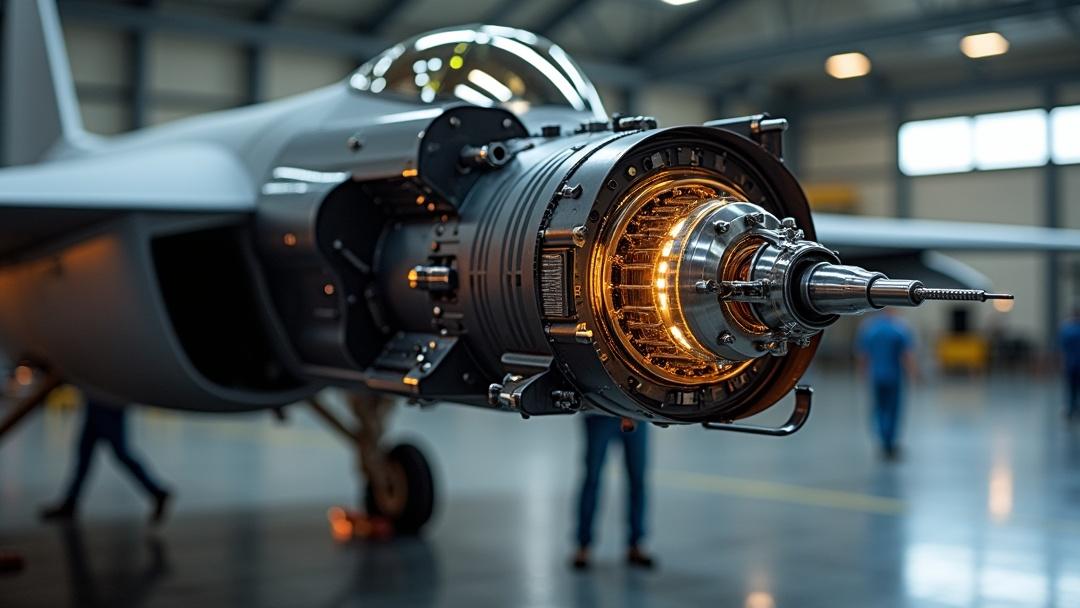
Electronic warfare systems fundamentally changed military operations by transforming the electromagnetic spectrum into a primary maneuver space where forces can sense, protect, and disrupt without direct contact. Before these systems matured, platforms relied mainly on speed, armor, terrain, and kinetic fires for survivability. Today, rare earth elements enable the compact, high-performance components that make modern EW capabilities possible—from neodymium magnets in antenna steering motors to yttrium-doped laser materials in countermeasure systems. This article explains what electronic warfare systems do, where rare earths appear in key subsystems, how supply chains shape availability, and what current trends mean for capability growth over the next decade.
Table of Contents
How Did Rare Earth Elements Help Electronic Warfare Transform Modern Military Operations?
Before electronic warfare systems matured, military platforms relied primarily on speed, armor, terrain features, and kinetic firepower to survive on the battlefield. Success in combat depended heavily on line-of-sight engagements and physical signatures like heat, sound, and visual detection. Forces maneuvered based on what they could see, hear, or physically sense.
The introduction of modern electronic warfare fundamentally transformed this paradigm. The electromagnetic spectrum became a primary battlespace where forces could sense, protect, and attack without direct physical contact. This shift meant that battles could be influenced, and sometimes decided, through invisible electromagnetic effects long before traditional weapons came into play.
Today's electronic warfare systems provide critical capabilities that improve survivability and mission effectiveness even in heavily contested environments. They can detect threats beyond visual range, protect friendly communications from jamming, and disrupt enemy sensors and command networks. These systems have become so essential that modern military operations are nearly impossible without them.
Rare earth elements play a crucial but often overlooked role in making these capabilities possible. These specialized materials enable the compact, high-performance components that form the backbone of electronic warfare hardware. From the powerful magnets in antenna steering systems to the optical materials in infrared countermeasures, rare earths provide the material foundation for electromagnetic superiority.
Rare Earth Role in Electronic Warfare Systems
Which elements are used and why
Neodymium and praseodymium form the core of NdFeB magnets, the workhorses of modern electronic warfare systems. These magnets appear in compact motors, actuators, and generators that support antenna pointing, stabilization systems, and platform power generation. Their exceptional magnetic strength allows for smaller, lighter components that can still deliver the performance needed in demanding military applications. The U.S. Department of Energy identifies these elements as critical to defense applications.
Dysprosium and terbium serve as crucial additives that help magnets maintain their performance at high temperatures. Electronic warfare systems generate significant heat from dense electronics and high-power transmitters. Without these heavy rare earth additions, standard NdFeB magnets would lose their magnetic properties when exposed to the extreme temperatures common in military electronics bays. Research shows that grain boundary diffusion of these elements can significantly improve temperature stability.
Samarium combines with cobalt to form SmCo magnets, an alternative to NdFeB in the most demanding environments. While more expensive than neodymium magnets, SmCo magnets excel in sustained high-heat conditions and resist corrosion better than other permanent magnet types. This makes them valuable for components exposed to harsh conditions or radiation.
Several rare earth elements contribute to optical and display technologies within electronic warfare systems. Yttrium, erbium, ytterbium, and neodymium appear in laser crystals and optical materials used for infrared countermeasures and advanced sensing. Europium and terbium serve as phosphor activators (opens in a new tab) that enable efficient, readable displays under challenging lighting conditions.
How it works
The connection between rare earths and electronic warfare capability becomes clear when examining specific subsystems. Antenna steering mechanisms use NdFeB or SmCo motors to achieve rapid, precise pointing. The high torque density of rare earth magnets allows these systems to track fast-moving threats while maintaining accuracy despite platform vibration and movement.
Power generation systems in electronic warfare platforms rely on rare earth magnets to achieve higher power density. Compact generators using NdFeB magnets can produce more electrical power without adding proportional weight. This extra power supports energy-hungry transmitters, processors, and cooling systems that make modern electronic warfare possible.
Directed infrared countermeasure systems showcase multiple rare-earth applications working together. These defensive systems use rare-earth-doped laser materials to generate efficient optical emissions while magnet-driven gimbals provide stable beam pointing. The combination enables precise tracking and effective countermeasures against heat-seeking threats.
Mission system displays depend on rare earth phosphors to present critical information clearly. Europium, terbium, and yttrium-based phosphors produce efficient visible light emission with precise color control. This allows operators to read displays clearly in bright sunlight or dim conditions while minimizing power consumption.
Temperature management drives many material choices in electronic warfare design. Dense RF power amplifiers and processors generate substantial heat that can demagnetize standard magnets. This thermal challenge makes dysprosium and terbium-enhanced NdFeB grades essential for maintaining performance. In the hottest locations, designers often specify SmCo magnets despite their higher cost.
Journey from Mine to Product
Supply chain steps
The path from rare earth ore to electronic warfare component involves multiple complex stages. Mining operations extract ore containing rare earth minerals, typically at concentrations of just a few percent. Beneficiation processes then concentrate these minerals, producing a mixed rare earth concentrate ready for chemical separation.
Chemical separation represents one of the most challenging steps in the supply chain. Facilities use solvent extraction and other techniques to separate individual rare earth oxides from the concentrate. This process requires sophisticated chemistry, specialized equipment, and careful waste management. The Department of Energy notes that separation capacity remains a critical bottleneck in the rare earth supply chain.
Once separated, rare earth oxides undergo conversion to metals through reduction processes. These metals are then alloyed with other elements to create feedstocks for magnets or specialty materials. For magnets, this involves combining rare earth metals with iron, boron, cobalt, or other elements in precise ratios.
Magnet fabrication follows a carefully controlled process. Manufacturers produce fine alloy powders, press them into desired shapes, and sinter them at high temperatures to create dense, strong magnets. After sintering, magnets undergo machining to final dimensions and receive protective coatings to prevent corrosion.
Defense-relevant electronics face additional requirements that extend the supply chain timeline. Components must meet strict traceability standards, undergo environmental qualification testing, and pass reliability screening. These extra steps ensure performance in military conditions but add significant time and cost compared to commercial equivalents.
Typical chokepoints
Separation capacity consistently constrains rare earth availability worldwide. The complex chemistry, environmental considerations, and specialized expertise required for separation are not evenly distributed globally. Most separation occurs in a handful of facilities, creating vulnerability to disruptions.
Heavy rare earths like dysprosium and terbium present particular challenges. These elements are structurally less abundant than light rare earths and often occur in different ore deposits. When high-temperature magnet demand increases, heavy rare earth availability can become the limiting factor for production.
Specialized manufacturing processes create additional bottlenecks even when raw materials are available. Sintering high-coercivity magnets requires precise control of temperature, atmosphere, and timing. Grain boundary diffusion processes that reduce heavy rare earth content need specialized equipment and expertise. Crystal growth for optical materials and uniform phosphor coating application represent other potential constraints.
Statistics & Societal Impact
Quantitative snapshot
The global electronic warfare market reached $16.2 billion in 2021 and is projected to grow to $20.8 billion by 2028, reflecting increased demand for spectrum superiority capabilities. This growth drives corresponding demand for rare earth-enabled components throughout the supply chain.
China dominates rare earth production and processing, accounting for approximately 70% of global mine production and an even higher percentage of separation capacity (opens in a new tab). This concentration creates supply risk concerns for defense industrial bases seeking predictable access to these critical materials.
The International Energy Agency projects that demand for rare earths for magnets could increase by four to six times by 2040 (opens in a new tab), driven by both clean energy transitions and defense modernization. This parallel demand from civilian and military sectors intensifies competition for limited supplies.
Permanent magnets account for approximately 30% of rare earth element consumption by value (opens in a new tab), making them the single largest application category. Within electronic warfare systems, magnets enable critical functions from antenna steering to power generation, establishing a direct link between rare earth availability and defense capability.
Downstream effects
Electronic warfare capabilities fundamentally alter operational risk calculations for military commanders. Systems that provide threat warning, enable emissions control, and degrade adversary sensors can dramatically improve platform survivability without requiring additional armor or weapons. A single electronic warfare pod can protect multiple aircraft in a formation, multiplying force effectiveness.
Spectrum awareness and protection capabilities improve mission reliability in complex electromagnetic environments. By reducing electromagnetic fratricide between friendly systems and maintaining reliable navigation, timing, and command links, electronic warfare systems enable coordinated operations in contested airspace. This coordination advantage often proves decisive in modern conflicts.
The integration of electronic warfare systems creates new engineering challenges that ripple through platform design. Increased power draw requires larger generators and more robust electrical distribution. Additional cooling capacity becomes necessary to manage thermal loads from high-power transmitters and processors. Signature management grows more complex as designers balance electromagnetic emissions with platform survivability requirements.
Innovators & History
Key breakthroughs
The development of samarium-cobalt magnets in the late 1960s and 1970s (opens in a new tab) enabled the first generation of compact, high-temperature permanent magnet designs. These magnets made possible smaller actuators and precision mechanisms that could operate reliably in the harsh conditions of military platforms.
The invention of neodymium-iron-boron magnets in the early 1980s (opens in a new tab) revolutionized electromagnetic component design. With energy densities far exceeding previous materials, NdFeB magnets accelerated the miniaturization of motors and generators throughout aerospace and defense electronics. This breakthrough enabled the compact, powerful systems that characterize modern electronic warfare.
Digital radio frequency memory technology emerged as a game-changing capability (opens in a new tab) for electronic attack missions. DRFM systems can capture, manipulate, and retransmit radar signals with high fidelity, creating sophisticated false targets and deception effects that were previously impossible.
Standardization efforts by NATO (opens in a new tab) and the U.S. Department of Defense (opens in a new tab) established common definitions and doctrine for electronic warfare. These frameworks improved interoperability between allied forces and provided clarity for procurement and development programs, even as underlying technologies continued to evolve rapidly.
From lab to product
The transition from materials research to fielded systems required advances across multiple disciplines. Magnet manufacturers developed powder processing techniques, sintering controls, and coating systems that could meet military specifications for vibration resistance, corrosion protection, and thermal cycling. Quality systems evolved to provide the traceability and consistency demanded by defense applications.
Electronic warfare signal processing moved from laboratory demonstrations to operational systems as enabling technologies matured. High-speed analog-to-digital converters, field-programmable gate arrays, and graphics processing units provided the computational power needed for real-time spectrum analysis and response. Reliable cooling solutions allowed these processors to operate continuously in confined spaces.
Commercialization occurred through collaboration between defense prime contractors and specialized suppliers. Large integrators like Raytheon, Northrop Grumman, and BAE Systems combined subsystems from magnet manufacturers, motion control specialists, RF component suppliers, and optical manufacturers. Each supplier brought deep expertise in their domain while meeting the environmental and documentation requirements of military programs.
Why It Matters Now
Current drivers
Electronic warfare has gained renewed urgency as military forces worldwide depend increasingly on electromagnetic systems. Modern operations rely on radar for sensing, GPS for navigation and timing, datalinks for coordination, and satellite communications for command and control. Each of these dependencies creates vulnerabilities that electronic warfare can exploit or protect.
The proliferation of unmanned aerial systems and loitering munitions drives demand for affordable, scalable countermeasures. Counter-drone systems must detect, track, and defeat multiple small targets simultaneously, pushing designs toward modular architectures that can adapt to evolving threats. Software-defined radios and cognitive electronic warfare systems promise greater flexibility but require sophisticated hardware foundations.
Digitization enables more capable and adaptable electronic warfare systems. Modern receivers and exciters can process wider bandwidths with greater fidelity, supporting more sophisticated effects. However, this digitization increases demands for compact power supplies, thermal management systems, and precision pointing mechanisms where rare earth materials play essential roles.
Security & policy context
Geographic concentration of rare earth processing creates strategic vulnerabilities (opens in a new tab). With most separation and refining capacity located in a single country, defense industrial bases face risks from trade disputes, export restrictions, or supply disruptions. This concentration affects not just raw materials but also downstream products like finished magnets.
Governments are responding with initiatives to diversify supply chains. The United States has funded domestic production projects, allied partnerships, and recycling research (opens in a new tab) to reduce dependence on single sources. Similar efforts in Europe, Japan, and Australia aim to create alternative supply chains for critical materials.
Export controls, procurement regulations, and traceability requirements add complexity to rare earth supply chains for defense applications. Program managers must account for these factors in acquisition planning, treating rare earth components as potential schedule and risk drivers rather than commodity items. Long-term contracts and strategic stockpiles provide some buffer against disruptions but cannot eliminate supply risks entirely.
Future Outlook
Materials & design trends
The magnet industry continues advancing technologies that reduce reliance on the scarcest rare earth elements. Grain boundary diffusion techniques allow manufacturers to concentrate dysprosium and terbium precisely where needed (opens in a new tab), reducing overall consumption while maintaining performance. Improved microstructure control and advanced coatings extend magnet life in harsh environments, reducing replacement needs.
Recycling technologies show promise for recovering rare earths from end-of-life products and manufacturing scrap (opens in a new tab). Near-term efforts focus on high-value sources like electric vehicle motors and wind turbine generators. However, defense-specific qualification requirements and the need for material segregation may slow adoption in military applications where pedigree and performance consistency are paramount.
Incremental improvements in optical and sensing technologies will enhance electronic warfare capabilities without requiring platform redesigns. Better detector integration, improved laser materials, and tighter mechanical stabilization can increase system effectiveness. Advances in gallium nitride and silicon carbide semiconductors may reduce some thermal management challenges, indirectly affecting rare earth magnet requirements.
5–10 year scenario
Demand for rare earth materials in electronic warfare systems will likely increase over the next decade. Parallel growth in defense modernization, drone proliferation, and civilian electrification will compete for limited rare earth supplies. Heavy rare earths like dysprosium and terbium may face particular supply pressure during disruptions.
The most probable bottlenecks will occur in midstream processing rather than mining. Separation capacity, metal and alloy production, and magnet manufacturing that meets defense specifications will likely constrain availability more than ore extraction. Building new separation facilities requires years of development and significant capital investment.
Risk mitigation strategies will combine multiple approaches. Defense organizations will likely maintain strategic stockpiles of critical materials and components. Design teams will incorporate substitution options where possible, accepting some performance trade-offs for supply security. Governments will continue investing in domestic or allied production capacity, though these facilities may operate at higher costs than established suppliers.
Internal Links & Reader Path
Related REEx resources
Understanding magnet selection requires comparing performance characteristics across temperature ranges. Resources explaining NdFeB versus SmCo trade-offs help engineers select appropriate materials for specific thermal environments and reliability requirements.
Supply chain complexities deserve detailed examination beyond this overview. Deep dives into separation processes, metal production, and magnet-grade alloying provide essential context for understanding availability constraints and price dynamics.
The broader application of rare earths in defense electronics extends beyond electronic warfare. Comprehensive guides covering sensors, actuators, and power electronics reveal the full scope of rare earth dependence in military systems and the interconnections between different capability areas.
Glossary
Terms to define
NdFeB (neodymium-iron-boron magnet) refers to the strongest type of permanent magnet commercially available. These magnets dominate applications requiring maximum magnetic field strength in minimum volume, making them ideal for compact motors and generators in electronic warfare systems.
SmCo (samarium-cobalt magnet) describes permanent magnets that excel in high-temperature environments. While less powerful than NdFeB at room
Conclusion
Electronic warfare systems represent a critical capability enabled by rare earth elements, particularly in high-performance magnets that power antenna steering, stabilization, and compact generators. As the electromagnetic spectrum becomes increasingly contested and forces rely more heavily on networked systems, the demand for REE-enabled EW components will continue growing. Supply chain vulnerabilities, especially in separation capacity and heavy REE availability, pose ongoing risks that require strategic mitigation through diversification, stockpiling, and domestic production investments. Understanding where rare earths appear in EW hardware and how supply chains function helps stakeholders make informed decisions about capability development, risk management, and long-term technology investments in this essential defense domain.
FAQs
What are electronic warfare systems in plain terms?
Electronic warfare systems are combinations of sensors, processors, and emitters that operate in the electromagnetic spectrum by detecting signals, protecting friendly systems, and disrupting adversary capabilities. They represent a family of capabilities integrated onto various platforms rather than a single device type.
How do EW and SIGINT differ?
EW focuses on operational effects like protecting friendly forces and degrading adversary capabilities in specific missions, while SIGINT emphasizes intelligence collection and long-term analysis. Though they may share hardware like receivers, their doctrine, authorities, and workflows remain distinct.
Where do rare earths show up inside EW hardware?
Rare earths most commonly appear in permanent magnets for motors, actuators, and generators that move antennas and support compact power systems. They also appear in optical/laser materials for IR sensing/countermeasures and in phosphors for rugged displays.
Are electronic warfare systems the same as cyber systems?
They are related but distinct: EW targets electromagnetic emissions and sensors, while cyber focuses on data, software, and networks. Modern operations often coordinate both as cyber-electromagnetic activities, but the tools, physics, and constraints differ significantly.
Why are heavy rare earths like dysprosium and terbium important?
Heavy REEs help magnets retain coercivity at elevated temperatures, valuable when components sit near hot engines or RF transmitters. Their relative scarcity and refining difficulty make them supply risk multipliers for high-temperature magnet applications.
