
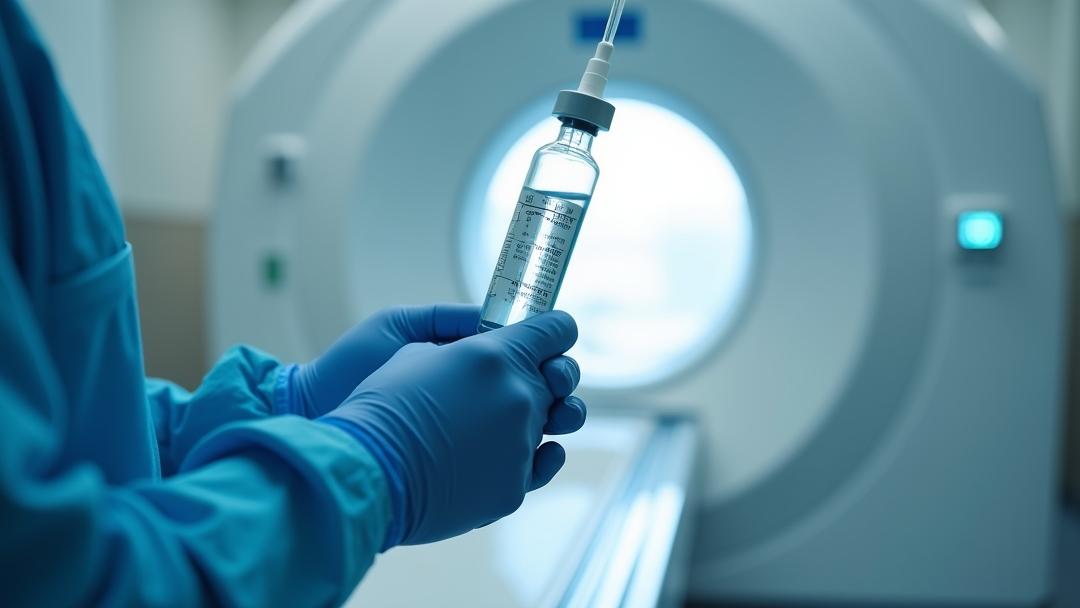
Before contrast-enhanced MRI, many scans relied more heavily on natural tissue differences, which could make it harder to spot small tumors, subtle inflammation, or tiny blood vessel changes. After MRI contrast agents became routine, radiologists could more confidently highlight blood flow, breakdown of the blood-brain barrier, and active disease in ways that improved detection and follow-up decisions. The rare earth connection is direct for contrast (gadolinium is a rare earth element) and indirect for the scanner ecosystem (rare earth magnets in MRI systems; rare earth phosphors in some display and detector chains), while the contrast medicine and the MRI magnet are separate technologies. This guide explains what MRI contrast agents are, why gadolinium is chelated for safety, how different agent designs affect performance and retention, key safety questions (kidneys, pregnancy, allergies), and what current guidelines say—plus how rare earth supply chains shape availability and innovation.
Table of Contents
How did MRI contrast agents change medical imaging—and why do rare earths matter?
Before contrast-enhanced MRI became routine, many scans relied heavily on natural tissue differences to create images. This made it harder to spot small tumors, subtle inflammation, or tiny blood vessel changes that might signal serious conditions. After MRI contrast agents entered regular use, radiologists gained the ability to highlight blood flow patterns, detect breakdown of the blood-brain barrier, and identify active disease with much greater confidence. These improvements helped doctors make better detection and follow-up decisions for countless patients.
The "rare earth" connection to MRI contrast is direct—gadolinium, the main ingredient in these contrast medicines, is itself a rare earth element. There's also an indirect connection through the MRI scanner ecosystem, where rare earth magnets and phosphors play supporting roles in various components. However, it's important to understand that the contrast medicine injected into patients and the MRI machine's magnet system are completely separate technologies.
Understanding MRI contrast agents means learning what they are, why gadolinium must be chemically "caged" (chelated) for safety, and how different agent designs affect both performance and how long they stay in the body. Key safety considerations include kidney function, pregnancy, and allergic reactions. Current medical guidelines provide clear direction on these issues, while rare earth supply chains continue to shape both availability and innovation in this critical medical field.
Rare Earth Role in MRI Contrast Agents
Which elements are used and why
Gadolinium (Gd) stands out as the primary rare earth element used in most MRI contrast medicines. Its unique magnetic properties can speed up tissue relaxation signals, dramatically improving the visibility of certain medical findings. Rather than injecting free gadolinium metal, which would be toxic, doctors use gadolinium that's been tightly bound in a chemical cage called a chelate. This chelation makes the gadolinium safe enough to inject while preserving its ability to enhance MRI images.
Other rare earth elements play different roles in the MRI ecosystem, though they're more associated with the scanner hardware than the injectable medicine. Neodymium (Nd), dysprosium (Dy), praseodymium (Pr), samarium (Sm), and terbium (Tb) appear in high-performance magnets and alloys throughout medical devices. These materials support the strong, stable magnetic fields and compact electromechanical components that modern medical equipment requires.
The dominant clinical "rare earth" story for contrast agents centers on gadolinium. While some might assume MRI scanners use permanent rare earth magnets for their main field, most actually use superconducting coils instead. Still, rare earth magnets do appear throughout supporting subsystems like motors, sensors, and pumps across medical equipment.
How it works
The mechanism starts with an IV injection of GBCA (gadolinium-based contrast agent). Once in the bloodstream, the gadolinium chelate alters local magnetic relaxation, primarily affecting what's called T1 relaxation for most agents. This creates a brighter signal in perfused or abnormal tissues, improving lesion conspicuity and giving doctors greater diagnostic confidence. It's important to understand that the goal is to change image contrast, not to "dye" tissue like a colored stain would.
The chemistry of chelation matters enormously for safety. Stronger binding chelates, called macrocyclic agents, hold onto gadolinium more tightly than linear chelates. This stronger grip means a lower likelihood of gadolinium breaking free from its chemical cage. Current evidence suggests this translates to lower retention risk, which is why many institutions now prefer macrocyclic agents, though all approved agents have defined indications and safety labeling.
Your kidneys play the starring role in clearing contrast from your body. In people with healthy kidneys, most GBCA gets excreted within hours to days. But when kidney function is severely impaired, the contrast circulates longer in the body. This prolonged circulation historically increased the risk of a condition called NSF (nephrogenic systemic fibrosis) with older, high-risk agents. Modern screening protocols and careful agent selection have dramatically reduced this risk, which is why imaging facilities always ask about kidney disease and recent lab results.
While not directly related to the injectable contrast, it's worth noting that rare earth magnets in MRI equipment face their own engineering challenges. Motors and actuators in these systems often use NdFeB magnets doped with dysprosium or terbium, or SmCo magnets, to maintain higher coercivity at elevated temperatures. This ensures stable performance near heat sources, though this is a device-engineering consideration rather than a feature of the contrast medicine itself.
Journey from Mine to Product
Supply chain steps
The path from raw materials to the contrast agent in your IV starts with mining mixed rare-earth ore. This ore gets processed into concentrate, then undergoes chemical separation to isolate individual oxides, including gadolinium oxide (Gd2O3). These oxides require further purification to reach pharmaceutical-grade standards. From there, manufacturers synthesize the gadolinium into chelated GBCA, followed by sterile fill-finish procedures and extensive quality assurance testing for purity, stability, and endotoxins.
Pharmaceutical production adds layers of stringent controls that go far beyond typical industrial processing. Good Manufacturing Practice (GMP) standards, trace metal limits, and batch release testing all come into play. "Medical-grade" rare earth inputs demand much tighter impurity profiles than materials destined for industrial uses, reflecting the critical nature of these medicines.
Typical chokepoints
The main bottlenecks in this supply chain occur at the midstream separation and refining stages. Turning mixed rare earths into high-purity individual oxides requires specialized facilities and expertise. The specialized chemistry supply chain needed to produce consistent chelating ligands and sterile injectable products at scale creates additional constraints. These midstream challenges can limit production even when raw ore supplies are adequate.
Light rare earths and heavy rare earths face different constraints in processing. Heavy rare earth processing, where many high-value separations occur, often becomes the limiting step in production. Understanding these distinctions helps explain why medical supply continuity requires careful resilience planning, even when raw materials appear plentiful.
Statistics & Societal Impact
Quantitative snapshot
MRI usage continues to grow worldwide, with contrast enhancement playing a crucial role in many examinations. Annual MRI exam volumes vary by region, but a significant percentage of brain tumor, multiple sclerosis, and liver lesion workups rely on contrast agents to provide the detailed information doctors need (opens in a new tab). These numbers help illustrate how often patients encounter contrast-enhanced imaging in modern healthcare.
Safety statistics provide important context for patients considering contrast-enhanced MRI. Allergic-like reactions to GBCAs occur in a small percentage of cases, with severe reactions being even rarer. The safety profile varies somewhat across different agent classes, but serious adverse events remain uncommon overall.
The story of NSF illustrates how medical practice evolves with new evidence. Historically, NSF occurred more frequently, but after restricting high-risk agents in patients with severe kidney disease, the incidence dropped dramatically. Under modern practice with group II agents, the risk is now considered "very low" (opens in a new tab).
Downstream effects
Contrast-enhanced MRI changes patient care in meaningful ways. The technology improves detection of active inflammation, helps characterize tumors more accurately, and maps blood-brain barrier disruption with precision. These capabilities can reduce unnecessary follow-up tests and speed time to treatment in selected cases, improving both patient outcomes and healthcare efficiency.
The implementation of standardized safety systems has transformed imaging practices. Kidney screening protocols, careful agent selection guidelines, and emergency preparedness procedures now form part of routine workflows at most imaging centers. These systematic approaches reduce harm while providing reassurance to both patients and healthcare providers.
Innovators & History
Key breakthroughs
The recognition of gadolinium's strong paramagnetism for enhancing MRI signals marked a crucial milestone in medical imaging. Scientists then faced the challenge of making this toxic metal safe for human use, leading to the development of chelated compounds. This represented a true "materials plus medicine" breakthrough, combining chemistry, physics, and medical knowledge to create a new diagnostic tool.
The mid-2000s brought another pivotal moment when the medical community recognized NSF and its connection to certain contrast agents in patients with kidney disease. This discovery led to new guidelines that stratified agents by risk level and emphasized the importance of renal screening and careful agent selection—a powerful example of how post-market surveillance can reshape standard care.
More recently, research on gadolinium retention in the body prompted new class warnings and requirements for patient Medication Guides. This ongoing evolution shows how continuous evidence gathering updates product labeling and shapes informed consent discussions between doctors and patients.
From lab to product
Translating chelation chemistry into mass-produced sterile injectables required significant advances in multiple areas. High-purity raw materials, sophisticated analytical chemistry methods, and stringent manufacturing controls all had to come together. Batch-to-batch consistency proves especially critical for injectable agents, where even small variations could affect safety or efficacy.
Clinical adoption followed as medical professionals developed standardized protocols covering timing, dosing by indication, and imaging sequences. This standardization made contrast-enhanced exams more reproducible across different hospitals, ensuring patients receive consistent, high-quality care regardless of location.
Why It Matters Now
Current drivers
Several trends keep demand strong for contrast-enhanced MRI examinations. Growth in cancer imaging, neuroinflammation workups, cardiac MRI, and liver lesion characterization all rely heavily on contrast agents. At the same time, newer MRI techniques aim to reduce contrast use in some scenarios through improved sequences and post-processing, though contrast remains essential for many diagnostic questions.
Patient demographics create additional considerations. More people with diabetes, hypertension, and chronic kidney disease need imaging studies, increasing the importance of clear risk stratification and communication about when contrast is or isn't necessary. This trend makes patient education and shared decision-making more important than ever.
Security & policy context
Rare earth supply chains remain globally concentrated, particularly in separation and refining stages. Policy efforts now focus on diversifying sources, building midstream capacity, and improving transparency for critical materials used across health and technology sectors.
Some pilot programs explore recycling and recovery of rare earths, though medical applications face unique challenges. Pharmaceutical-grade gadolinium supply represents a specialized niche with strict purity demands that complicate circularity compared with industrial uses.
Future Outlook
Materials & design trends
The field continues moving toward more stable macrocyclic agents in many clinical settings. Research explores dose reduction strategies, targeted agents for specific conditions, and even non-gadolinium approaches, including iron-based agents for limited indications. Adoption of these innovations depends on accumulating evidence, regulatory approvals, and demonstrated clinical need.
"Retention-aware" practice will likely remain a priority going forward. This means clearer documentation of which agent type was used, better patient handouts explaining the technology, and selective use protocols that consider whether non-contrast MRI or alternative imaging modalities can answer the clinical question.
5–10 year scenario
Looking ahead, MRI demand will likely grow with aging populations and the expansion of precision oncology. Contrast use may become more tailored by specific indication and individual patient risk factors. This evolution increases the importance of standardized kidney function screening and shared decision-making between patients and providers.
Several bottlenecks could affect future availability and innovation. Midstream rare earth processing capacity, pharmaceutical manufacturing redundancy, and regulatory alignment on labeling and patient communication all require attention. Mitigation strategies include diversified refining locations, strategic stockpiles of critical materials, and multi-site fill-finish capacity to ensure supply resilience.
Conclusion
MRI contrast agents containing the rare earth element gadolinium have transformed medical imaging by enabling clearer visualization of tumors, inflammation, and vascular changes. Understanding the connection between rare earth supply chains and these essential medical products—from mining and separation to pharmaceutical-grade chelation and sterile manufacturing—reveals both the complexity of modern healthcare materials and the importance of supply resilience. As clinical practice evolves with retention-aware protocols and tailored patient screening, the field continues balancing diagnostic benefit with safety considerations while navigating global rare earth supply dynamics that affect both contrast medicines and the broader MRI technology ecosystem.
