
Highlights
- The U.S. has directed over $1 billion toward critical mineral investments in Latin America since early 2025, targeting lithium, copper, and rare earth supply chains through development finance institutions.
- Latin America holds roughly 60% of the world's lithium reserves and substantial rare earth resources, but reserve statistics don't equal commercial supply—investment announcements are not operating mines.
- While governments treat critical minerals as national security infrastructure, geopolitics may guide funding but geology, permitting, and capital discipline ultimately determine which mines get built.
Sometimes geopolitics arrives quietly—through loans, development banks, and carefully structured offtake agreements. A recent report via The Northern Miner claims the United States has directed more than $1 billion toward critical mineral investments in Latin America since early 2025, targeting lithium, copper, and rare earth supply chains.
Keeping it simple and as Rare Earth Exchanges™ continues to chronicle, Washington is moving more assertively to secure minerals vital to electric vehicles, advanced electronics, and defense technologies. But beneath the headline lies a more complicated reality, shaped by capital intensity, geopolitics, and the slow mechanics of building mines and processing capacity.
Solid Rock Beneath the Headlines
Several points in the report are broadly accurate.
U.S. development finance institutions and multilateral lenders have increased activity in the region. The U.S. International Development Finance Corporation (DFC) is reportedly evaluating a $465 million investment to expand the Serra Verde rare earth operation in Brazil, while the Inter-American Development Bank approved a $100 million loan tied to a large lithium project in Argentina.
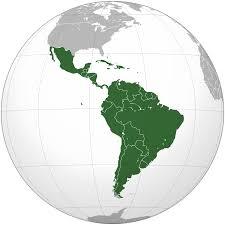
Latin America is also central to future mineral supply. The region holdsroughly 60% of the world’s known lithium reserves, particularly across the Argentina–Chile–Bolivia “Lithium Triangle.” Brazil hosts substantial rare earth resources and growing exploration activity in Minas Gerais, while Chile and Argentina remain pivotal to global copper development.
Geology, in other words, already favors the region.
When the Narrative Runs Ahead of the Ore
Where the story stretches is in suggesting that $1 billion materially reshapes global supply chains. In rare earths alone, China continues to dominate processing, metal refining, and magnet manufacturing, controlling the overwhelming majority of downstream capacity. Building an independent mine-to-magnet ecosystem requires tens of billions of dollars and years of infrastructure development.
Reserve statistics can also mislead. Brazil is often cited as holding large rare earth resources, yet actual production remains minimal, illustrating a basic truth of mining: resources on paper do not equal commercial supply.
Investment announcements are not operating mines.
The Signal Beneath the Noise
The real takeaway is strategic.
Governments increasingly treat critical minerals as national security infrastructure, using development banks, policy incentives, and offtake agreements to shape supply chains.
Yet Latin America is unlikely to align exclusively with one geopolitical bloc. Countries across the region continue welcoming capital from both Washington and Beijing, balancing investment against sovereignty and economic priorities.
For investors, the hierarchy remains unchanged:
Geopolitics may guide the money, and let's not forget, geology, metallurgy, and chemistry, permitting, and rationalized and streamlined government and capital discipline ultimately decide which mines are built.


0 Comments
No replies yet
Loading new replies...
Moderator
Join the full discussion at the Rare Earth Exchanges Forum →