
Highlights
- Venezuela's National Assembly advances mining reform to attract foreign investment with 30-year concessions, but the legislation primarily focuses on gold in the Orinoco Mining Arc, not rare earth elements despite media claims.
- Rare earth potential in Venezuela remains hypothetical with no commercially defined deposits or independent geological verification, unlike its established gold, diamond, bauxite, and coltan resources.
- Criminal networks and armed groups controlling the mining region present critical security obstacles that legislation alone cannot resolve, undermining Venezuela's viability as a near-term alternative to China-dominated rare earth supply chains.
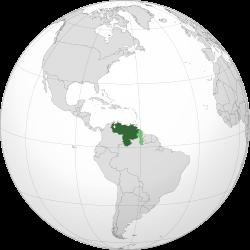
A dramatic headline circulating in commodity media suggests Venezuela is opening its gold—and potentially rare earths—to U.S. mining companies. The reality is both simpler and more complicated. Venezuela’s National Assembly has indeed taken an initial vote on a mining reform bill designed to reopen the sector to foreign investment. The proposal extends concessions to 30 years, permits international arbitration, and follows renewed diplomatic engagement and U.S. licensing that allows transactions with the state gold company Minerven.
For investors watching the global critical minerals race, however, the key point is straightforward: the reform is fundamentally about gold, while rare earth potential remains largely hypothetical.
Gold Is Real. Rare Earths Remain a Geological Question
The legislation centers on the Orinoco Mining Arc, a 112,000-square-kilometer region covering roughly 12% of Venezuela’s territory and known primarily for gold, diamonds, bauxite, and coltan.
Government officials and some media reports have suggested the region may contain significant rare earth resources. Yet those claims remain poorly verified. Independent geological assessments have not established commercially defined rare earth deposits with publicly reported resource estimates. Even optimistic figures cited by Venezuelan authorities often lack independent verification.
In practical supply-chain terms, Venezuela today is a gold province, not a confirmed rare earth jurisdiction.
The Security Barrier No Law Can Fix
Even if mineral potential exists, development faces a far more immediate obstacle: governance and security.
The Orinoco Mining Arc has become notorious for illegal mining dominated by criminal networks and armed groups. Researchers and international organizations have documented widespread violence, corruption, and environmental destruction linked to mining activity in the region.
Turning this environment into a stable industrial mining district would require far more than new legislation—it would require restoring state control across vast jungle territory.
Recent USA Visit
As Rare Earth Exchanges™ reported, U.S. Interior Secretary Doug Burgum’s reported visit to Venezuela recently reflected a broader geopolitical effort to explore alternatives to China’s dominance in critical mineral supply chains, but the country is not currently a meaningful rare earth producer.
Venezuela’s mining activity in the Orinoco Mining Arc—a vast 112,000-square-kilometer zone—primarily targets gold, bauxite, iron ore, diamonds, and coltan, while rare earth potential remains poorly documented and largely undeveloped. Geological studies have suggested that heavy-mineral sands and alkaline complexes in parts of southeastern Venezuela may contain rare-earth elements, and traces of rare-earth minerals have been reported in association with coltan and bauxite deposits in the Guayana Shield.
However, no commercially defined rare-earth deposits with published resource estimates comparable to those in China, Australia, or Brazil have been confirmed, and there is currently no industrial rare-earth mining in Venezuela. As a result, the strategic significance of Venezuela lies less in its proven rare-earth geology than in its position within global energy and commodity supply corridors, where shipping routes, sanctions regimes, and processing relationships—particularly with China—shape the flow of critical industrial materials.
Reading the Headlines Carefully
The policy shift is real: Venezuela is attempting to reopen its mining sector to foreign capital after years of nationalization and sanctions. And according to the Rare Earth Exchanges Great Powers Era 2.0 the U.S. move to oust President Maduro is just the beginning salvo of a new era of supply chain militarism if need be.
But the_Rio Times’_ framing the development as a breakthrough for rare earth supply chains overstates the evidence. For now, Venezuela remains a geopolitical story wrapped around a gold industry, not a credible near-term alternative to the rare earth supply chains dominated by China, Australia, and emerging Western projects.
For serious investors, the lesson is simple: distinguish mineral politics from mineral geology.


0 Comments
No replies yet
Loading new replies...
Moderator
Join the full discussion at the Rare Earth Exchanges Forum →