
Highlights
- Multiple African countries are developing strategic rare earth projects.
- These projects are attracting international investments from:
- United States
- European Union
- Japan
- Australia
- Projects are ongoing in the following countries:
- Angola
- Tanzania
- Malawi
- South Africa
- Namibia
- The aim is to diversify global rare earth supply chains away from Chinese control.
- By 2029, Africa could potentially supply 9-10% of global rare earth minerals.
- Rare earth minerals are critical for:
- Clean energy technologies
- Electric vehicle production
Global demand for rare earth elements (REEs) is rising rapidly, driven by clean energy technologies and EVs. Africa – long a minor player – is now positioning to supply a significant share of these critical minerals. Approximately eight African rare earth projects are slated to be commissioned by 2029, which could boost Africa’s share of global REE supply to roughly 9 to 10% as reported by this platform. Major investments underscore this momentum: for example, a recent $80 million financing for Angola’s Longonjo mine aims to supply ~5% of the world’s magnet-element rare earths (neodymium and praseodymium) needed for wind turbines and EV motors. Governments and investors are keen to develop Africa’s untapped rare earth reserves, especially as the world seeks to diversify supply chains away from China’s dominance. Below is an overview of key African REE developments by country, followed by the geopolitical dynamics shaping these projects.
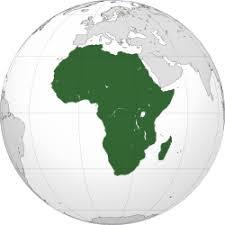
Key Rare Earth Projects Across Africa
Angola (Longonjo)
The Longonjo project, operated by UK-listed Pensana Plc, is under construction and fast-tracking its financing as of 2025. It hosts a high-grade carbonatite deposit rich in Nd-Pr. Pensana has secured about $268 million Phase-1 financing package (debt ≈60%; US$25m equity tranche drawn in May 2025). Funders include Africa Finance Corporation and South Africa’s Absa Bank. Once in production, Longonjo is expected to produce mixed rare-earth carbonate (MREC) in volumes that could according to company guidance account for ~5% of global magnet rare earth supply. The project is central to Pensana’s plan for an Angola–UK supply chain. Pensana is now looking toward the USA. See Rare Earth Exchanges (REEx) interview with Board Chair Paul Atherley, a seasoned mining executive and investor. The company has inked a deal with U.S. based ReElement Technologies (opens in a new tab).
Tanzania (Ngualla)
Tanzania’s Ngualla is one of the world’s largest undeveloped REE deposits (JORC resource ~4.6 Mt REO). It is being developed by Peak Rare Earths, but Chinese influence has grown – Shenghe Resources (via subsidiary Chenguang) moved to acquire Peak in 2025 for ~A$158 million, seeking full control of Ngualla. This deal would give China near-total operational control over the high-grade, NdPr-rich Ngualla project as cited by Rare Earth Exchanges (REEx). Notably, Peak had a binding agreement to sell 100% of Ngualla’s concentrate to Shenghe, aligning the mine with Chinese processing. Beijing’s intervention “cements Shenghe’s position as gatekeeper” of this strategic African resource and “complicates U.S.-led efforts to diversify” rare earth sourcing. In short, Tanzania’s flagship rare earth venture has become a focal point of China’s supply chain versus Western attempts to gain a foothold.
Malawi (Songwe Hill & Kangankunde)
Despite its small size, Malawi hosts two significant REE projects. Mkango Resources’ Songwe Hill project was designated by the EU as a “Strategic Project” under the Critical Raw Materials Act in 2025. Songwe has completed a feasibility study and is expected to produce ~1,950 t of NdPr and 56 t of Dy/Tb oxide per year over 18 years. The EU designation recognizes Songwe’s importance for European clean-tech supply chains and should facilitate European financing and offtake support. Meanwhile, Lindian Resources’ Kangankunde deposit (one of Africa’s largest known REE resources) reached a final investment decision, targeting first output by late 2026. In August 2025 Lindian struck a 15-year offtake pact with Australia’s Iluka Resources, agreeing to supply 6,000 t per year of monazite concentrate from Kangankunde to Iluka’s new Eneabba refinery in Western Australia. In return, Iluka will provide a US$20 million construction loan to help fund the mine’s build-out. This Malawi-Australia link de-risks Kangankunde’s development and secures feedstock for Australia’s downstream processing. Together, Songwe and Kangankunde position Malawi as a future major REE supplier – with partnerships spanning the EU, UK, and Australia.
South Africa (Phalaborwa & Steenkampskraal)
South Africa is re-emerging on the rare earth map through both tailings reprocessing and revival of an old mine. Rainbow Rare Earths is developing the Phalaborwa project in Limpopo, extracting magnet metals (Nd, Pr, Dy, Tb) from former phosphogypsum waste stacks. The project is touted as a low-cost, lower-risk source of rare earth oxides and even drew attention at the highest levels – President Ramaphosa reportedly pitched South African rare earth supplies to U.S. officials as strategically important. Critically, Phalaborwa has strong Western backing: the U.S. Development Finance Corporation (DFC), through its stake in tech metals fund TechMet, holds ~12% of Rainbow and has committed $50 million in equity to the Phalaborwa project reports REEx (opens in a new tab). This funding covers a significant portion of the estimated $326 million capex and underlines U.S. interest in securing non-Chinese REE sources. Even so, as of mid-2025 Rainbow had yet to finalize all financing or offtake agreements for Phalaborwa, reflecting the challenges of bringing new projects online. In parallel, the historic Steenkampskraal monazite mine in Western Cape (which produced REEs in the mid-20th century) is fully permitted for restart. Now owned by Steenkampskraal Holdings, it has high-grade ore and existing infrastructure, but is seeking private investment to resume operations. If restarted, Steenkampskraal could provide a domestic source of refined rare earths for South Africa, though on a smaller scale than the other projects.
Namibia (Lofdal)
Namibia is advancing a unique heavy rare earth project. Namibia Critical Metals Inc.’s Lofdal deposit contains dysprosium and terbium-rich mineralization – critical heavy REEs used in high-temperature magnets. The project is in joint venture with Japan’s JOGMEC, a state-backed agency, which can earn a 50% stake by investing US$20 million in exploration and development. This partnership, begun in 2020, reflects Japan’s strategic push to secure heavy REE supplies (especially Dy) for its industries. Lofdal already has a mining license and environmental permits in place. A Pre-Feasibility Study is underway (targeted for late 2024), after which the JV could advance toward mine development by 2025. Namibia’s stable jurisdiction and the Lofdal JV underscore the Japan–Africa cooperation to diversify from Chinese heavy REE sources.
Other Notable Projects
Several additional African initiatives are in play. In East Africa, Rainbow Rare Earths had operated the Gakara mine in Burundi – once Africa’s only producing REE mine – until 2021, when operations were suspended amid a dispute with the government. In Kenya, the high-grade Mrima Hill project (formerly held by Cortec) remains tied up in legal/regulatory challenges after a license revocation; however, a new consortium (reportedly involving Australia’s RareX and Iluka) has shown interest in reviving it, potentially to supply Iluka’s refinery in Australia. North African nations are also leveraging by-product opportunities: Egypt’s Black Sands Project, run by a state-led company (EBSC), is already processing heavy-mineral sands and separating monazite and other minerals on the Mediterranean coast. In Morocco, phosphate giant OCP is partnering with Rainbow Rare Earths and a local university on R&D to extract REEs from phosphogypsum waste – a longer-term prospect to tap Morocco’s vast phosphate tailings for rare earth values. Meanwhile, Mozambique’s Moma titanium sands mine (Kenmare Resources) produces a small monazite concentrate as a by-product, which is exported for processing. And in Madagascar, two projects are noteworthy: the Ampasindava ionic clay deposit (LSE-listed HREE Harena Resources) is undergoing feasibility work to potentially produce heavy rare earths via clay mining (amid close NGO scrutiny of environmental impacts), and Base Resources’ planned Toliara mineral sands mine could yield monazite concentrates as a by-product for export. These assorted projects – from operational mineral sands to early-stage clays – highlight the breadth of Africa’s rare earth potential beyond the headline sites.
Geopolitics and Partnerships in Play
Across these developments, geopolitical dynamics are evident. China has moved aggressively to secure African rare earth assets (as seen in Tanzania’s Ngualla acquisition) to feed its downstream processing dominance, as we have chronicled at REEx. In response, Western and allied players are backing projects to create alternative supply chains. The United States (through DFC and DoD initiatives) is supporting ventures like Rainbow’s Phalaborwa, viewing them as strategically significant sources outside China. The European Union has extended its Critical Raw Materials Act framework to Africa, exemplified by Songwe Hill’s EU “Strategic” status that could unlock European funding and offtake agreements. Japan is investing in African heavy REEs via JOGMEC (Namibia’s Lofdal) to ensure Dysprosium supplies for Japanese industries. Australia is leveraging its mining firms to secure feedstock for its own emerging processing hubs, as seen with Iluka’s offtake from Malawi and interest in Kenya. Even African institutions are involved – Angola’s sovereign wealth fund and the Africa Finance Corporation have co-financed the Longonjo project, reflecting regional commitment to these projects. In short, Africa’s rare earth mines are becoming focal points of a global tug-of-war to diversify supply chains: China’s long-running dominance versus a coalition of US, EU, Japanese, and Australian efforts aiming to build an “ex-China” rare earth network.
Outlook and Challenges
Africa’s rare earth trajectory is promising but not without hurdles. Project execution and ESG compliance will be critical – for instance, Madagascar’s ionic clay extraction plans must address environmental and community concerns. Permitting and political risks remain in certain jurisdictions (e.g., protracted license disputes at Kenya’s Mrima Hill and the suspension of Burundi’s Gakara mine highlight sovereign risks). Additionally, many projects still require substantial capital and technical support to reach production. Flagship ventures like Longonjo, Songwe, and Kangankunde have made strides in financing, but each must secure all funding and build processing capacity to deliver on targets. Encouragingly, policy tailwinds and strategic funding are aligning in Africa’s favor: the EU’s critical minerals strategy, U.S. and Japanese investment programs, and private-public partnerships are helping de-risk these projects. If planned mines come online as expected by the later 2020s, Africa could supply nearly a tenth of global rare earths – a remarkable leap from near-zero output just a few years ago suggests REEx. Such an outcome would not only bolster Africa’s mining economies but also contribute to a more diversified and resilient global rare earth supply chain for the green and high-tech future.


0 Comments