
Highlights
- Africa holds 30% of global critical mineral reserves and a working-age population projected to reach 1.56 billion by 2050, positioning it as a future industrial platform beyond just mining opportunities.
- Despite economic growth of 3.5% in 2024 and $97 billion in FDI, Africa faces sharp regional divergence, commodity dependence, weak manufacturing, and skills shortages that create significant execution risk.
- The African Continental Free Trade Area and Agenda 2063 signal Africa's evolution into a coordinated economic bloc with greater bargaining power over minerals, trade, and industrial policy.
Africa is being described here as a continent of scale, youth, minerals, and unfinished potential. Recently a Chinese trade association argues that despite global shocks, many African countries have kept reforming, improved macroeconomic management, and opened further to outside investment. At the same time, it admits that uneven development, fragile economic structures, and reliance on raw commodity exports remain unresolved.
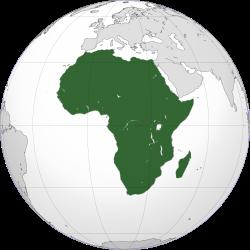
For Western business readers, the key takeaway is simple: Africa is not just a humanitarian or geopolitical story. It is increasingly a strategic growth and supply chain story, especially in critical minerals, energy transition inputs, labor force expansion, and regional market integration.
The Resource Prize—and the Demographic Engine
Africa holds roughly 30% of global critical mineral reserves, more than 50% of cobalt, about 40% of manganese, plus meaningful lithium, rare earths, and platinum group metals. And then there is Africa’s young and fast-growing population, with working-age people projected to rise from 849 million in 2024 to 1.56 billion by 2050.
That matters. For the West, this is not framed as a single mining opportunity but as a future industrial platform—if infrastructure, skills, and governance improve.
Resilience With Uneven Edges
The piece highlights Africa’s recent economic resilience, citing growth of 3.3% in 2023 and 3.5% in 2024, above global averages, alongside a sharp rise in foreign direct investment to $97 billion in 2024. But it also stresses sharp regional divergence. East Africa is presented as the fastest-growing subregion, while Southern Africa lags.
The deeper message is more revealing: Africa is still highly exposed to commodity cycles, food imports, weak manufacturing, and skills shortages. In other words, the upside is large, but the execution risk is larger.
The Integration Bet
One of the most important updates is political and institutional, not geological: the African Union’s push into the second ten-year phase of Agenda 2063, including the African Continental Free Trade Area (opens in a new tab). A piece via the Association of China Rare Earth Industry portrays regional integration as Africa’s economic “shock absorber,” reducing dependence on any single outside market.
For U.S. and Western businesses, that is the signal worth watching. The breakthrough here is not a mine or factory. It is the possibility that Africa becomes a more coordinated economic bloc with greater bargaining power over minerals, trade, and industrial policy.
Source Note: This item originates from media associated with a state-linked Chinese industry channel and cites a Chinese academic commentary platform. It should be treated as an informed but strategic narrative, and key claims should be verified with independent sources before use in investment or policy analysis.


0 Comments
No replies yet
Loading new replies...
Moderator
Join the full discussion at the Rare Earth Exchanges Forum →